

Baby Food Textures by Age: A Stage-by-Stage Guide for Australian Parents


One of the questions we hear most from Australian mums is a simple but worrying one: "How thick or lumpy should my baby's food actually be right now?" It's completely normal to feel unsure. Getting baby food textures right by age matters more than many parents realise — it helps your baby learn to chew, builds confidence with new foods, and reduces fussiness down the track. The good news is that texture progression follows a gentle, predictable path, and you don't need to rush it.
This guide walks you through baby food textures by age, stage by stage, so you know exactly what to offer and when. We've kept everything in line with Australian feeding advice from the Raising Children Network and the NHMRC Infant Feeding Guidelines, so you can feel reassured every step of the way.
How baby food textures change as your baby grows
When your baby first starts solids at around six months, they've only ever known milk. Moving to food is a brand-new skill — not just tasting, but learning to move food around their mouth, chew (even without teeth), and swallow safely. Textures progress from very smooth and runny through to soft lumps and finger foods over the space of a few months.
Every baby is a little different, so treat ages as a guide rather than a strict timetable. What matters is steady forward movement: offering slightly more texture every week or two rather than staying on smooth purées for months. If you're still deciding when to begin, our complete guide to when to start solids in Australia covers the readiness signs to look for first.

Stage 1 — Smooth, runny purées (around 6 months)
Your baby's very first foods should be smooth, lump-free and quite runny — only a little thicker than the milk they're used to. Think single-ingredient purées such as cooked and blended pumpkin, sweet potato, carrot, apple or pear, loosened with a little breast milk, formula or cooled boiled water.
At this stage your baby is learning to take food from a spoon and move it to the back of their mouth. Some will spill straight back out at first — that's a normal reflex, not a rejection. Iron is the priority nutrient now, so include iron-rich first foods like well-cooked, puréed meat, or iron-fortified baby cereal mixed to a smooth consistency. You can read more in our guide to iron-rich first foods for babies.
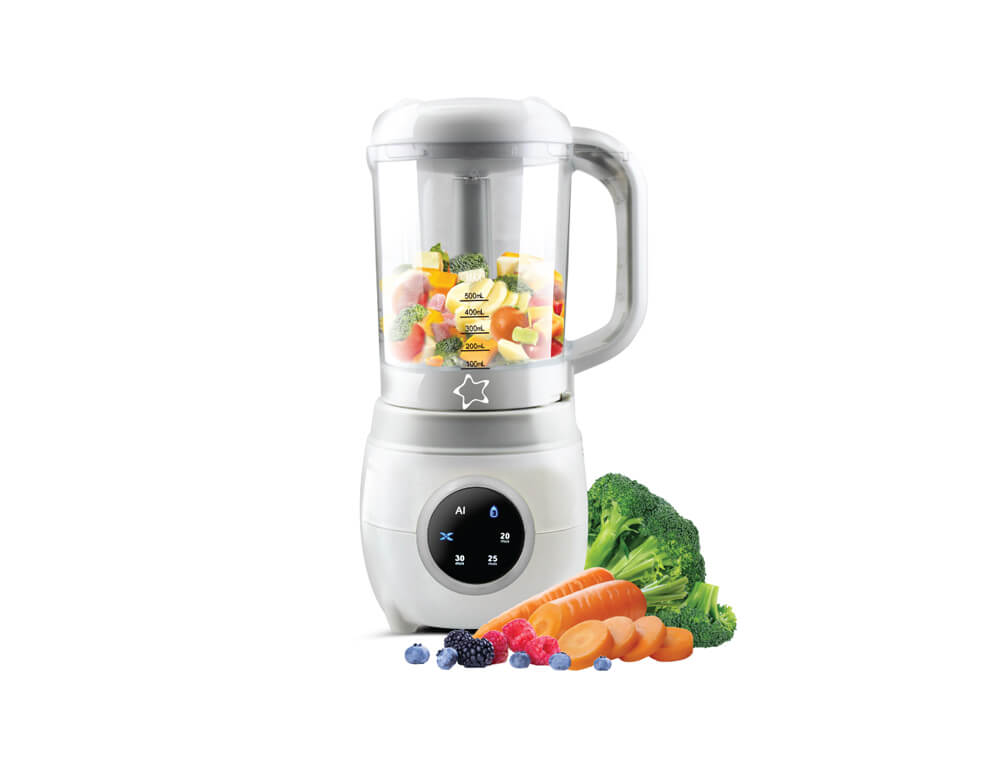
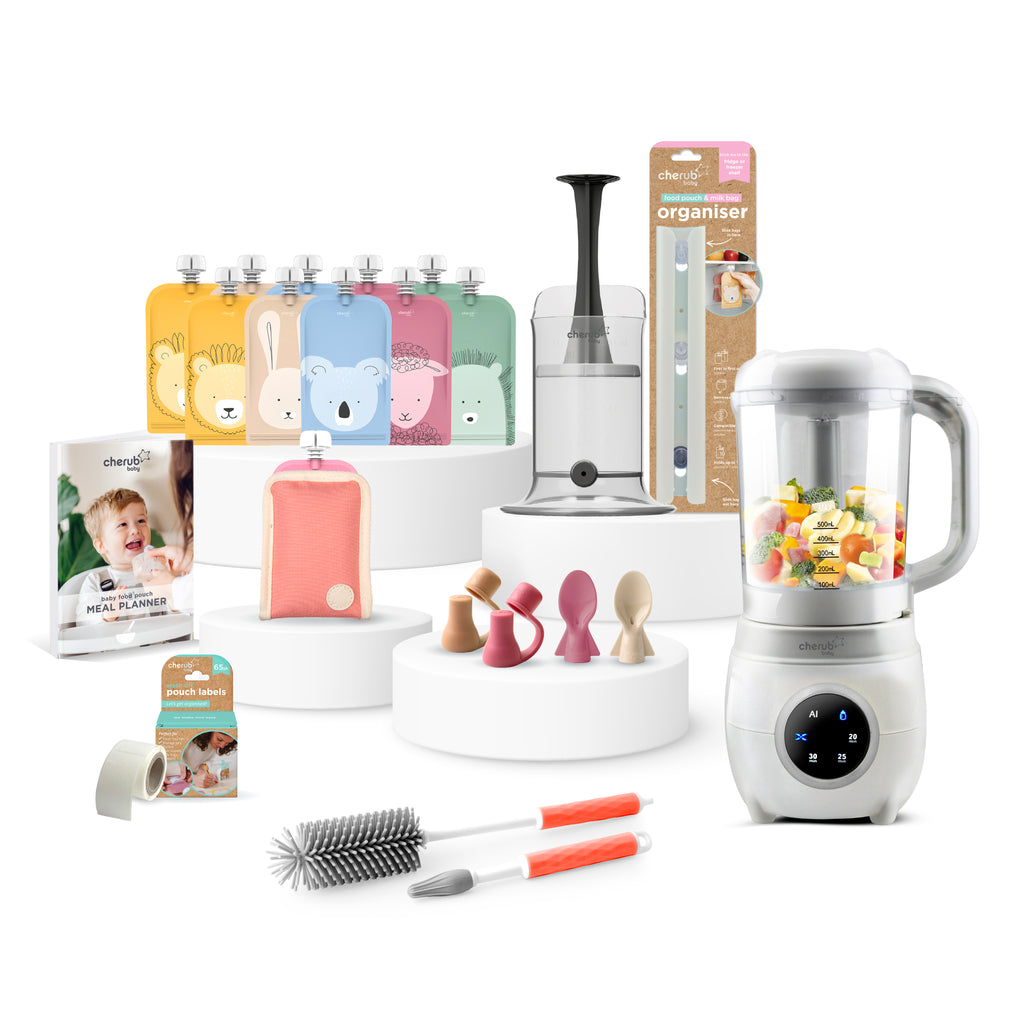
Batch cooking soft purees and steamed vegetables for BLW is so much easier with a dedicated baby food maker. Steam, blend and store in one machine — saving you time every week.
Shop Baby Food Makers →
Stage 2 — Thicker purées and soft mash (6–8 months)
Once your baby is comfortably swallowing smooth purées, thicken things up. Stage two textures hold their shape on a spoon and can include gentle combinations — apple and banana, or pumpkin and lentil. From here, move towards soft mashed foods such as mashed avocado, mashed banana or well-cooked mashed vegetables.
This is the stage where you stop blending everything perfectly smooth and start leaving a little body in the food. Mashing with a fork instead of blending is an easy way to add gentle texture. Your baby is learning that food can feel different in the mouth, which is exactly the skill they need for what comes next.
If your baby is showing interest in self-feeding, a Fresh Food Feeder can be a great tool during this transition. It allows them to safely explore soft fruits, vegetables and other foods independently while still being exposed to new tastes and textures. The small holes release tiny amounts of food as they chew and suck, helping build oral motor skills, confidence and familiarity with different food textures at their own pace.


Stage 3 — Lumpy and minced textures (8–10 months)
Around eight to ten months, your baby is ready for soft lumps and minced or finely chopped foods. Think cottage cheese, mashed banana with soft oat pieces, minced casserole, scrambled egg, or soft-cooked pasta. The aim is to give your baby food they need to actively mash and move around their mouth, rather than simply swallow.
Many parents feel nervous about lumps because of gagging. Gagging is a normal, protective reflex that helps your baby learn to manage texture — it looks alarming but is different from choking. Offering soft lumps now, alongside some finger foods, sets your baby up beautifully. For inspiration, our baby food purée recipes for 6 to 12 months include ideas you can easily thicken or mash as your baby progresses.

Stage 4 — Soft finger foods and family meals (10–12+ months)
By around ten to twelve months, most babies are enjoying soft finger foods and modified versions of family meals. Steamed vegetable sticks, soft fruit, toast fingers, well-cooked pasta and small soft meatballs all help your baby practise self-feeding and chewing. Continue offering a mix of textures rather than dropping back to purées.
If you'd like a full list of safe, no-teeth-needed ideas to start with, our guide to baby finger foods for 6 months and up is a lovely place to begin. Always stay close and supervise, and prepare foods in safe shapes and sizes.
Why introducing lumps before 9 months matters
It can be tempting to stay on smooth purées because they feel safer, but research consistently shows that introducing lumpy textures by around nine months is important. Babies who don't experience lumps before this window are more likely to be fussier eaters and to have feeding difficulties that can linger into childhood. The Raising Children Network and NHMRC both encourage progressing textures steadily through the second half of the first year, rather than staying smooth for too long.
So if your baby is happily managing purées, take it as your cue to gently add more texture. A few gags along the way are part of the learning curve — not a sign to go backwards.
Gentle tips for moving from one texture to the next
Move at your baby's pace, but keep moving. Introduce a slightly thicker or lumpier version of a food your baby already likes, so the flavour is familiar even though the texture is new. Mix a little texture into a smooth favourite — a few soft lumps stirred through a purée your baby enjoys. Offer texture when your baby is hungry but not overtired, and stay relaxed; babies pick up on our nerves. Most of all, keep offering. It can take ten or more tries before a baby accepts a new texture, and that's completely normal.
Frequently asked questions
What texture should baby food be at 6 months?
At around six months, baby food should be a smooth, lump-free purée that's only slightly thicker than breast milk or formula. Single-ingredient purées loosened with a little milk or cooled boiled water are ideal as your baby learns to take food from a spoon.
When should I introduce lumpy textures to my baby?
Aim to introduce soft lumps and minced foods from around eight months, and ideally before nine months. Babies introduced to lumps within this window tend to accept a wider range of foods and have fewer feeding difficulties later on.
My baby gags on lumps — does that mean they're not ready?
Gagging is a normal, protective reflex as your baby learns to manage new textures, and it's different from choking. Keep offering soft lumps in a calm, supervised setting. If gagging is frequent and distressing, drop back slightly, then build the texture up again gradually.
How do I thicken baby food without losing nutrients?
Mash or fork-blend cooked vegetables rather than fully puréeing them, or stir in iron-fortified baby cereal, well-cooked lentils or mashed avocado. Steaming ingredients and keeping the cooking liquid helps retain nutrients while letting you control the thickness.
Is it okay to skip purées and go straight to finger foods?
Some families choose baby-led weaning and offer soft finger foods from the start, while others prefer purées, and many combine both. There's no single right approach — our guide to baby-led weaning vs purées can help you decide what suits your family.
How quickly should I move through the texture stages?
There's no fixed timetable, but aim to add a little more texture every week or two rather than staying on one stage for months. Steady progress through the second half of the first year helps your baby build chewing skills and accept a variety of foods.
This article offers general information for Australian parents and isn't a substitute for personal medical advice. If you have concerns about your baby's feeding, growth or development, speak with your GP, child health nurse or a paediatric dietitian.


