

Baby Food Puree Recipes for 6 to 12 Months: Easy Healthy Ideas for Australian Parents


Starting your baby on solids is one of the most exciting milestones of the first year — and making your own homemade baby food purees is one of the best gifts you can give your little one. Fresh, whole ingredients, no additives, and the satisfaction of knowing exactly what's in every spoonful.
In this guide, we've put together the best baby food puree recipes for 6 to 12 months, following Australian NHMRC guidelines. Whether you're just starting solids or ready to move to combination purees, we've got you covered.
When to Start Baby Purees in Australia
Australian health guidelines recommend starting solids at around 6 months, when your baby shows signs of readiness. These signs include being able to sit upright with minimal support, showing interest in food, and having good head control. Starting before 4 months is not recommended.
If you're wondering exactly when to introduce first foods, read our complete guide to starting solids in Australia for everything you need to know, backed by current NHMRC recommendations.
The first weeks of solid feeding are about exploration — tiny tastes, learning to swallow, and building positive associations with food. Milk (breast milk or formula) remains your baby's primary nutrition source until 12 months.
Stage 1 Baby Puree Recipes (6 to 7 Months)
Stage 1 purees are smooth, single-ingredient purees with a thin consistency — ideal for babies just beginning their solid food journey.
Sweet Potato Puree
Peel and dice one medium sweet potato. Steam for 12 to 15 minutes until completely soft. Blend until smooth, adding a little breast milk or cooled boiled water to reach the right consistency. Sweet potato is naturally sweet and rich in beta-carotene — a wonderful first food.
Pumpkin Puree
Dice 200g of butternut pumpkin and steam until soft, about 12 minutes. Blend until silky smooth. Pumpkin is easy to digest, mild in flavour, and packed with vitamin A. A firm favourite with Australian babies.
Apple Puree
Peel, core and dice 2 medium apples. Steam for 8 to 10 minutes until soft. Blend to a smooth consistency, thinning with a little cooled boiled water if needed. Apple puree pairs beautifully with almost any vegetable.
Carrot Puree
Peel and chop 3 medium carrots. Steam for 15 minutes until very tender. Blend until smooth, adding a little cooking water if needed. Carrots are sweet, nutritious, and well-accepted by most babies from the very first taste.
Broccoli Puree
Steam 150g of broccoli florets for 8 to 10 minutes. Blend until smooth, adding a little water. Introducing green vegetables early helps babies develop a taste for them — broccoli is an excellent source of folate and vitamin C.
Iron-Rich Meat Puree
NHMRC guidelines highlight iron as a critical nutrient from 6 months. Steam or simmer 80g of chicken breast or lean beef until cooked through. Blend with a little cooking liquid until very smooth. For more ideas, see our guide to iron-rich first foods for babies in Australia.
Make Baby Purees in Minutes
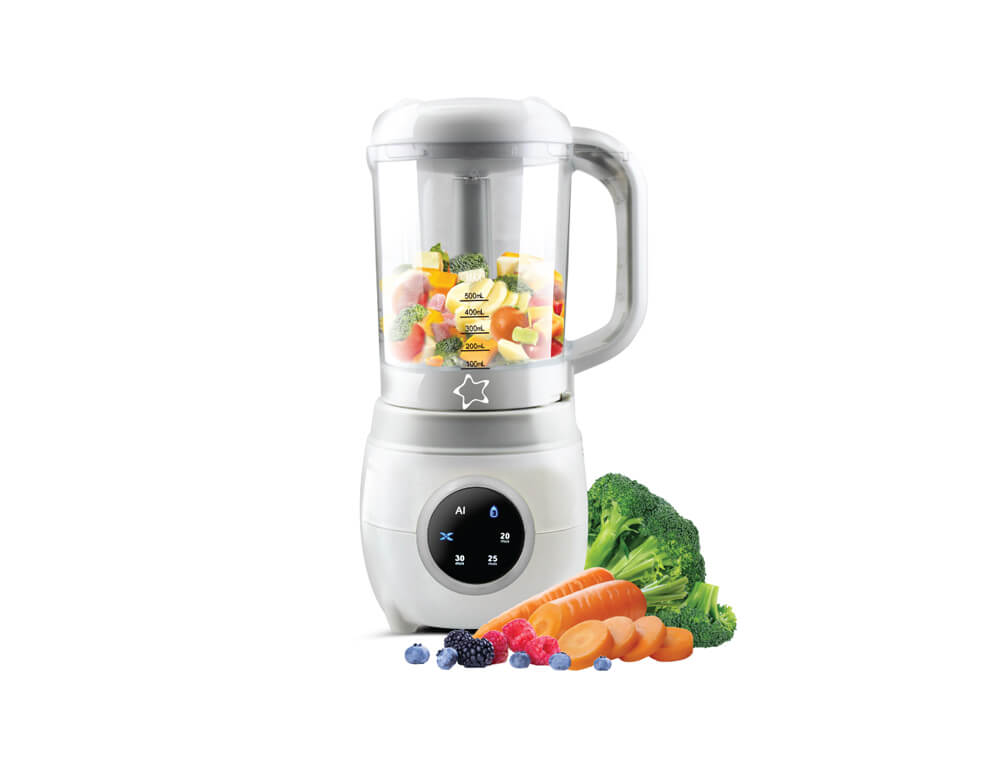
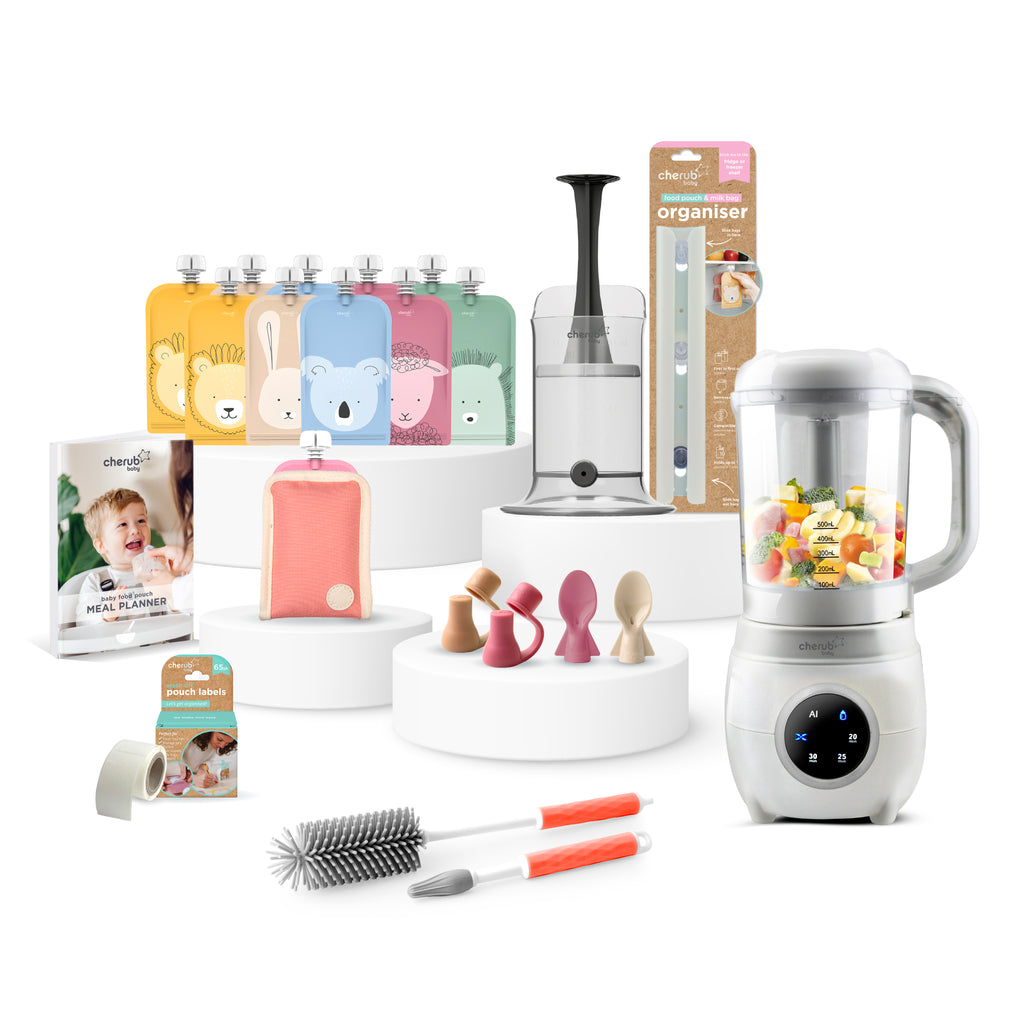
Our award-winning Baby Food Maker steams and blends in one bowl — no extra washing up. Perfect for batch-cooking all these purees in a single session. Used and loved by thousands of Australian mums.
Stage 2 Combination Purees (7 to 9 Months)
Once your baby has tried a range of single-ingredient purees, it's time to introduce combinations. Stage 2 purees are slightly thicker, and you can begin to leave a little more texture. This is where flavour variety really begins.
Sweet Potato, Chicken and Pea
Combine sweet potato puree with pureed chicken and a small amount of steamed pea puree. This combination provides protein, complex carbohydrates, and iron in one nourishing meal. A great one to batch-cook and freeze.
Pumpkin and Red Lentil
Cook 2 tablespoons of red lentils in low-sodium vegetable stock until soft. Blend with steamed pumpkin. Red lentils are an excellent plant-based iron source — ideal if you're raising a vegetarian baby or simply want to vary iron sources.
Apple, Spinach and Pear
Blend equal parts apple puree, pear puree and a small amount of steamed spinach. The natural sweetness of the fruit balances the spinach beautifully. Spinach adds iron and folate to support your growing baby.
Chicken, Avocado and Sweet Potato
A creamy, nourishing combination of pureed chicken, mashed ripe avocado and sweet potato puree. Avocado provides healthy monounsaturated fats that are important for your baby's brain development and growth.
Pumpkin, Carrot and Coconut
Combine pumpkin puree, carrot puree and a small splash of full-fat coconut milk. Healthy fats from coconut support brain development and help absorb fat-soluble vitamins A and D. Mild, sweet and usually a big hit.

Stage 3: Moving to Texture (9 to 12 Months)
By 9 months, most babies are ready for mashed or lumpy textures rather than completely smooth purees. This is an important developmental step — prolonged use of smooth purees beyond 9 months can be associated with feeding difficulties later on, according to Australian feeding guidelines.
At this stage, mash rather than blend, leaving small soft lumps your baby can work with. You can also offer soft finger foods alongside mashed meals. For ideas on combining both approaches, see our guide to baby-led weaning vs purees.
Mashed Banana and Yoghurt
Mash half a ripe banana with 2 tablespoons of full-fat plain yoghurt. No cooking required — a quick, nourishing breakfast or snack that babies tend to love. Choose a plain, unsweetened yoghurt with no added flavours.
Mashed Salmon and Potato
Steam a small portion of salmon fillet and mash with cooked potato and peas. Salmon is an excellent source of omega-3 fatty acids, which support brain and eye development. Introduce fish from around 6 months as part of allergen introduction.
Mashed Lentil Dhal
Cook red lentils in low-sodium stock with a pinch of cumin and diced carrot until completely soft. Mash to a chunky consistency. Introducing mild spices early helps broaden your baby's palate and sets the stage for a diverse, adventurous eater.
How to Store Homemade Baby Purees Safely
Making purees in batches saves enormous time during those busy early months. Here's how to store them safely:
- Refrigerator: Store in airtight containers for up to 3 days.
- Freezer: Freeze in ice cube trays or small portions for up to 3 months. Label each portion with the date and contents.
- Thawing: Thaw overnight in the fridge or gently reheat from frozen. Never thaw at room temperature.
- Reheating: Heat thoroughly, stir well to distribute heat evenly, and always test the temperature on your inner wrist before serving.
Our reusable food pouches are perfect for storing and serving purees on the go — fill them at home, freeze, and defrost as needed. BPA-free and dishwasher safe, they're a favourite with Australian mums at daycare drop-off.
Store and Serve with Ease
Our Reusable Food Pouches hold up to 150ml of homemade puree, are easy to fill and clean, and perfect for taking to daycare or out and about. Loved by Australian mums for being a sustainable, practical alternative to store-bought pouches.


Tips for Making Baby Food Purees at Home
- Steam rather than boil: Steaming preserves more nutrients than boiling. A baby food maker that steams and blends in one bowl is ideal for busy parents.
- Use cooking liquid: If you do boil vegetables, use the cooking water to thin the puree — it retains water-soluble nutrients like vitamin C and B vitamins.
- No salt or sugar: Baby kidneys can't handle salt. Never add sugar to purees. Natural sweetness from vegetables and fruit is more than enough for little taste buds.
- Introduce allergens early: Current Australian guidelines recommend introducing common allergens one at a time from around 6 months. See our guide to introducing allergens to babies in Australia.
- Serve at the right temperature: Purees should always be lukewarm, never hot. Always test temperature on your inner wrist before offering to your baby.
Frequently Asked Questions About Baby Food Purees
When should I start baby purees in Australia?
Australian NHMRC guidelines recommend starting solids at around 6 months, when your baby shows developmental readiness — sitting with support, good head control, and interest in food. Starting before 4 months is not recommended. If your baby was born premature, speak with your GP or child health nurse about the right timing for your baby.
What are the best first purees for an Australian baby?
Iron-rich foods are recommended as priority first foods under Australian guidelines. Excellent options include pureed meat (chicken, lamb, beef), mashed legumes (lentils, chickpeas) and iron-fortified baby cereal. You can alternate with vegetable purees like sweet potato, pumpkin and carrot, plus fruit purees like pear and apple.
How much puree should a 6-month-old eat?
At 6 months, the goal is exploration, not volume. Start with 1 to 2 teaspoons once a day and gradually increase amounts over the following weeks. Breast milk or formula remains the primary nutrition source until 12 months, so don't worry if your baby only takes a few tastes at first.
Can I freeze homemade baby purees?
Yes — most homemade purees freeze well for up to 3 months. Freeze in small portions using an ice cube tray, then transfer to a labelled zip-lock bag or reusable pouch once frozen. Defrost overnight in the fridge when needed. Never refreeze previously frozen food once it has been thawed.
Do I need a baby food maker to make purees at home?
You don't absolutely need one, but a baby food maker makes the process significantly faster and easier. It steams and blends in one bowl, preserving more nutrients than boiling, with less washing up. Many Australian parents find it a genuinely worthwhile investment for the first 12 months of solids.
What foods should I avoid in baby purees under 12 months?
Avoid honey (risk of infant botulism), added salt, added sugar, and high-choking-risk foods. Cow's milk as a main drink should wait until 12 months, though small amounts of dairy in cooking — yoghurt, cheese — are fine from 6 months. Avoid shark, broadbill and marlin due to mercury levels in young children.
Related Reading
- Baby Food Textures by Age: A Stage-by-Stage Guide for Australian Parents — how to progress your baby's textures from these smooth purées through to soft finger foods


