

Baby-Led Weaning vs Purees: Which Is Right for Your Baby?


Baby-led weaning or purees — which approach is right for your baby? Both methods are safe, both are supported by Australian health authorities, and both have real advantages. The best choice depends on you, your baby, and your lifestyle.
This guide covers the evidence on both approaches, plus the increasingly popular combination method most Australian families end up using.
What Is Baby-Led Weaning (BLW)?
Baby-led weaning means skipping purees entirely and offering soft, appropriately-sized whole foods from the start — your baby picks up food themselves and decides what and how much to eat.
How BLW works
- Start at around 6 months when baby shows readiness signs
- Offer soft foods in strips or spears baby can grip
- Baby self-feeds — no spoons, no forcing
- Gagging is normal and expected, especially early on
- Milk remains the primary nutrition source until around 12 months
What Is Traditional Spoon-Feeding with Purees?
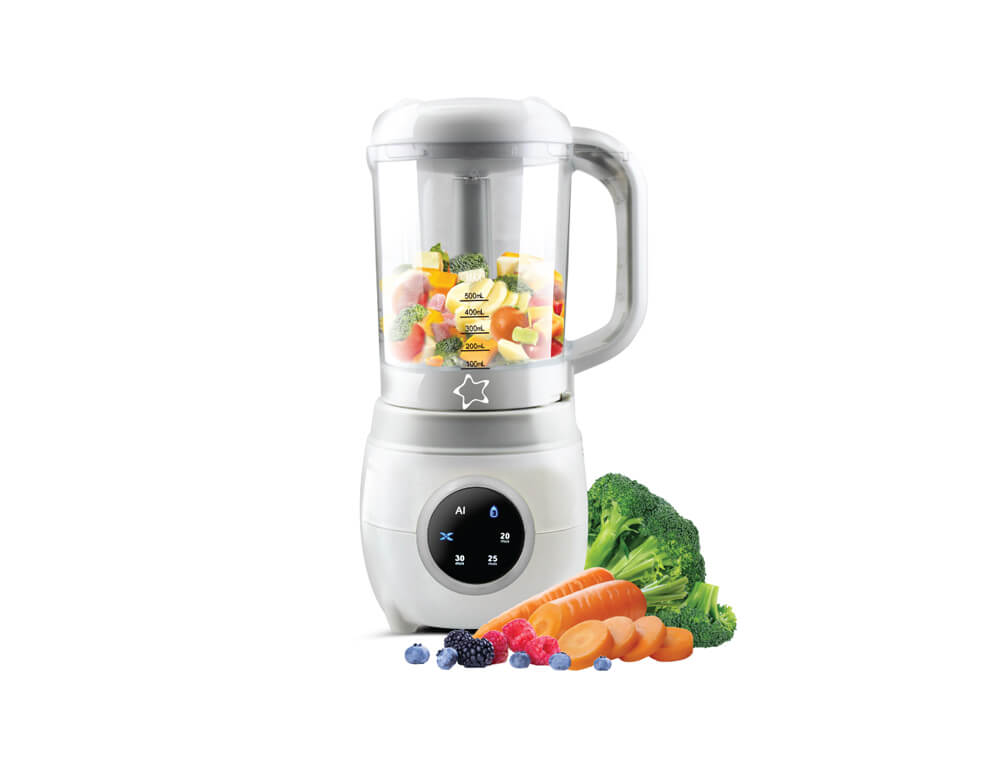
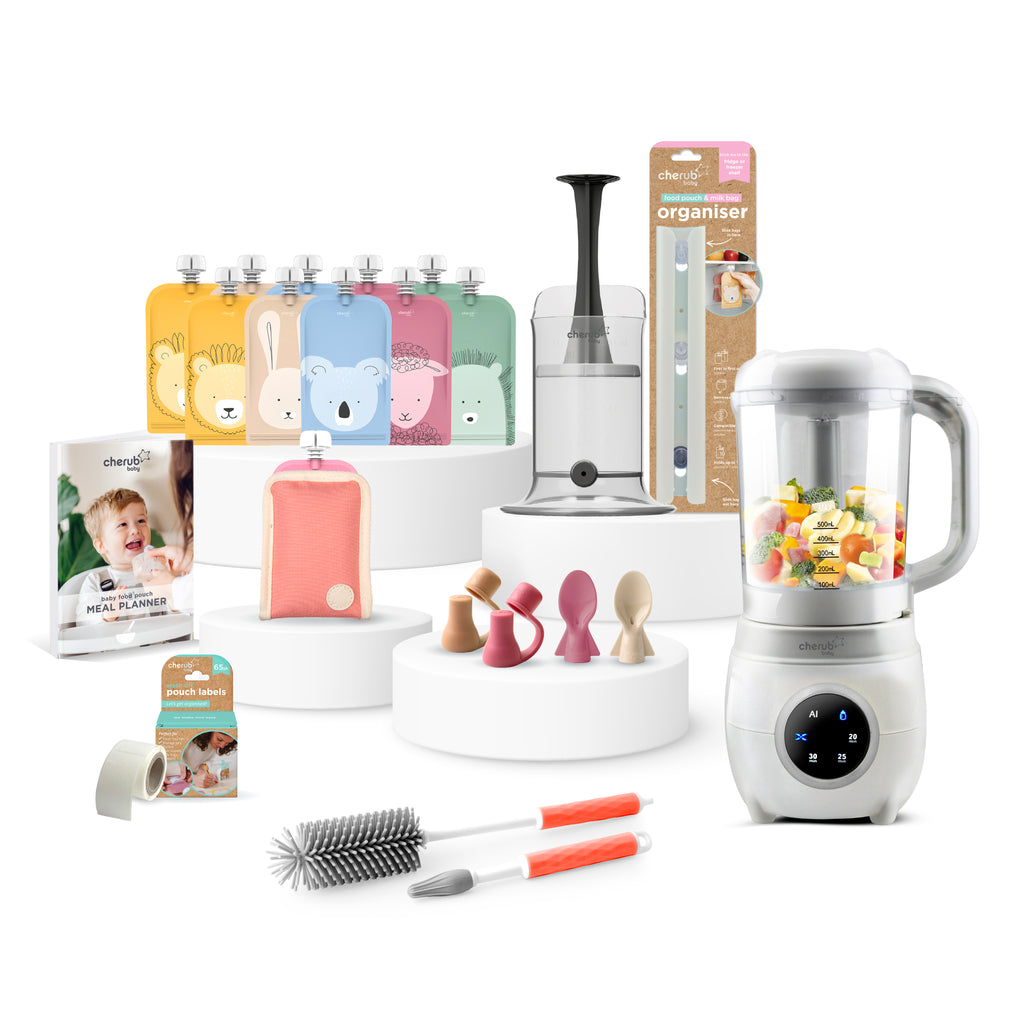
Traditional weaning involves introducing smooth purees via spoon, gradually increasing texture over time. A baby food maker and steamer makes batch purees fast and easy — then store in reusable food pouches for the week.
What Does the Research Say?
BLW benefits
- Better appetite regulation — BLW babies self-regulate intake, potentially reducing overfeeding
- Lower fussy eating risk — studies show wider food variety acceptance at 18–24 months
- Fine motor skill development — pincer grip and hand-eye coordination benefit from self-feeding
- More positive food relationship — participation in family mealtimes from the start
Traditional purees benefits
- Precise nutrition tracking — know exactly what and how much baby eats
- Easier iron delivery — iron-fortified cereals reliably boost iron from 6 months
- Practical for childcare — purees in pouches easy for childcare workers
Is BLW safe? What about choking?
The BLISS study — the largest BLW research project — found no increased choking risk with guided BLW when foods are prepared correctly. The key distinction is between gagging (normal, protective) and choking (genuine emergency). Complete an infant first aid course before starting solids regardless of approach.
The Combination Approach — What Most Families Do
Offering both purees and finger foods from the start is increasingly recommended by Australian paediatric dietitians:
- BLW motor and independence benefits alongside purees' nutritional precision
- Works well for childcare (pouches) alongside BLW at home
- Babies exposed to both textures early tend to be less texture-sensitive later
- No pressure to commit to one approach — follow your baby's lead each meal
Safety Non-Negotiables
- Always supervise mealtimes — never leave baby alone while eating
- Always sit upright in a highchair
- Know gagging vs choking — gagging is loud and normal; choking is silent and an emergency
- BLW food prep: Foods must squish easily between thumb and forefinger; cut in strips not rounds; grapes halved lengthways; no whole nuts

Which Method Is Right for You?
Consider BLW if you…
- Want to minimise fussy eating and maximise food variety
- Are comfortable with mess and gagging
- Have completed an infant first aid course
Consider purees if you…
- Want precise control over nutrition
- Have a premature baby or one with developmental delays
- Are managing known allergies carefully
Consider the combination if you…
- Want flexibility and the benefits of both
- Use childcare but want BLW benefits at home meals
- Aren't sure yet — start with both and see what works
If you're feeling anxious about gagging or choking as your baby begins solids, you may find it helpful to ease the transition from milk by introducing our Fresh Food Feeder, designed to let little ones safely explore new tastes and textures at their own pace.


Frequently Asked Questions
Is baby-led weaning safe?
Yes — research shows BLW is safe when foods are prepared correctly and parents know gagging vs choking. The BLISS study found no increased choking risk with guided BLW.
Can I do BLW and purees at the same time?
Absolutely — the combination approach is widely recommended by Australian paediatric dietitians, and is what most families naturally end up doing.
When should I start baby-led weaning?
Around 6 months, when your baby shows readiness signs: sitting upright with support, head control, loss of tongue-thrust reflex, and interest in food.
How do I know my baby is getting enough with BLW?
In the early months, milk remains the primary nutrition source — solids are exploratory. Monitor milk intake, nappy output, energy, and growth. Talk to your child health nurse if concerned.
What are the best first BLW finger foods?
Soft steamed sweet potato sticks, avocado wedges, banana, steamed broccoli florets, scrambled egg, and soft cooked pasta. All should squish easily between your fingers. See our full guide: Baby Finger Foods: 15 Best Ideas for 6 Months+
Always consult your maternal child health nurse or paediatric dietitian for personalised advice.
Related Reading
- Baby Finger Foods: 15 Best Ideas for 6 Months+ — safe first finger foods once your baby is ready to start solids
- When to Start Solids in Australia: The Complete Guide for Parents — Australian guidelines on timing, readiness signs and first foods
- Breast Milk Storage Guidelines Australia 2026 — how long breast milk lasts and safe storage tips
- Toddler Lunch Ideas for 12–18 Months — easy, nutritious lunch ideas for Australian toddlers from 12 months
- BLW Meal Ideas Week by Week — practical week-by-week baby-led weaning meal plan for Australian parents from 6 to 9 months


