

Iron-Rich First Foods for Babies: The Australian Parent's Complete Guide


When your baby reaches around six months, one of the most important things to get right with food is iron. Australian babies' iron stores — built up during pregnancy — start to run low at this age, and breast milk alone can no longer keep up. That's why the NHMRC recommends starting solids with iron-rich foods as a clear priority for your baby's health.
This guide breaks down exactly which iron-rich first foods to offer, how much your baby needs, how to prepare them safely at home, and how to make the whole process easier — whether you're doing purées, baby-led weaning, or a combination of both.
Before you get started, make sure you've read our complete guide to starting solids in Australia — it covers the readiness signs, timing, and first-food textures your maternal child health nurse will be looking for.
Why Is Iron So Important for Babies at 6 Months?
Iron is essential for brain development, immune function, and energy production. During the first six months of life, babies rely on the iron stores they built up in the womb. But those stores deplete rapidly around the six-month mark — which is precisely why solid foods need to fill the gap.
According to the National Health and Medical Research Council (NHMRC) Infant Feeding Guidelines, iron-rich foods should be among the very first foods offered when starting solids. This is especially important for breastfed babies, as breast milk is naturally low in iron (even though the iron it contains is highly absorbable).
Signs of Iron Deficiency in Babies
Iron deficiency is the most common nutritional deficiency in Australian infants. Signs to watch for include:
- Pale skin or pallor around the lips and gums
- Unusual tiredness or lethargy for their age
- Poor appetite or disinterest in food
- Slow weight gain
- Frequent infections or illness
If you're concerned about your baby's iron levels, speak with your GP or maternal child health nurse. A simple blood test can confirm iron status.
The Best Iron-Rich First Foods for Babies in Australia
Iron comes in two forms: haem iron (from animal sources — more easily absorbed) and non-haem iron (from plant sources — less easily absorbed, but still very important). Here's a breakdown of the best options for Australian babies.
Haem Iron Sources (Animal-Based)
- Pureed red meat (beef, lamb) — the best source of haem iron for babies. Even a small two-tablespoon serve makes a meaningful difference to daily iron intake.
- Minced chicken or turkey — easier to blend smoothly than red meat, and still a solid iron source.
- Fish (salmon, tuna, barramundi) — provides iron plus omega-3 fatty acids essential for brain development.
- Egg yolk — good source of iron, plus choline for cognitive development. Well-cooked scrambled egg is a perfect early finger food, too.
Non-Haem Iron Sources (Plant-Based)
- Iron-fortified infant cereals — a classic Australian first food, explicitly recommended by the NHMRC for good reason. Rice cereal or oat cereal mixed with breast milk or formula is a gentle, iron-rich first option.
- Lentils and legumes — red lentils in particular blend beautifully into smooth purées with vegetables.
- Tofu — soft, easy to blend, and an excellent protein and iron source for plant-based families.
- Dark leafy greens — spinach, silverbeet, and broccoli all contribute non-haem iron.
- Chickpeas — mash or blend with olive oil and a squeeze of lemon for a nutritious first food.
Boost Iron Absorption with Vitamin C
Non-haem iron is less easily absorbed than haem iron — but you can dramatically increase uptake by pairing plant-based iron foods with a vitamin C–rich food at the same meal. Great options include:
- Pureed red capsicum (exceptionally high in vitamin C)
- Mashed sweet potato
- A squeeze of orange juice stirred through lentil purée
- Pureed strawberries or kiwi as a dessert course
On the flip side, avoid offering tea or large amounts of cow's milk at mealtimes — both can significantly inhibit iron absorption. Water is the best drink alongside solids once your baby is over six months.

How to Prepare Iron-Rich Foods at Home
At six months, most babies are only ready for smooth purées or very soft mashes. Getting the texture right matters enormously at this stage — too thick and it can be overwhelming; too runny and it won't provide enough nutritional density.
Steaming and Blending: The Easiest Method
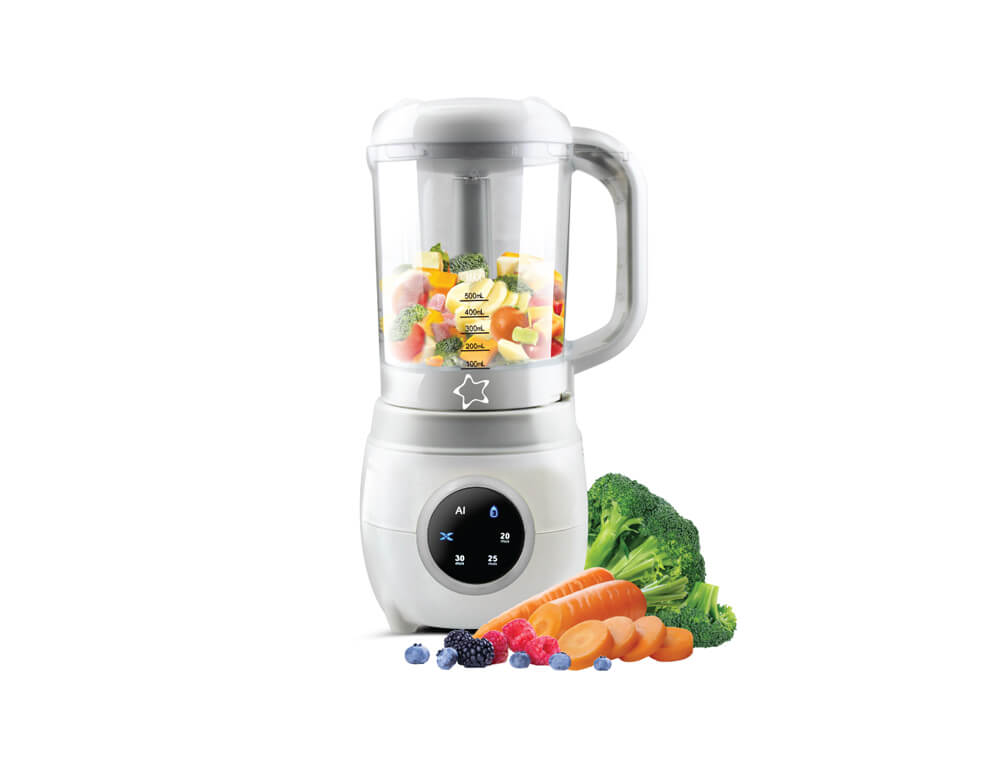
The easiest way to prepare iron-rich vegetable and meat purées at home is with an all-in-one baby food maker. You simply chop, steam, and blend — all in one device, with no nutritional loss from boiling water. Steaming preserves significantly more iron and vitamins than boiling.
💜 Cherub Baby Tip
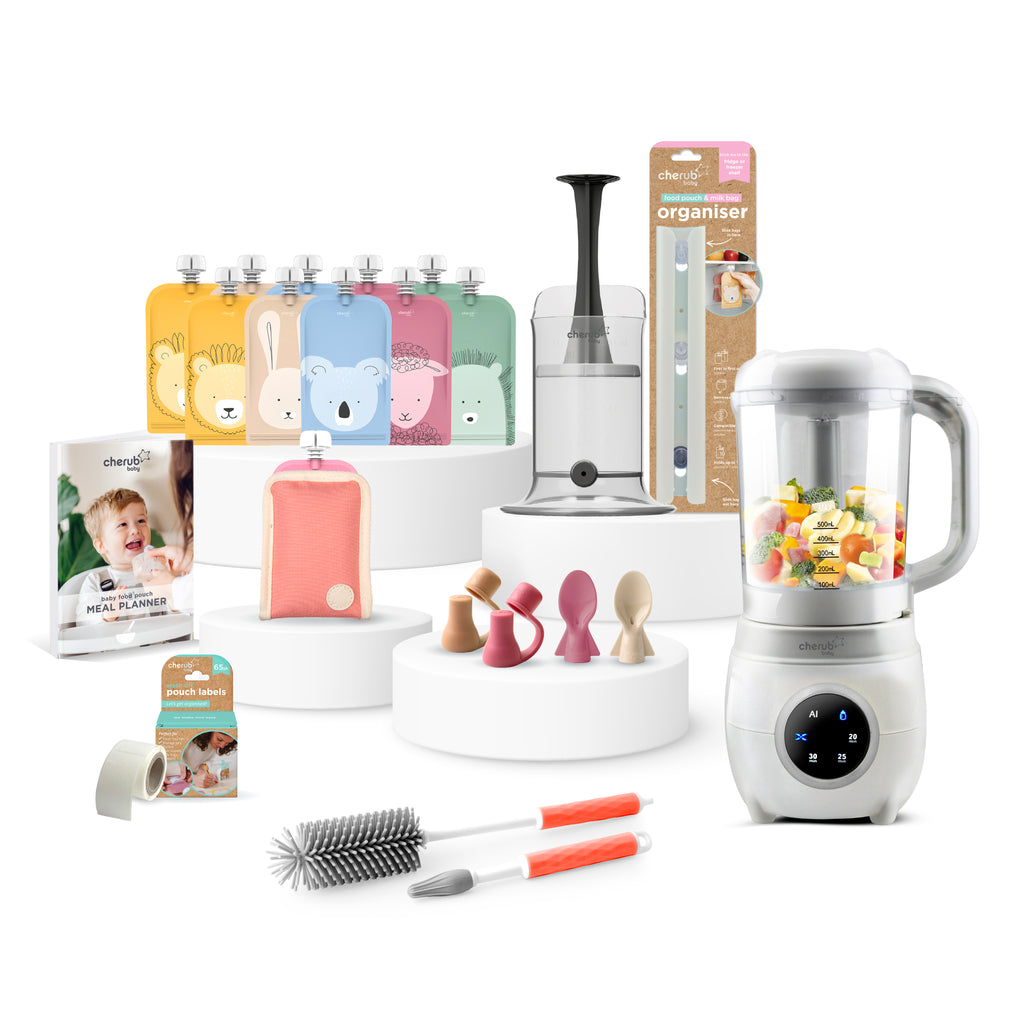
Our award-winning baby food maker steams and blends in one button press — perfect for iron-rich first purées like beef and sweet potato, or red lentil and carrot blend. BPA-free, dishwasher-safe, and designed to make homemade baby food genuinely easy for Australian mums.
Batch Cooking and Storing Iron-Rich Purées
Once you've nailed a purée your baby enjoys, make a large batch and freeze individual serves. Frozen purées keep for up to three months and make weeknight feeding far less stressful. Ice cube trays work well for tiny early serves; purpose-designed reusable food pouches are ideal for larger serves once your baby is eating more volume.
Our reusable food pouches are BPA-free and designed specifically for homemade baby food — fill them with your iron-rich purées, freeze them flat, and defrost as needed. A great way to reduce waste and save money compared to single-use pouches from the supermarket.


Sample Iron-Rich Meal Ideas by Age
6–7 Months: Smooth Purées
- Pureed beef with sweet potato and a little water or breast milk to smooth
- Red lentil and pumpkin purée with a drizzle of olive oil
- Chicken and carrot purée blended until very smooth
- Iron-fortified infant rice cereal mixed with breast milk or formula
- Silverbeet and potato purée with olive oil for added calories
8–9 Months: Soft Mashes and Lumpy Textures
- Minced beef with soft-cooked pasta and tomato sauce
- Scrambled egg with wilted spinach on toast fingers
- Mashed chickpeas with roasted red capsicum
- Flaked salmon with mashed potato and peas
10–12 Months: Iron-Rich Finger Foods
By 10 months, most babies are ready to explore iron-rich finger foods. Soft strips of slow-cooked lamb, cubes of well-cooked egg, or little balls of lentil and vegetable patty all work well. Check out our guide to 15 finger foods for babies with no teeth for age-appropriate ideas that minimise choking risk.
Our Fresh Food Feeder is also the perfect way to safely introduce iron-rich foods and encourage independent eating, designed to let little ones safely explore new tastes and textures at their own pace.


How Much Iron Does My Baby Actually Need?
The NHMRC recommends that babies aged 7–12 months get around 11mg of iron per day — a significant increase from the 0.2mg needed in the first six months (when iron stores from the womb cover their needs). This doesn't mean you need to obsessively measure every meal, but it does mean offering iron-rich foods two to three times daily.
A single 30g serve of red meat provides around 1–2mg of iron. Combined with iron-fortified cereal, legumes, eggs, and leafy greens across the day, most babies will meet their needs through a varied, well-planned diet.
Iron and BLW: Can You Do Both?
Absolutely. You can prioritise iron regardless of whether you choose baby-led weaning, purées, or a combination approach. Soft strips of slow-cooked meat, scrambled egg, and well-mashed lentils all work beautifully in a BLW framework. If you're weighing up your options, read our baby-led weaning vs purées guide for Australian parents — it breaks down the evidence for both approaches in a practical, non-judgemental way.

What About Introducing Allergens?
Once your baby is eating iron-rich foods comfortably, the next important step is introducing the nine common allergens — eggs, peanuts, dairy, tree nuts, wheat, soy, sesame, fish, and shellfish. Australian and international research now recommends early introduction as the best way to prevent food allergy. Read our 2026 guide to introducing allergens to your baby in Australia for a step-by-step approach backed by the latest ASCIA guidelines.
Frequently Asked Questions
When should I start giving my baby iron-rich foods?
From the very first day you introduce solids — usually around six months. The NHMRC recommends iron-rich foods at every meal from the start, as babies' stored iron begins to deplete around this age. Don't wait until your baby is "settled" into eating — offer iron from day one of starting solids.
Is red meat really the best iron source for babies?
Yes — haem iron from red meat (particularly beef and lamb) is the most bioavailable form, meaning the body absorbs it most efficiently. Even small amounts make a real difference to daily intake. If your family doesn't eat red meat, eggs, legumes, tofu, and iron-fortified cereals are all excellent plant-based alternatives that can meet your baby's needs.
My baby refuses to eat meat — what can I do?
Many babies initially reject meat textures. Try blending beef or chicken very finely and mixing it into a vegetable purée they already enjoy. Adding a small amount of butter or olive oil improves both texture and palatability. It can take 10–15 repeated exposures before a baby accepts a new food — so keep offering without pressure, and don't give up after the first refusal.
Is spinach a good iron source for babies?
Yes, with one caveat: spinach contains non-haem iron, which is less well absorbed than haem iron from meat. Always pair spinach with a vitamin C–rich food — blend it with sweet potato, or serve alongside a capsicum purée — to boost absorption. In age-appropriate serves, spinach is a safe and nutritious choice from six months.
Does iron-fortified infant cereal actually work?
Yes — iron-fortified infant cereals (like rice cereal or oat cereal) are specifically formulated to help meet Australian babies' iron needs, and they're explicitly recommended by the NHMRC. They're a convenient and effective option, particularly in the early weeks of starting solids when meat textures can be harder to prepare and accept.
What drinks should I avoid alongside iron-rich foods?
Avoid cow's milk as a main drink at mealtimes, as the calcium can interfere with iron absorption. Avoid tea completely for babies under 12 months — the tannins significantly reduce iron uptake. Plain water is the ideal drink to offer alongside solids from six months onwards.


