

How to Cut Food for Baby-Led Weaning: A Safety Guide for Australian Parents


If you've decided to try baby-led weaning, one question probably keeps you up at night: "Am I cutting this the right way so my baby doesn't choke?" It's the most common worry we hear from Australian parents — and it's a sign you're taking safety seriously. The reassuring news is that learning how to cut food for baby-led weaning is straightforward once you understand a few simple rules, and the right shapes actually make self-feeding much safer.
This guide walks you through exactly how to prepare and cut food for baby-led weaning by age, which shapes to avoid, and the quick safety checks that give you peace of mind at every meal. Everything here lines up with Australian guidance from the Raising Children Network and the NHMRC Infant Feeding Guidelines.
Why food size and shape matter so much
A baby's airway is roughly the width of a drinking straw — tiny. Small, firm, round pieces are the riskiest because they can slip back and lodge in that narrow space. The way you cut and prepare food has a bigger impact on safety than which food you choose. Get the shape right, and you dramatically lower the risk while still letting your baby explore real food with their hands.
If you're still weighing up your approach, our guide to baby-led weaning vs purées explains the differences so you can choose what feels right for your family.

The golden rule: bigger is safer at the start
It feels counterintuitive, but when your baby first begins, larger pieces are safer than small ones. A long strip of soft food — about the length of an adult finger — lets your baby hold it in their fist with a portion sticking out the top. They gnaw and suck on the protruding end, controlling exactly how much breaks off. Small, bite-sized pieces, on the other hand, can be stuffed straight into the mouth before your baby has the skills to manage them.
So at six months, think strips and sticks, not cubes and coins. As your baby's skills grow, the size of the pieces comes down to match.
How to cut food for baby-led weaning by age
Around 6 months — finger-length strips
At the start, your baby uses a whole-hand (palmar) grasp, so they can only hold food that's long enough to poke out of a closed fist. Cut soft foods into strips about 2 to 3 centimetres wide and the length of an adult finger. Good first options include steamed carrot, sweet potato or pumpkin batons, soft pear or banana strips (leave a little peel on for grip), avocado wedges rolled in baby cereal, and strips of well-toasted bread or soft omelette.
7 to 9 months — as the pincer grasp develops
As your baby starts to pick things up between thumb and forefinger, you can offer slightly smaller pieces alongside strips. Bite-sized soft pieces — around the size of your fingertip — work well now: soft-cooked pasta, small florets of well-steamed broccoli with a stalk to hold, flaked fish (carefully boned), or soft fruit pieces. Keep some larger strips on the plate too while the pincer grasp is still developing.
9 to 12 months — smaller, chickpea-sized pieces
With a confident pincer grasp, your baby can manage smaller pieces around the size of a chickpea. This is a great stage for soft diced vegetables, small soft meatballs, grated cheese and pieces of soft fruit. Continue to make sure everything passes the squish test below, and keep meals supervised and seated.

Foods that need extra care
Some everyday foods are higher risk because of their shape or firmness. You don't necessarily need to avoid them — you just need to modify them:
Round foods like grapes, cherry tomatoes, blueberries and olives should be quartered lengthways (never served whole or in coins). Slippery foods like banana, avocado and melon can be coated in a little iron-fortified baby cereal or rolled in ground oats to make them easier to hold and control. Hard foods such as raw apple and carrot should be steamed until soft, or grated, rather than served raw and firm. Sausages and hot dogs should be cut lengthways into strips, not into round coins. Always remove pips, stones, bones and tough skins.
Foods to avoid altogether for babies and young toddlers include whole nuts, popcorn, hard lollies, chunks of hard raw vegetable and anything small, hard and round. For more on this, our guide to baby finger foods for 6 months and up lists safe, no-teeth-needed options to start with.
The squish test and other quick safety checks
Before every meal, run a few simple checks. The squish test is the most important: you should be able to squash the piece of food easily between your thumb and forefinger, or against the roof of your mouth with your tongue. If it doesn't squish, it needs more cooking or a different preparation.
Beyond that: always seat your baby upright in a high chair, never let them eat while crawling, walking or in a car seat; stay within arm's reach and supervise every mouthful; never prop-feed or rush a meal; and avoid distractions like screens at the table. Calm, seated, supervised meals are the single biggest safety habit you can build.
Gagging versus choking — knowing the difference
Almost every baby gags as they learn to eat, and it can be frightening to watch. Gagging is a normal, protective reflex that pushes food forward and helps your baby learn to manage texture — they'll usually be noisy, may go red, and then sort it out themselves. Choking is silent or high-pitched, with little or no air movement, and needs immediate action. Because they look similar at first, many Australian parents choose to complete an infant first-aid course before starting solids. It's one of the best ways to feel confident at the table. For a closer look at telling the two apart, read our full guide on gagging vs choking during baby-led weaning. The Raising Children Network has clear guidance on choking first aid for babies.
Tools that make baby-led weaning prep easier
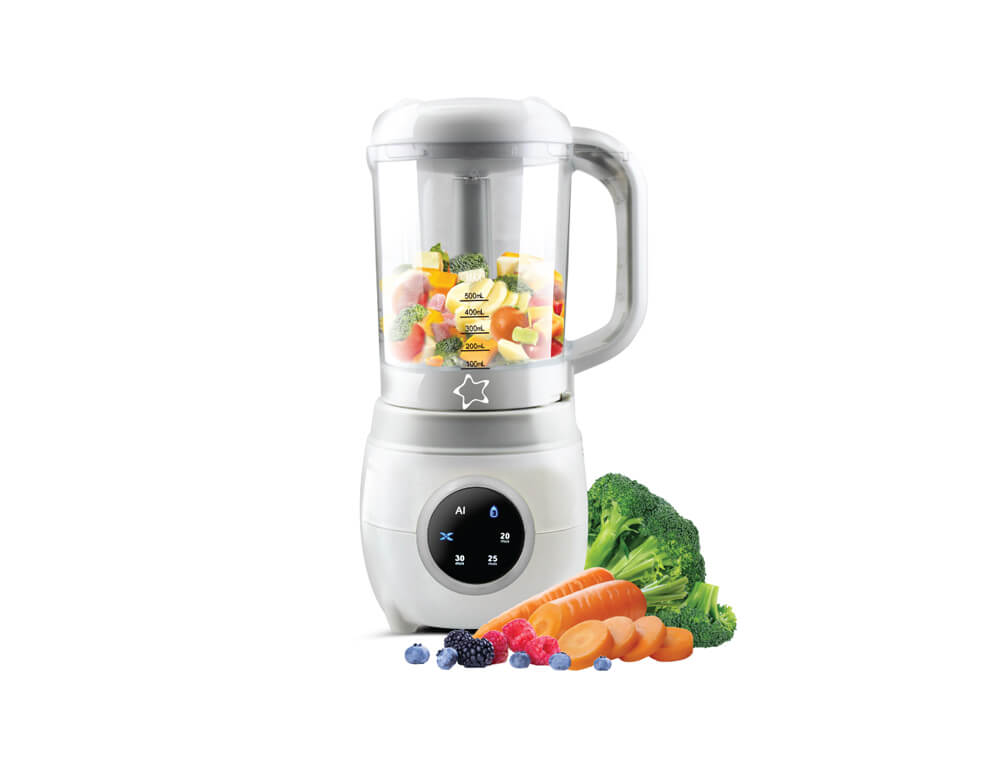
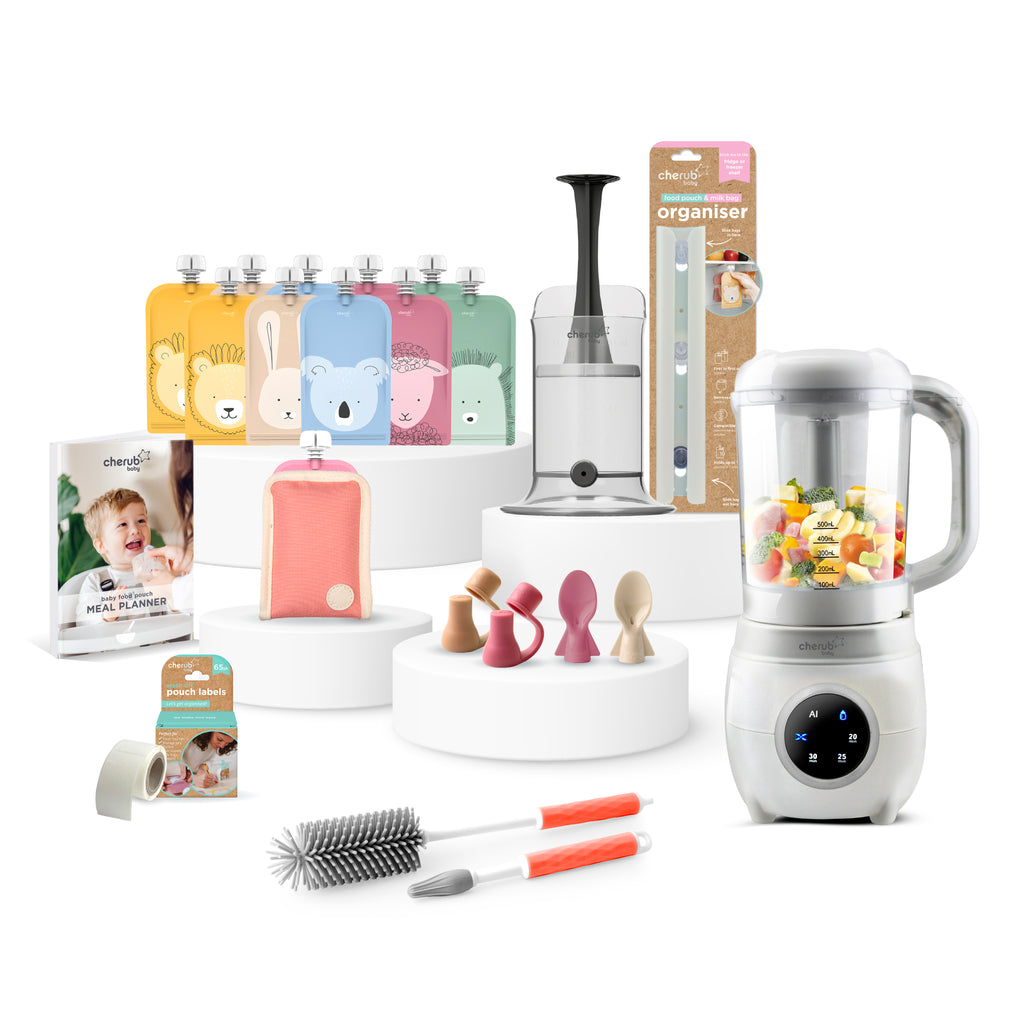
Safe BLW is much easier when food is cooked to the right softness. A baby food maker steams vegetables, fruit and meat until they're perfectly soft and squishable — ideal for cutting into safe strips and sticks. You can steam a big batch at once, then cut and serve throughout the week. Need ideas for what to actually serve each week? Our BLW meal ideas week by week guide maps it all out.
For leftovers and meals on the go, reusable food pouches are a handy way to store soft purees and mashes alongside finger foods, so your baby always has a safe, familiar option. Shop our baby food makers →
Frequently asked questions
How big should baby-led weaning pieces be at 6 months?
At six months, cut soft foods into finger-length strips about 2 to 3 centimetres wide — long enough for your baby to hold in their fist with some sticking out the top. Larger strips are safer than small pieces at this stage because your baby controls how much they bite off.
How do I cut grapes and cherry tomatoes for baby-led weaning?
Always quarter grapes, cherry tomatoes, blueberries and similar round foods lengthways before serving. Never offer them whole or sliced into round coins, as their size and shape make them a high choking risk for babies and young toddlers.
Is baby-led weaning more likely to cause choking?
Research has found that baby-led weaning does not increase choking risk when foods are prepared in safe shapes and sizes and meals are supervised. Cutting food correctly, applying the squish test and seating your baby upright are the keys to keeping it safe.
What's the squish test?
The squish test means you should be able to easily squash a piece of food between your thumb and forefinger. If it squishes easily, it's soft enough for your baby; if it doesn't, it needs more cooking or a different preparation before serving.
When can my baby eat smaller, bite-sized pieces?
As your baby develops a pincer grasp — usually around 9 months — you can offer smaller, chickpea-sized pieces alongside strips. Keep offering a mix while their skills develop, and continue applying the squish test to everything.
Should I learn infant first aid before starting BLW?
It's a great idea. Knowing how to tell gagging from choking and how to respond to a choking baby will help you feel far more confident at mealtimes. Many Australian parents complete an infant first-aid course before introducing solids.
This article offers general information for Australian parents and isn't a substitute for personal medical or first-aid advice. Always supervise your baby while eating, and speak with your GP or child health nurse if you have concerns.


