

BLW Meal Ideas Week by Week: A Baby-Led Weaning Guide for Australian Parents


Baby-led weaning (BLW) is one of the most exciting — and, let's be honest, messiest — adventures you'll take with your little one. The idea is beautifully simple: instead of spoon-feeding purees, you offer soft finger foods from the start and let your baby explore flavours and textures at their own pace.
But knowing what to offer and when can feel overwhelming, especially in those first few weeks. This guide gives you practical BLW meal ideas week by week, from the very first tastes at 6 months through to the confident self-feeders at 9 months. Not sure whether BLW or purees is right for your family? Read our comparison: baby-led weaning vs purees — which is right for your baby?
Is Your Baby Ready for BLW? Signs to Look For
Before diving into meal ideas, it's worth checking your baby is developmentally ready. Australian guidelines, including those from the Raising Children Network, recommend starting solids around 6 months — not before 4 months and ideally not after 7 months.
Signs of readiness include:
- Sitting up with minimal support and holding their head steady
- Showing interest in food — watching you eat, reaching towards your plate
- No longer pushing food out with their tongue automatically (the tongue-thrust reflex fading)
- Able to pick up objects and bring them to their mouth
For a deeper overview of the starting solids timeline, see our complete guide to starting solids in Australia.
BLW Safety First: How to Prepare Foods
Before we get to the meal ideas, a quick note on food preparation — because safety is everything with BLW:
- Size and shape: Cut foods into strips or sticks roughly the length and width of your index finger. This makes them easy for babies to grasp with a palmar grip (their fist). Avoid small round pieces that are choking hazards.
- Texture: Food should be soft enough to squish easily between your thumb and finger. If you can't squish it, your baby can't gum it safely.
- Temperature: Always let cooked foods cool before offering them.
- Supervision: Never leave your baby alone during a meal. Gagging is normal and different from choking — it's your baby's protective reflex doing its job.
- Avoid: Honey (under 12 months), whole nuts, raw apple and carrot (hard pieces), whole grapes, and high-salt foods.
For a complete breakdown of safe sizes and shapes at each age, see our guide on how to cut food for baby-led weaning safely.
Week 1 BLW Meal Ideas (Around 6 Months)
The first week is about exploration, not nutrition — your baby is still getting most of what they need from breast milk or formula. Keep it simple. Aim for one or two foods at a time, once a day, and expect most of it to end up on the floor (or your baby's face).
Day 1–2: Steamed broccoli florets (large enough to hold, soft enough to squish). Broccoli is easy to grip and packed with iron and vitamin C.
Day 3–4: Ripe avocado spears (quarter the avocado lengthwise). Avocado is creamy, nutritious, and surprisingly easy for a 6-month-old to manage.
Day 5–6: Steamed sweet potato sticks. Cook until very soft. A great source of beta-carotene and natural sweetness babies love.
Day 7: Scrambled egg strips. Eggs are a brilliant iron-rich first food. Cook soft and slice into strips. Also an early allergen introduction — important for Australian babies following ASCIA guidelines.

Weeks 2–3 BLW Meal Ideas (6–7 Months)
By now your baby is getting the hang of picking up food and bringing it to their mouth. Start offering two or three foods at each sitting and introduce new foods every few days.
Breakfast ideas:
- Oat porridge served on a preloaded spoon, or thickened and offered as a strip on a spoon
- Toast fingers spread with mashed avocado or nut butter (thinly spread, not a thick blob)
- Soft ripe banana broken into chunks
Lunch/dinner ideas:
- Steamed carrot sticks (cooked until very soft — raw carrot is a choking hazard)
- Soft-cooked pumpkin wedges
- Slow-cooked chicken strips (leg meat, which stays more tender than breast)
- Flaked salmon with skin removed
- Lentil patties (mashed and shaped into soft fingers)
Keep offering breast milk or formula before each solid meal at this stage — milk is still the primary nutrition source until around 12 months.

Weeks 4–6 BLW Meal Ideas (Around 7 Months)
Your baby is likely getting more coordinated and starting to develop a pincer grip (using their thumb and forefinger). You can start introducing slightly smaller pieces alongside the larger finger-food strips.
Breakfast:
- Soft French toast fingers (egg-dipped bread, lightly cooked)
- Ripe mango strips
- Ricotta on toast fingers
Lunch:
- Mini frittata fingers with vegetables (great batch cook for the week)
- Cucumber spears (not yet soft, but manageable for a 7-month-old to suck on)
- Soft-cooked pasta spirals (no sauce, or light tomato sauce)
Dinner:
- Mashed potato scooped onto a preloaded spoon
- Slow-cooked beef strips
- Steamed peas (slightly squished so they're not whole round pieces)
Reusable food pouches are brilliant for purees and soft foods when you're out and about, and work perfectly alongside a BLW approach. Your baby can squeeze the pouch themselves, building independence and self-feeding skills from the start.
Shop Reusable Food Pouches →


Weeks 7–8 BLW Meal Ideas (7–8 Months)
By now your baby has likely tried a good range of single foods. This is a great time to start combining flavours and introducing family foods prepared safely.
Ideas to try:
- Soft vegetable fritters (zucchini and corn, for example) shaped into strips
- Yoghurt served with a preloaded spoon — plain full-fat Greek yoghurt is perfect
- Soft-cooked asparagus spears
- Warm quinoa patties with hidden veg
- Ripe rockmelon strips
- Mini meatballs (soft-cooked, sized so they can't be swallowed whole)
- Sliced soft kiwifruit
At this stage, offer three small meals a day alongside breast milk or formula. Don't stress if some days your baby eats enthusiastically and other days barely touches anything — this is completely normal.

Weeks 9–12 BLW Meal Ideas (8–9 Months)
Your 8–9 month old is becoming a proper little foodie. They're likely more interested in feeding themselves, their pincer grip is improving, and they may start showing preferences.
Breakfast:
- Weetbix softened with milk, served on a spoon for self-feeding
- Pancakes (small, soft) with mashed banana
- Soft scrambled eggs with vegemite toast fingers (low-salt vegemite spread thinly)
Lunch:
- Avocado and cheese on crackers (soft crackers)
- Soft pasta with mild tomato and vegetable sauce
- Mini rice cakes with smooth nut butter
Dinner:
- Slow-cooked family casserole (pull-apart tender meat and soft vegetables)
- Fish cakes (soft-baked, no bones)
- Soft dahl with rice
By 9 months, you'll likely find your baby eating a reasonable amount at most meals and showing real enjoyment of food. This is also a great time to introduce more finger foods for babies without teeth — babies can gum remarkably well!
Combining BLW With Purees: Is It Okay?
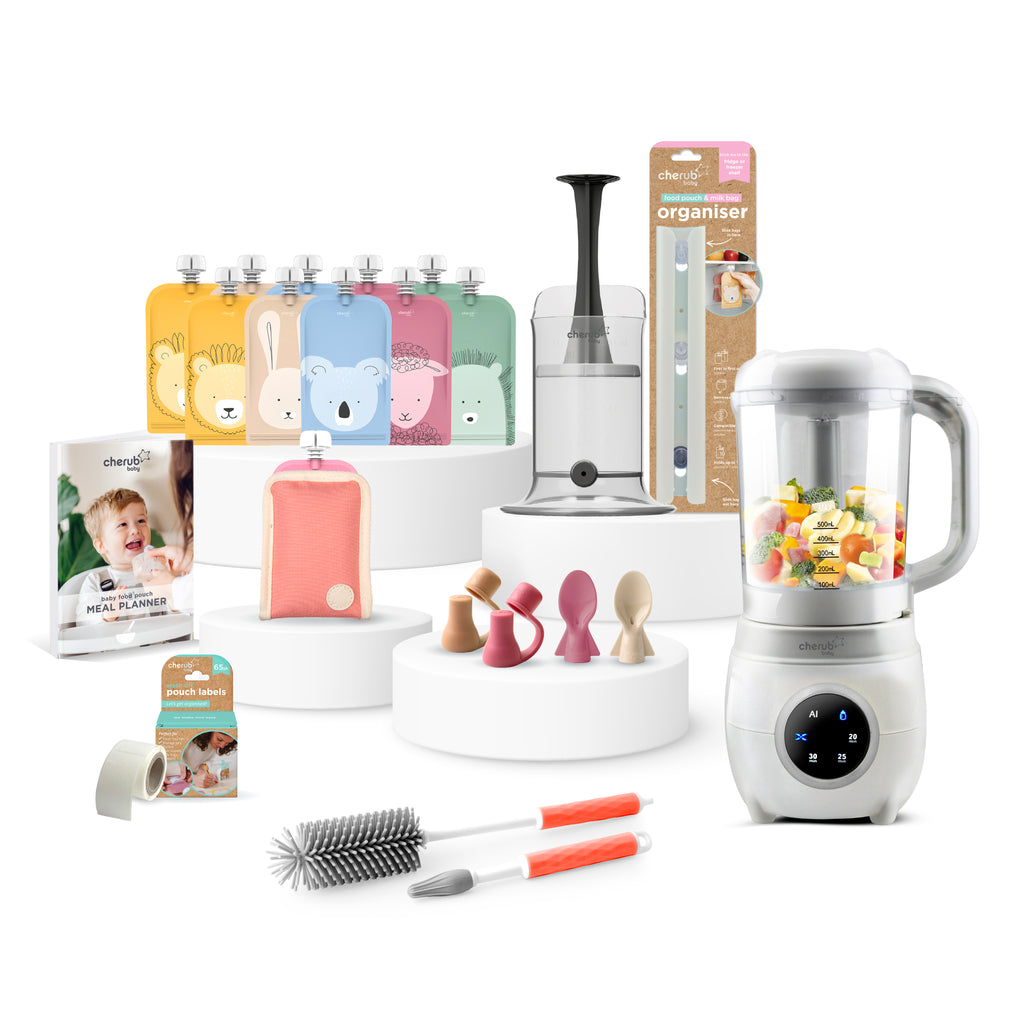
Absolutely. Many Australian families use a combination approach — offering finger foods at mealtimes while also using purees or soft mashes for more nutritious or tricky-to-finger-food ingredients. Reusable pouches are a fantastic tool here: fill them with smooth vegetable or fruit purees, and your baby feeds themselves by squeezing. No contradiction with the BLW philosophy at all.
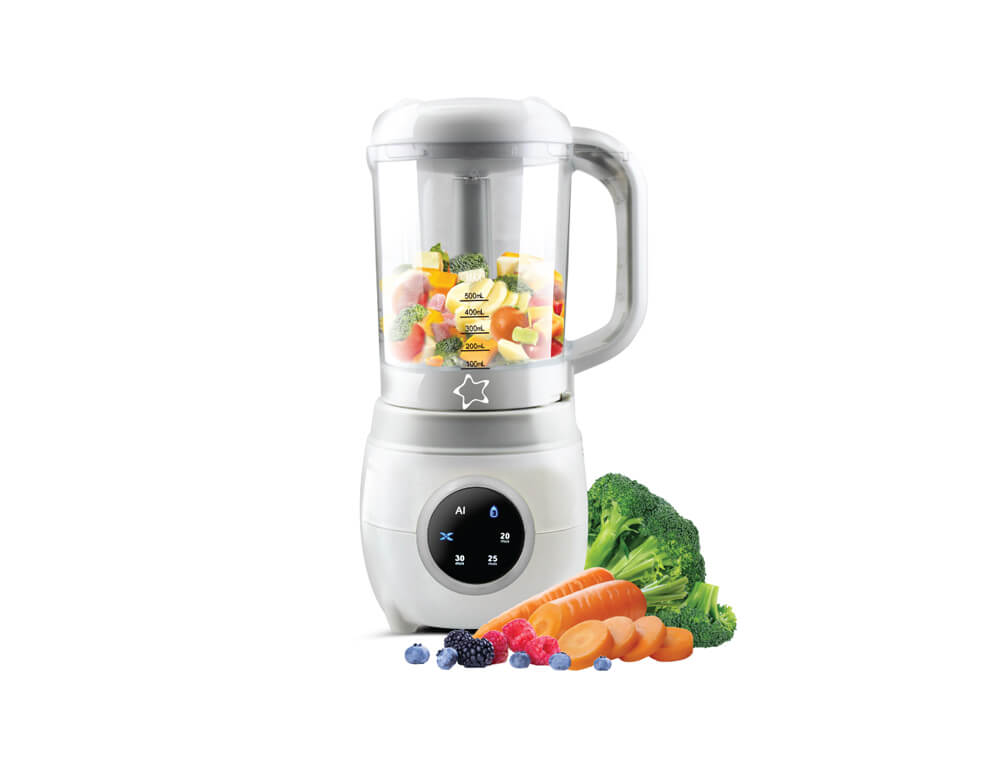
Batch cooking soft purees and steamed vegetables for BLW is so much easier with a dedicated baby food maker. Steam, blend and store in one machine — saving you time every week.
Shop Baby Food Makers →
Frequently Asked Questions
How many times a day should I offer food during BLW?
At 6 months, once a day is perfectly fine — BLW at this stage is primarily about exploring food, not meeting nutritional needs. By 7–8 months, aim for two to three small meals a day. Continue offering breast milk or formula before meals as the main source of nutrition until around 12 months.
My baby gags a lot during BLW — should I be worried?
Gagging is a normal and important part of BLW. It's your baby's protective reflex pushing food forward in their mouth to prevent choking. It can look alarming, but it's different from choking: a gagging baby is noisy and their colour stays normal. A choking baby is silent and may go pale or blue. If you're unsure, take an infant first aid course — the Australian Red Cross offers these nationally.
What are the best first BLW foods for Australian babies?
Great starting foods include steamed broccoli florets, avocado spears, ripe banana, sweet potato sticks, and soft scrambled egg strips. Prioritise iron-rich foods — such as meat, eggs, and lentils — at every meal from the start, as babies' iron stores deplete around 6 months. Check our complete guide to starting solids in Australia for more detail.
Do I still need to introduce allergens with BLW?
Yes — allergen introduction is just as important with BLW. Australian ASCIA guidelines recommend introducing the eight common allergens (eggs, peanuts, tree nuts, milk, wheat, soy, sesame, and fish) early and regularly. Eggs and smooth nut butters are easy to include as BLW-friendly finger foods from around 6 months.
Is BLW safe if my baby has no teeth?
Yes. Babies have surprisingly strong gums and can gum soft foods effectively from 6 months. The key is ensuring all foods are soft enough to be squished between your thumb and forefinger. Most babies manage a wide range of foods long before their first teeth appear.
Can I do BLW if I'm also giving purees?
Absolutely. A combined approach is common and completely safe. You can offer finger foods at some meals and smooth purees (via spoon or pouch) at others — or even at the same meal. The most important thing is that your baby is exploring a variety of flavours and textures at their own pace.
Related Reading
- How to Cut Food for Baby-Led Weaning: A Safety Guide for Australian Parents — safe food sizes and shapes by age to reduce choking risk as you work through these weekly meals


