

Baby Meal Plan for 6 Months: A Week-by-Week Feeding Guide for Australian Parents


Starting solids is one of the most exciting — and sometimes overwhelming — milestones of the first year. A simple, practical baby meal plan takes the guesswork out of what to feed your 6-month-old and gives you the confidence to introduce new foods one step at a time.
This week-by-week guide follows current Australian guidelines and NHMRC recommendations. It's designed for real mums with real schedules — no complicated recipes, no stress, just nourishing food your baby will love.
Before diving into the meal plan, make sure you've read our complete guide to starting solids in Australia so you know your baby is showing the right developmental signs.
How to Use This Baby Meal Plan
At 6 months, the goal is not to replace milk feeds — it's to introduce your baby to new tastes, textures and the experience of eating. Breast milk or formula remains your baby's primary nutrition source until 12 months.
- Offer solids after a milk feed, not before, so your baby isn't too hungry or too full
- Start with 1 to 2 teaspoons and gradually increase over the weeks — see our guide on how much solid food a 6-month-old should eat
- Introduce one new food at a time, then wait 2 to 3 days before introducing another
- Never force food — follow your baby's cues and stop when they turn away
- Iron-rich foods should be offered at least once a day from the start
Week 1: The First Tastes (Day 1 to 7)
Week 1 is all about curiosity. Your baby is learning to move food from the front to the back of their mouth and swallow — a brand new skill. Don't expect much to actually go in at this stage.
Sample Week 1 Schedule
- Breakfast: 1 to 2 teaspoons iron-fortified baby cereal mixed with breast milk or formula
- Lunch: 1 to 2 teaspoons smooth vegetable puree (sweet potato or pumpkin)
- Dinner: Skip solids in week 1 — one to two offerings per day is plenty
Stick to single-ingredient purees this week. Sweet potato, pumpkin and carrot are gentle, easy to digest and usually well-accepted. For easy step-by-step puree instructions, see our baby food puree recipes guide.
Iron in Week 1
Include a small serve of iron-fortified baby cereal or pureed meat at least once a day from the very beginning. Iron stores from birth begin to deplete around 6 months, making iron the most important nutrient to introduce early. See our iron-rich first foods guide for the best iron-rich options for Australian babies.
Make Purees Effortlessly
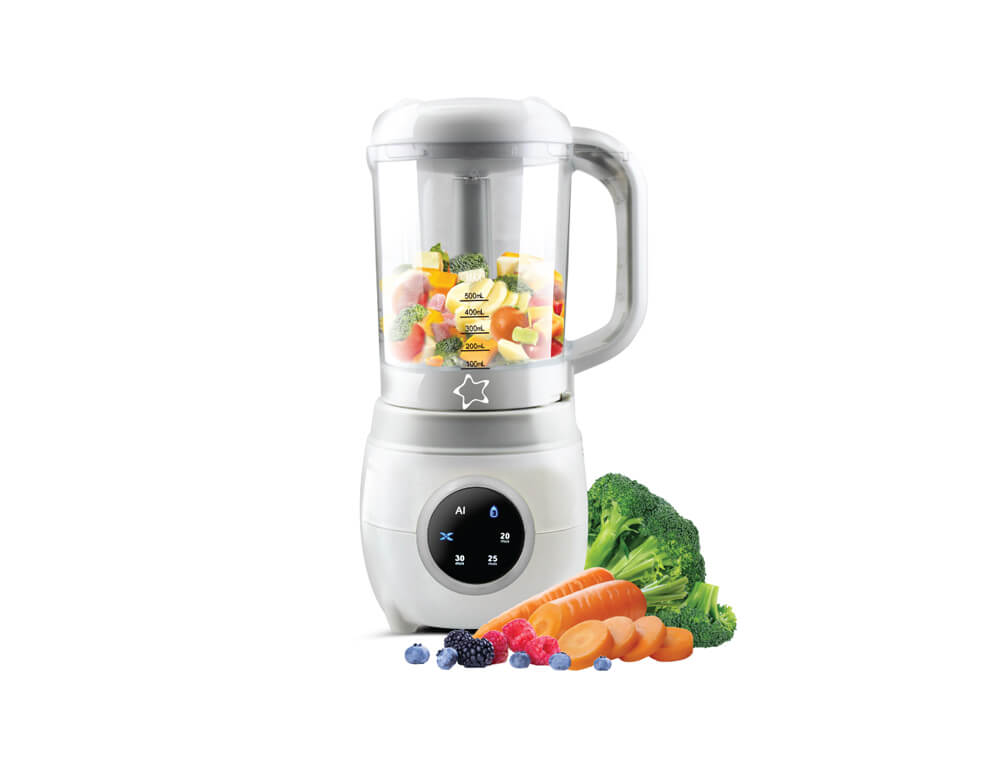
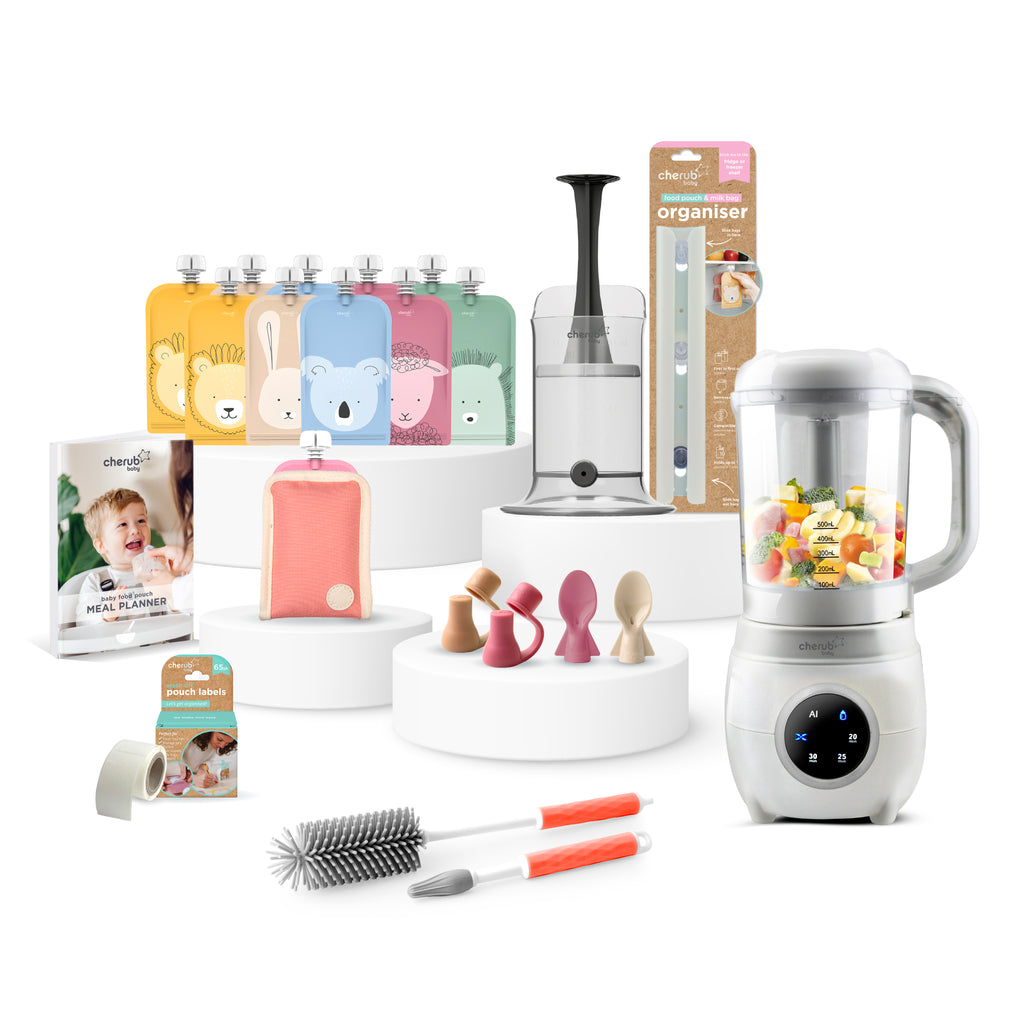
Our award-winning Baby Food Maker steams and blends in one bowl in minutes. Perfect for batch-cooking a week's worth of purees on a Sunday afternoon so you're always prepared for the week ahead.
Week 2: Adding More Foods (Day 8 to 14)
By week 2, your baby is getting the hang of swallowing and you can start introducing more variety. Continue to offer iron-rich foods daily and begin introducing a wider range of vegetables and some fruit.
Sample Week 2 Schedule
- Breakfast: Iron-fortified baby cereal with breast milk, or pureed chicken with sweet potato
- Lunch: Vegetable puree — try broccoli, carrot or zucchini this week
- Dinner: Introduce a small serve of fruit puree — pear or apple work beautifully
Aim for 2 to 3 small meals per day by the end of week 2. Keep portions small — a tablespoon or two at each meal is completely normal.
New Foods to Try in Week 2
- Broccoli puree
- Zucchini puree
- Pear puree
- Apple puree
- Pureed chicken
- Mashed avocado

Week 3: Introducing Combination Purees (Day 15 to 21)
Week 3 is exciting — time to start combining flavours. Once your baby has tolerated each food individually, you can mix them together to create more interesting and nutritious meals.
Sample Week 3 Schedule
- Breakfast: Iron-fortified cereal or pureed meat with vegetable
- Lunch: Combination vegetable puree (e.g. pumpkin and carrot, or sweet potato and pea)
- Dinner: Fruit combination (e.g. apple and pear, or banana with a little full-fat yoghurt)
Week 3 Combination Ideas
- Pumpkin and carrot
- Sweet potato and pea
- Apple and pear
- Chicken and sweet potato
- Broccoli and potato
- Lentil and vegetable
Starting Allergen Introduction
Australian guidelines recommend introducing common food allergens — egg, peanut, tree nuts, fish, wheat, dairy and soy — from around 6 months. Introduce one at a time and wait 2 to 3 days before trying another. Early and regular introduction reduces the risk of allergy development.
Week 4: Building a Routine (Day 22 to 28)
By week 4, most babies have a developing routine around solid meals. Aim for 3 small meals per day, with iron-rich foods appearing at least once — ideally twice — each day.
Sample Week 4 Schedule
- Breakfast (after morning milk feed): Pureed meat or iron-fortified cereal, followed by a fruit puree
- Lunch (after midday milk feed): Combination vegetable puree with protein
- Dinner (after afternoon milk feed): Vegetable mash or combination puree
7 to 9 Months: Thickening Up the Texture
From around 7 months, you can begin thickening purees and leaving more texture. Mashed rather than blended, with soft lumps your baby can work with. This progression is important — Australian feeding guidelines note that prolonged use of smooth purees beyond 9 months is associated with feeding difficulties later on.
Sample Daily Meal Plan at 7 to 9 Months
- Breakfast: Weetbix or porridge with mashed banana, or scrambled egg with toast fingers
- Morning snack: A few teaspoons of mashed fruit, or a small piece of soft fruit
- Lunch: Mashed chicken and vegetable, or lentil dhal with mashed potato
- Afternoon snack: Full-fat yoghurt, or soft cooked vegetable pieces
- Dinner: Family food mashed to an appropriate texture — e.g. mashed fish pie, shepherd's pie, or lentil soup
Batch Cooking and Storing Your Baby's Meals
Batch cooking is one of the most practical things you can do as a new mum starting solids. Spend an hour on a Sunday preparing a week's worth of purees, portion into individual serves, and freeze. Having meals ready in the freezer takes so much pressure off weekday mealtimes.
Our reusable food pouches are ideal for storing and serving batch-cooked purees. Fill them at home, freeze flat, then defrost overnight in the fridge. They're perfect for daycare, day trips and feeding on the go — no mess, no fuss, and they're BPA-free.
The Easiest Way to Feed on the Go
Our Reusable Food Pouches are designed to fill from the bottom, making them easy to pack with your homemade purees. Dishwasher safe, BPA-free, and the favourite travel feeding solution for thousands of Australian families.


What to Do When Your Baby Refuses Food
Food refusal at 6 months is completely normal. Your baby may take weeks to accept some foods, and that's fine. A few things to remember:
- It can take 10 to 15 exposures to a new food before a baby accepts it — keep offering without pressure
- Never force food or use distractions (screens, toys) to get more food in
- If your baby is frequently unsettled after meals, read our guide on why babies are unsettled at night since starting solids
- Serve foods with familiar flavours alongside new ones to build acceptance

Frequently Asked Questions About Baby Meal Plans
How many meals a day should a 6-month-old have?
At 6 months, start with just one meal a day and gradually build to two by the end of the first month of solids. By 7 to 8 months, most babies manage 3 small meals per day. Remember that milk feeds remain the primary nutrition source throughout the first year, so there's no rush to increase food volume quickly.
What should a 6-month-old eat in a day?
A typical day at 6 months might include 1 to 2 small meals of smooth puree, each about 1 to 4 tablespoons, alongside their regular milk feeds. Priority foods are iron-rich options (pureed meat, legumes, iron-fortified cereal) paired with vitamin C-rich vegetables or fruit to boost iron absorption.
Can I follow a baby meal plan if I'm breastfeeding?
Absolutely. This meal plan is designed to complement breastfeeding — not replace it. Offer solids after a milk feed so your baby is content but not overly full. Australian guidelines support continued breastfeeding alongside solids well beyond 12 months if you and your baby choose to.
When should I introduce a 3-meal-a-day schedule?
Most babies are ready for 3 small meals a day by around 7 to 8 months. Watch for cues — if your baby is consistently finishing meals and looking for more, it's a good sign they're ready to add another meal. Don't rush this; let your baby's appetite lead the way.
Should I follow a strict timetable for solids?
A loose structure is helpful, but strict timetables are not necessary at 6 months. Offer solids at roughly the same times each day to build a routine, but be responsive to your baby's hunger and fullness cues. Flexibility is important, especially in the early weeks when sleep schedules are still variable.
What iron-rich foods should I include every day?
Australian NHMRC guidelines recommend offering iron-rich foods at least once a day from the start of solids. Good options include pureed red meat (beef, lamb), pureed chicken, pureed lentils or chickpeas, iron-fortified baby cereal, and eggs. Pair these with vitamin C-rich foods (pumpkin, sweet potato, broccoli, pear) to enhance iron absorption.


