

How to Introduce Allergens to Your Baby in Australia: The 2026 ASCIA Guide


Introducing allergens to your baby is one of those milestones that can feel genuinely nerve-wracking — especially for first-time mums. The good news? Australian guidance is clear, the science is reassuring, and with the right approach, allergen introduction is safer and simpler than many parents expect.
This guide reflects the updated 2026 ASCIA (Australasian Society of Clinical Immunology and Allergy) guidelines — which have made important changes to recommendations, particularly around peanut and egg introduction.
If you haven't already read our complete guide to starting solids in Australia, that's the best place to begin — it covers timing, readiness signs, and first textures. Then come back here for the allergen-specific detail.
Why Early Allergen Introduction Matters?
It might seem counterintuitive, but research has consistently shown that delaying the introduction of common allergens actually increases the risk of your baby developing a food allergy. This is the basis for the shift in guidance over the past decade, and the 2026 ASCIA update reinforces it further.
The landmark LEAP (Learning Early About Peanut Allergy) study, followed by a series of Australian and international trials, found that babies who were introduced to allergenic foods early — and offered them regularly — had significantly lower rates of food allergy than those whose parents avoided these foods in the first year.
The 9 Common Food Allergens in Australia
In Australia and New Zealand, the nine most common food allergens are:
- Cow's milk (dairy)
- Egg
- Peanut
- Tree nuts (cashews, almonds, walnuts, etc.)
- Wheat
- Soy
- Sesame
- Fish
- Shellfish (prawns, crab, lobster)
These foods account for the vast majority of food allergic reactions in Australian children. Introducing each one intentionally and in an age-appropriate form is key.

When to Start Introducing Allergens?
The 2026 ASCIA guideline recommends introducing common allergen foods from around six months of age — at the same time you're introducing other solid foods — and not before four months. There is no longer a recommended "delay" window for most allergens.
Critically, the updated 2026 guideline places greater emphasis on introducing peanut and well-cooked egg soon after babies start eating solid foods — rather than waiting until 12 months, as some older advice suggested. Introduce these early in your solids journey, not at the end of it.
Does My Baby's Family History Change the Advice?
If your baby has a sibling or parent with a known food allergy, speak with your GP or paediatrician before introducing that specific allergen. However, for most babies — even those with a family history of allergy — early introduction is still recommended. Your doctor can arrange allergy testing or a supervised introduction in a clinic if needed.
How to Introduce Allergens Safely: Step by Step
Step 1: Start with One New Allergen at a Time
Introduce one new allergen at a time, so that if a reaction occurs, you know exactly which food caused it. Wait two to three days between introducing each new allergenic food — though it doesn't need to be longer than that unless your baby shows a reaction.
Step 2: Offer a Small Amount First
Start with a tiny amount of the allergen — about a quarter of a teaspoon — and observe your baby for 15–20 minutes. If there's no reaction, you can offer more at the same sitting. Some families introduce new allergens at their baby's first meal of the day, so they can monitor for reactions during waking hours.
Step 3: Offer It in an Age-Appropriate Form
Not all allergen foods are naturally suitable for a six-month-old in their whole form. Here are age-appropriate ways to introduce each:
- Egg: Well-cooked scrambled egg or egg mixed into a vegetable purée. Never raw or runny for babies.
- Peanut: Smooth peanut butter thinned to a purée consistency with breast milk, formula, or water. Never whole peanuts (choking hazard).
- Cow's milk (dairy): Plain full-fat yoghurt, grated cheese, or small amounts of milk in cooking. Avoid cow's milk as a main drink under 12 months.
- Tree nuts: Finely ground almond or cashew meal stirred into yoghurt or purée. Never whole or large pieces.
- Wheat: Bread fingers, soft wholegrain crackers, or wheat-based pasta cooked until very soft.
- Soy: Plain tofu blended into purée, or soy-based infant formula as directed by your doctor.
- Sesame: A very small amount of tahini (sesame paste) stirred into vegetable purée.
- Fish: Well-cooked, flaked, boneless fish like salmon or barramundi, mashed or blended smoothly.
- Shellfish: Finely mashed prawn meat or crab mixed into purée. Ensure it is always very well cooked.
💜 Cherub Baby Tip
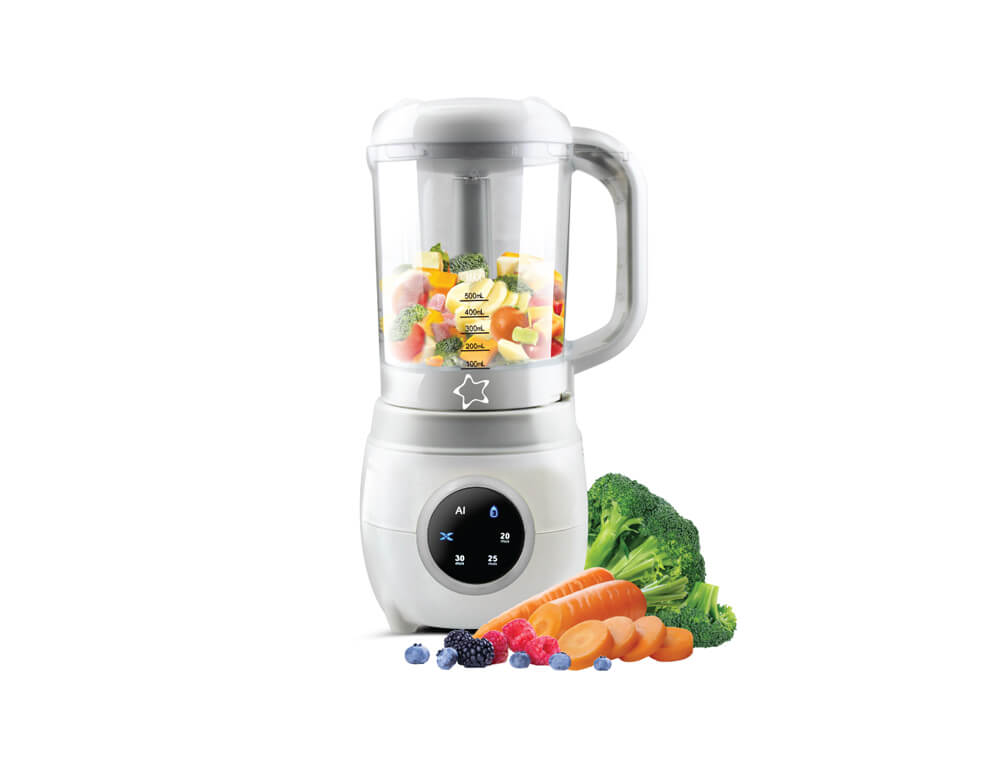
An all-in-one baby food maker makes preparing allergen-containing purées much easier — steam fish, blend with vegetables, and mix in a small amount of a new allergen food all in one device. The texture control means you can get consistencies just right for your baby's stage. Shop Baby Food Makers →
Step 4: Once Tolerated, Keep Offering Regularly
This is the part many parents miss. Once your baby has tolerated an allergen without reaction, the 2026 ASCIA guideline recommends continuing to offer that food at least once a week — ideally more often. Regular exposure helps maintain tolerance. An allergen your baby tolerated at 6 months can sometimes become problematic if it's then avoided for months.
What Does an Allergic Reaction Look Like?
Mild to moderate allergic reactions typically appear within 15–30 minutes of eating an allergen food. Signs include:
- Hives or welts on the skin — red, raised, itchy patches
- Swelling, particularly around the lips, eyes, or face
- Vomiting shortly after eating
- A runny nose and watery eyes
- Pale skin or becoming suddenly quiet or subdued
Severe reactions (anaphylaxis) are rare but serious. Signs include difficulty breathing, a hoarse cry, collapsing, or becoming limp and unresponsive. If you suspect anaphylaxis, call 000 immediately.
For mild reactions, contact your GP the same day. Do not offer that food again until you've had medical advice on how to proceed.
Preparing Allergen Foods Using a Baby Food Maker
Many allergen-containing foods blend well into purées that your baby may already enjoy. A baby food maker makes this straightforward — steam vegetables alongside a small amount of fish, egg, or legumes, then blend together for a nutrient-dense purée that introduces the allergen alongside familiar flavours.
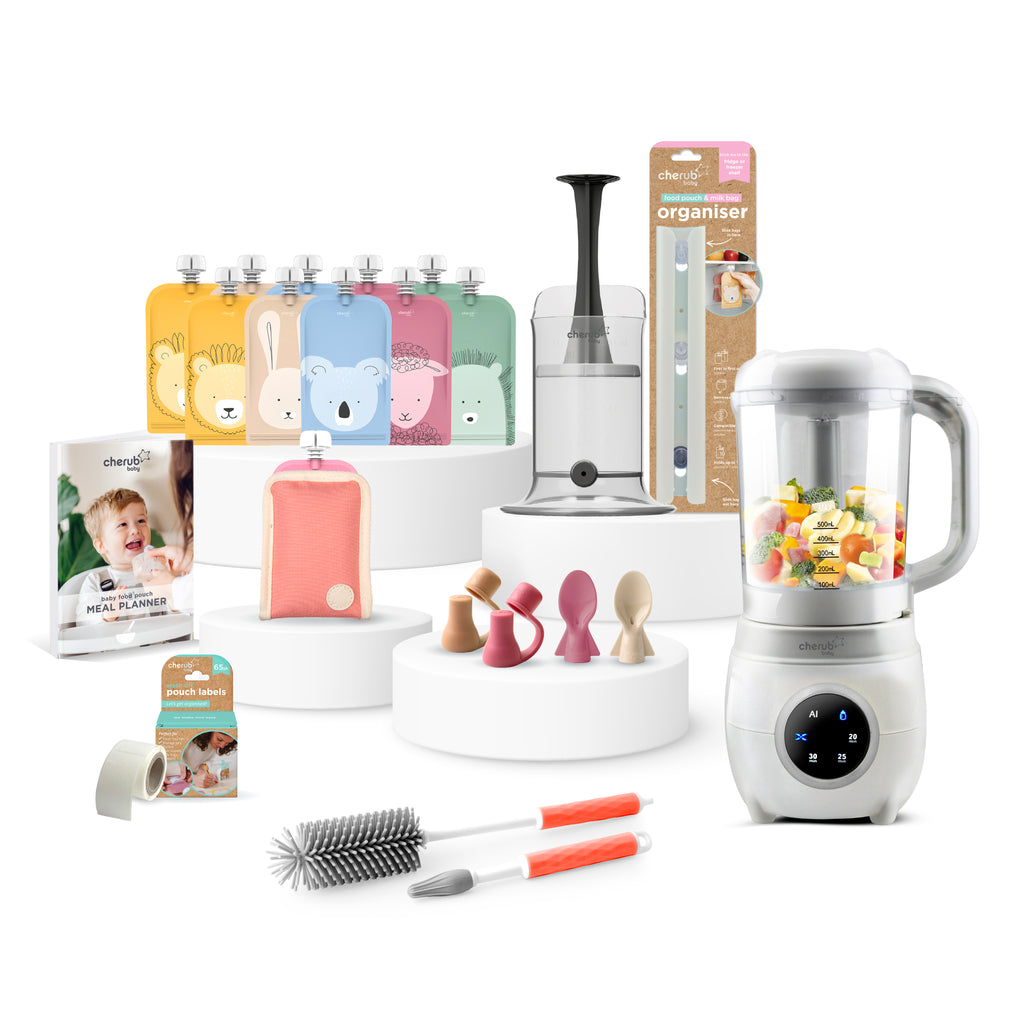
Once you've identified safe foods, batch cooking allergen-containing purées and freezing them in reusable food pouches means you're always prepared — and your baby gets regular, consistent exposure to each allergen without any daily stress.


How This Fits with Starting Solids Overall
Allergen introduction doesn't need to happen in a particular order relative to your other first foods — just ensure it happens in that first year. If you're doing baby-led weaning, allergen introduction fits naturally: soft egg, smooth peanut butter on toast fingers, and mashed fish work well as finger foods once your baby is ready. Read our baby-led weaning vs purées guide for more on how to approach first foods in a way that suits your family.
Frequently Asked Questions
What is the right age to introduce allergens in Australia?
Around six months of age — at the same time you begin other solid foods. The 2026 ASCIA guideline recommends not delaying allergen introduction past 12 months. For high-risk babies (those with severe eczema or an existing food allergy), speak to your GP or allergy specialist before introducing peanut or egg.
Do I need to introduce allergens in a specific order?
No — there is no required order for allergen introduction. The key priorities are to introduce all nine common allergens within the first year, and to offer peanut and egg early in the solids journey. Introduce one new allergen at a time so you can identify any reactions clearly.
What if my baby already has eczema — is it safe to introduce allergens?
Babies with moderate to severe eczema are at higher risk of food allergy, so their allergen introduction is handled differently. Speak with your GP or paediatrician before introducing peanut and egg in particular — they may refer you for allergy testing or a supervised introduction in a clinical setting first.
Can I introduce allergens alongside iron-rich foods?
Yes, absolutely. Many allergen-containing foods — like egg, fish, and legumes — are also great iron sources for babies. You can introduce an allergen and an iron-rich food at the same meal. Read our guide to iron-rich first foods for Australian babies alongside this one for a comprehensive approach to your baby's nutrition.
How long do I wait between introducing different allergens?
Two to three days between each new allergenic food is sufficient — there's no need for a longer gap unless your baby shows a reaction. Some parents prefer to introduce one allergen per week for extra peace of mind. The most important thing is to keep moving through the list rather than staying on safe foods indefinitely.
My baby had a mild reaction — can I try the food again?
Do not reintroduce a food that has caused a reaction without medical advice. Contact your GP or maternal child health nurse on the same day you observe a reaction. They can advise whether testing is needed or whether a supervised food challenge is appropriate before you try that food again.


