

How to Sterilise Baby Bottles in a Baby Food Maker: A Guide for Australian Parents


Yes — you can sterilise baby bottles in a baby food maker, as long as your machine has a dedicated steam-sterilise function. Steam sterilising is one of the safest, most reliable methods there is, and an all-in-one machine that steams, blends and sterilises means a single appliance quietly does the work of several. If you already own a baby food maker with a sterilise setting, you may never need a separate steriliser at all.
Below is exactly how it works, step by step, plus how long to keep sterilising and a few time-saving tips for busy Australian mums and dads.
Can a baby food maker really sterilise bottles?
It can — provided the model is designed to. Many modern baby food makers are actually 3-in-1 or 4-in-1 machines that steam food, blend it, warm milk and run a steam-sterilise cycle. The same heating element that gently steams pumpkin and pear also produces the hot steam needed to sterilise bottles, teats and accessories.
The key word is steam. Sterilising isn't about a quick rinse — it's about surrounding every surface with steam hot enough to kill the germs a young baby's immune system can't yet handle. A food maker with a sterilise function does this in an enclosed chamber, so it's every bit as effective as a standalone steam steriliser.
If your machine only steams food and doesn't list a sterilise setting, don't improvise. Use a purpose-built method instead — our guide to how to sterilise baby bottles walks through every option.

Why steam sterilising is worth it
Steam reaches around 100°C, which reliably destroys the bacteria and viruses that can cause tummy upsets in babies. Unlike chemical sterilising, it leaves no taste or residue, and unlike boiling, there's no pot of scalding water to watch over. The outside of the machine stays cool enough to touch, and once the cycle finishes, contents stay sterile for hours if you keep the lid closed.
Australia's Pregnancy, Birth & Baby service recommends cleaning and sterilising all bottle-feeding equipment to protect your baby from infection, and steam is one of the methods it lists as safe and effective.
How to sterilise baby bottles in a baby food maker, step by step
1. Wash everything thoroughly first
Sterilising is not a substitute for cleaning. Wash bottles, teats, rings and caps in warm soapy water, using a bottle brush to reach the base and a teat brush for the holes. Rinse well. Any milk residue left behind can stop steam from doing its job.
2. Add the right amount of water
Pour the volume of water specified in your machine's manual into the base or steaming chamber. Too little and the cycle may cut short; too much and you'll get pooling. Filtered water helps prevent mineral build-up over time.
3. Load the bottles and parts
Place bottles upside-down so steam circulates inside them, and spread teats, rings and caps out so nothing traps a pocket of air. Don't overcrowd — steam needs a clear path to every surface.
4. Run the sterilise cycle
Select the sterilise setting and start it. Most steam cycles run for roughly 8–15 minutes depending on the machine. Let it complete fully rather than opening it early.
5. Cool, then store safely
Let everything cool before handling, and wash your hands (or use clean tongs) before touching sterilised parts. Reassemble bottles straight away, or store the dry, sterilised equipment in a clean, covered container in the fridge until you need it.
How long does it take?
A steam-sterilise cycle in a baby food maker typically takes about 8 to 15 minutes, plus a few minutes to cool. It's genuinely hands-off — you load it, press start and get on with your day. Compared with standing over a boiling pot, it gives you back real time during the busiest newborn weeks.
How long should you keep sterilising bottles?
In Australia, the general advice is to sterilise bottle-feeding equipment until your baby is around 12 months old. According to Raising Children Network, a baby's immune system isn't yet strong enough to fight off some infections, so sterilising reduces the chance of illness. After the first birthday, thorough washing in hot soapy water (or a dishwasher) is usually enough — but keep sterilising for as long as you're advised to by your child and family health nurse.
One machine, less clutter
The real appeal of sterilising in a baby food maker is simplicity. Instead of a steriliser, a separate steamer and a blender crowding the bench, a single 4-in-1 machine handles milk warming, steaming, pureeing and sterilising. For small kitchens — and small budgets — that's a genuine win.
Do it all with one machine
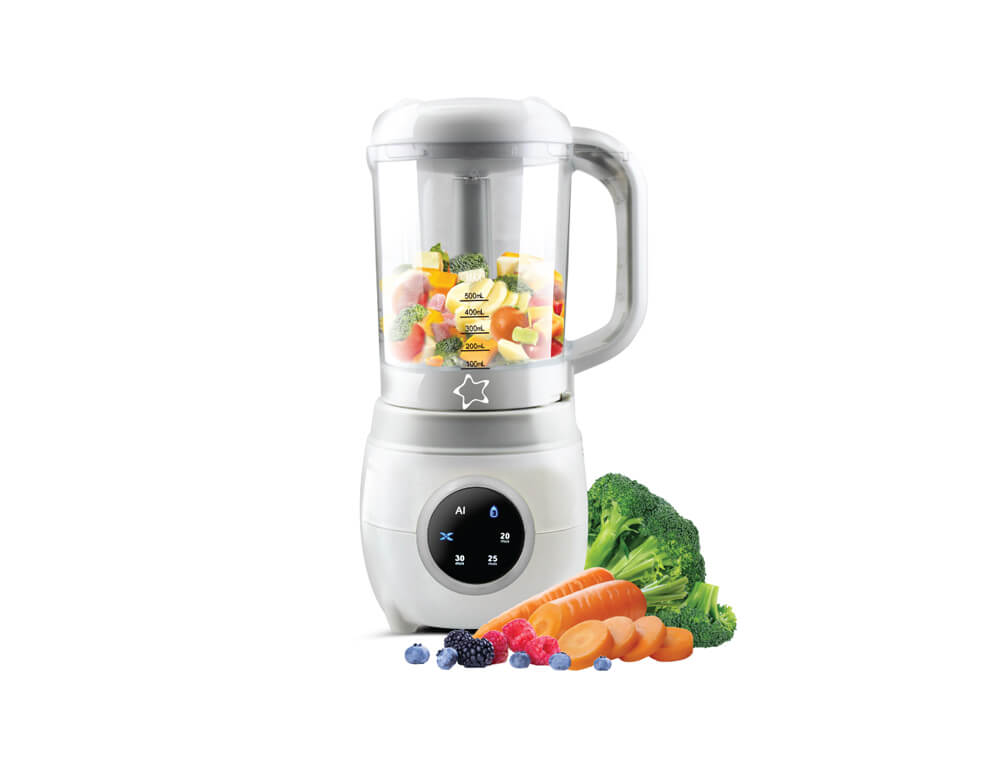
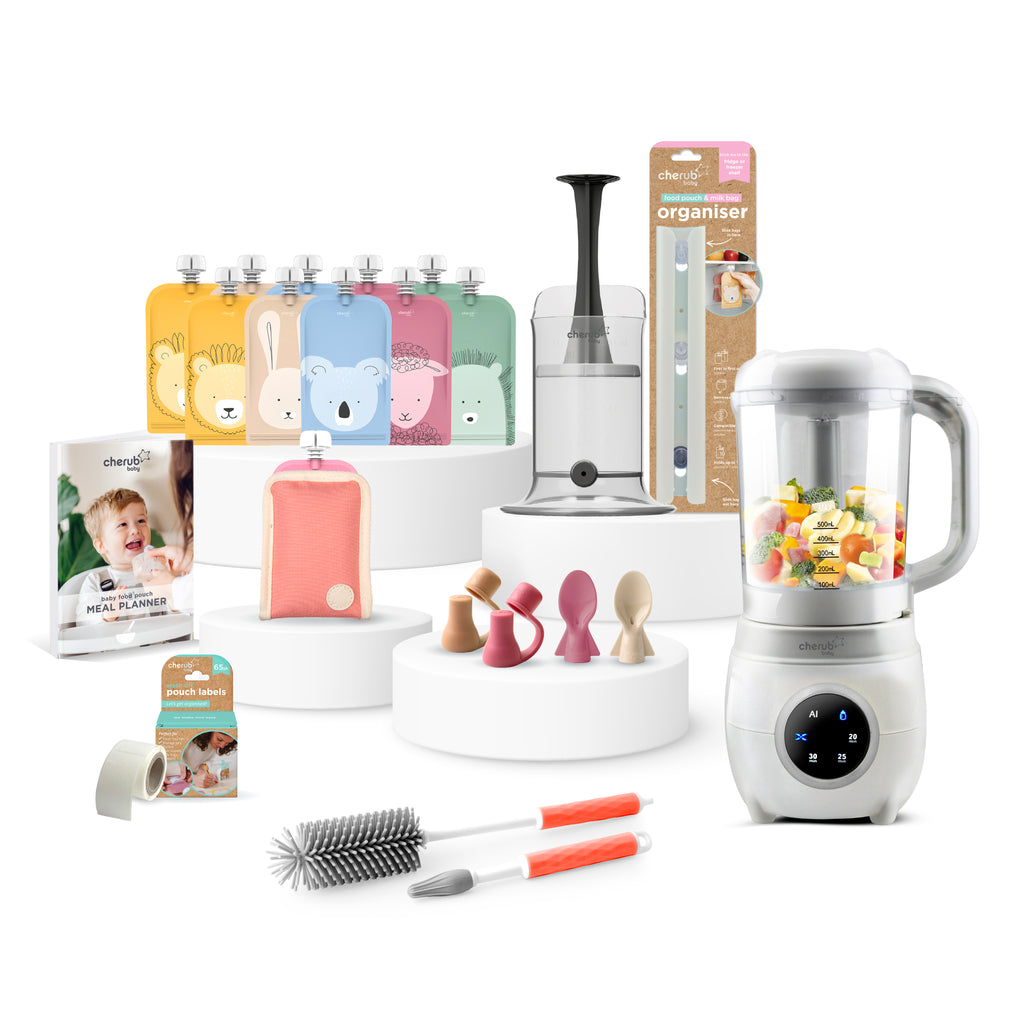
Cherub Baby's Automatic Baby Food Maker, Steriliser & Warmer steams, blends, warms and sterilises — so you can make a batch of puree and sterilise the bottles in the same trusted machine. View Product →
A few tips for busy parents
Sterilise a full load at once rather than one bottle at a time. Keep the lid closed after the cycle to hold sterility for longer. Descale the machine regularly if you're in a hard-water area, and always check your specific manual — every model is a little different. If you're steaming food and sterilising in the same machine, give the chamber a quick wipe between jobs.
Frequently asked questions
Can you sterilise bottles and make baby food in the same machine?
Yes. A 4-in-1 baby food maker is designed to switch between steaming or blending food and sterilising bottles. Just wash the chamber between different jobs so no food residue is left behind.
Is steam sterilising in a food maker as good as a dedicated steriliser?
It is. Both use hot steam to kill germs, and the enclosed chamber of a food maker works the same way. What matters is that your machine has a genuine sterilise setting and you follow its instructions.
Do I need to dry the bottles after sterilising?
No need to towel-dry — that can reintroduce germs. Let bottles air-dry in the closed machine, or reassemble them while still warm and store them in a clean, covered container in the fridge.
Can I sterilise teats and dummies too?
Yes, teats, rings, caps and dummies can all go in, as long as they're spread out so steam reaches every surface. Check that each item is labelled steam-safe.
How often should I sterilise?
Sterilise bottles and teats after every feed while your baby is very young. Always wash first, then sterilise, and use the equipment within 24 hours if it's stored in the fridge.
When can I stop sterilising bottles?
Most Australian guidance suggests continuing until around 12 months. After that, careful washing in hot soapy water is generally enough, though it's worth confirming with your child and family health nurse.
Related reading
- Best Baby Food Maker Australia 2026: How to Choose
- Can You Steam and Blend Baby Food in One Machine?
- Baby Food Maker vs Steaming on the Stove: Is It Worth It?
- When to Start Solids in Australia: The Complete Guide


