

Homemade vs Store-Bought Baby Food: Which Is Better?


The honest answer is that neither homemade nor store-bought baby food is unsafe, and the best choice is often a mix of both. Homemade baby food usually wins on cost, ingredient control and introducing your family's flavours, while store-bought baby food wins on convenience and consistency. What matters most is that your baby gets a variety of nutritious foods and textures - however it reaches the bowl.
If you are weighing up whether to steam and blend your own or reach for the shelf, here is a balanced, practical comparison to help you decide what works for your family and your week.
At a glance: homemade vs store-bought baby food
| What matters | Homemade baby food | Store-bought baby food |
|---|---|---|
| Cost | Usually cheaper per serve, especially in bulk | More expensive per serve over time |
| Ingredient control | You choose every ingredient - no additives | Set recipe; check the label for added ingredients |
| Convenience | Needs prep and cooking time | Ready to serve, portable, no prep |
| Variety and flavour | Easy to match family meals and new flavours | Good range, but limited to what is on the shelf |
| Texture progression | You control the texture as baby grows | Often smoother; fewer lumpy stages |
| Safety standards | Safe with good hygiene and storage | Meets strict commercial food-safety rules |
| Waste | Low with reusable pouches and freezing | More single-use packaging |
The case for homemade baby food
Making your own has some clear advantages:
- You control the ingredients. No added salt, sugar or preservatives - just the fruit, veg, grains and proteins you choose.
- It is usually cheaper. Cooking a batch of seasonal vegetables and freezing portions costs far less per serve than buying individual pouches.
- It introduces family flavours. Babies who taste the herbs and foods your family eats often adapt more easily to family meals later.
- You manage texture. You can move from smooth purees to lumpier, mashed and finger-food textures at your baby's pace.
The trade-off is time. Homemade food needs cooking, blending, storing and washing up. The good news is that batch-cooking once a week and freezing portions makes it manageable - more on that below.

The case for store-bought baby food
Shop-bought pouches and jars earn their place too:
- Convenience. They are ready to serve, need no preparation and are perfect for outings, daycare and busy days.
- Consistency. Each pouch tastes and behaves the same, which can help on fussy days.
- Variety out of season. You can offer foods that are hard to find fresh at certain times of year.
- Food-safety standards. Commercial baby food is produced under strict safety rules.
The trade-offs are cost over time, more packaging waste, and less control over the exact recipe and texture. Reading the label helps - look for products without added salt or sugar.

Is store-bought safe, and is homemade healthier?
This is where many parents worry unnecessarily. There is no strong evidence that homemade purees are automatically safer or lower in contaminants than commercial baby food - both can be part of a healthy diet. What matters more is variety, iron-rich foods from around six months, and progressing textures. The Raising Children Network and Australia's NHMRC infant feeding advice both emphasise offering a wide range of nutritious first foods and moving through textures as your baby is ready, rather than favouring one preparation method. For a deeper look at first foods, see our guides on when to start solids in Australia and iron-rich first foods for babies.
Which is right for you?
Use this quick guide to decide:
- Choose mostly homemade if you want to keep costs down, control ingredients, reduce packaging, and you can set aside an hour a week to batch-cook.
- Choose mostly store-bought if your days are unpredictable, you value grab-and-go convenience, or you are often feeding on the move.
- Do both (what most families do) if you want homemade at home and the odd pouch for outings, daycare and busy stretches.
The best of both: make homemade quick and easy
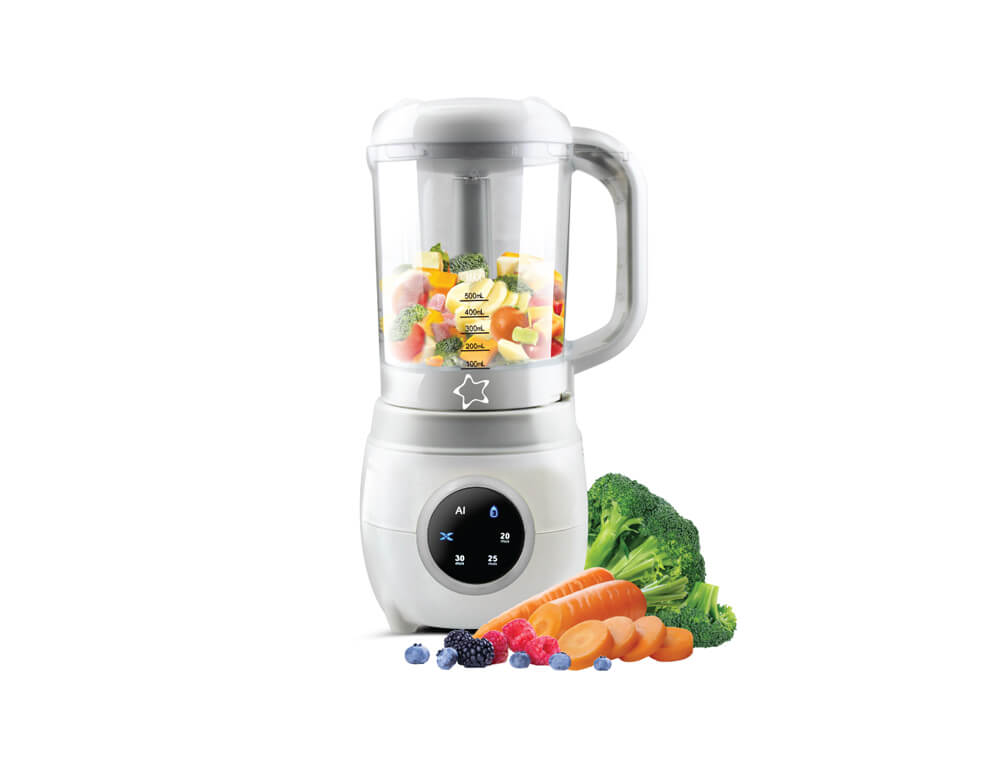
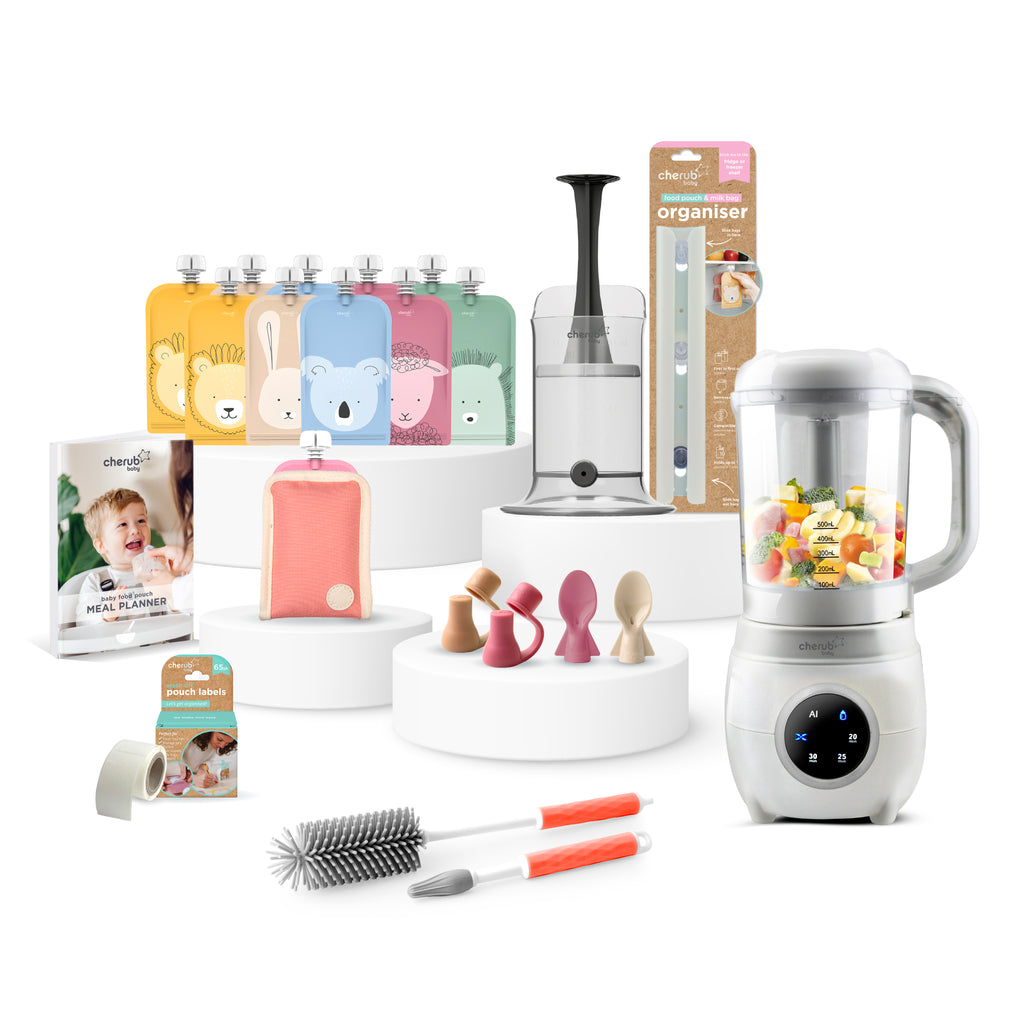
Most parents love the idea of homemade but worry about the effort. The trick is the right tools. A baby food maker that steams and blends in one jug turns a pile of vegetables into smooth puree in minutes - our 4-in-1 Baby Food Maker & Steriliser steams, blends, warms and sterilises, so you can prep a whole week of meals with minimal fuss and washing up. For step-by-step help, read the easiest way to make homemade baby food.
Then store your batches in reusable food pouches - fill, freeze, and warm straight from the same pouch. They give you the convenience of shop-bought pouches with the cost and ingredient control of homemade, and they cut down single-use waste. See our full buying guide to the best reusable food pouches in Australia.
Frequently asked questions
Is homemade baby food healthier than store-bought?
Not necessarily. Both can be healthy. Homemade gives you full ingredient control, while quality store-bought food meets strict safety standards. What matters most is offering variety, iron-rich foods and progressing textures.
Is store-bought baby food safe?
Yes. Commercial baby food is made under strict food-safety rules. Check labels and choose products without added salt or sugar for the best options.
Is homemade baby food cheaper?
Usually, yes - especially when you batch-cook seasonal produce and freeze portions. Buying individual pouches for every meal costs more over time.
Can I mix homemade and store-bought baby food?
Absolutely, and most families do. Homemade at home and a pouch for outings or daycare is a practical, balanced approach.
How do I make homemade baby food quickly?
Use a baby food maker to steam and blend in one step, batch-cook once a week, and freeze portions in reusable pouches so you always have ready meals on hand.
How should I store homemade baby food?
Refrigerate and use within about two days, or freeze in small portions such as reusable pouches or ice-cube trays. Label with the date and thaw safely in the fridge or a warmer.


