

Baby Food Maker vs Steaming on the Stove: Is It Worth It?


The honest answer: a baby food maker is worth it if it removes enough hassle that homemade purees actually become part of your routine — otherwise a pot, a steamer basket and a stick blender do the same job for less. An all-in-one machine steams and blends in one jug with minimal cleanup, which is a genuine time-saver for busy parents. Stovetop steaming costs almost nothing if you already own the gear and lets you cook big family batches, but it means more pots, more watching and more washing up. Neither is "better" — the right choice depends on how often you'll cook, your bench space and how much cleaning you'll tolerate.
Here's a clear, brand-free comparison to help you decide before your baby starts solids.
At a glance
| Factor | All-in-one baby food maker | Steaming on the stove |
|---|---|---|
| Upfront cost | Moderate (one appliance) | Low if you own a pot, steamer and blender |
| Time & effort | Steams and blends in one jug, mostly hands-off | More hands-on — watch the pot, transfer to a blender |
| Cleanup | One jug and blade to wash | Pot, steamer, blender and utensils |
| Batch size | Small-to-medium baby portions | Large family-sized batches |
| Bench space | Takes a permanent spot | Uses cookware you already store |
| Extra functions | Often reheats, defrosts, sterilises | None beyond the cooktop |
The case for an all-in-one baby food maker
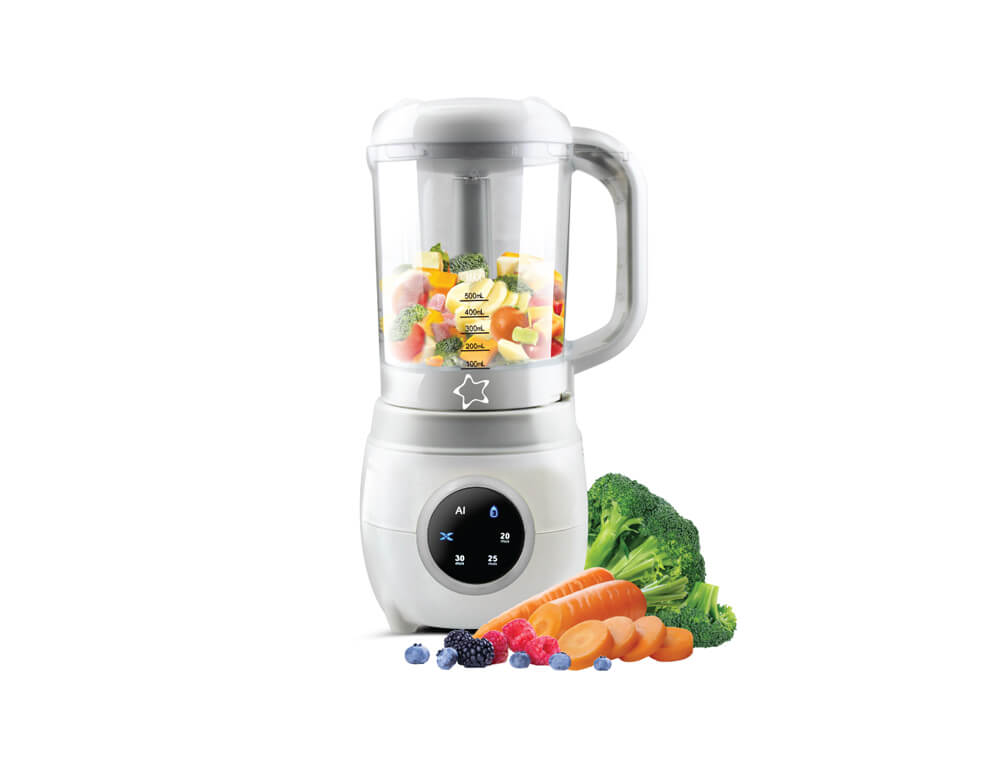
A dedicated baby food maker steams fruit, veg, meat or fish and then blends it in the same jug, so you're not transferring hot food between appliances. For time-poor parents that lower friction is the whole point: if making a fresh puree takes ten minutes and one jug to wash, you're far more likely to keep doing it rather than reaching for a shop-bought pouch. Many machines also reheat, defrost and even sterilise, so a single appliance covers several jobs. The trade-offs are the upfront cost and a permanent spot on your bench. If you want a compact, mostly hands-off routine for small baby portions, this is the convenient option — our guide to the best baby food makers in Australia compares features in detail.

The case for steaming on the stove
Steaming on the stovetop is as old as cooking itself, and it works beautifully. Pop chopped veg in a steamer basket over simmering water, cook until soft, then blend with a little of the cooking water using a stick blender or food processor. The big wins are cost (you likely own everything already) and batch size — you can cook a large tray of sweet potato or pumpkin in one go and freeze weeks of portions. Steaming also sidesteps any concerns some parents have about cooking in plastic.
The downsides are practical: it's more hands-on, you're washing a pot, steamer and blender, and it takes a touch more attention. If you already own a steamer and blender and don't mind extra dishes, this is a strong, budget-friendly choice. For how the blending tools compare, see our piece on a baby food maker vs a blender vs a processor.

Which is right for you?
Choose an all-in-one baby food maker if: you value convenience and minimal cleanup, you're mostly making small fresh portions, you want reheating and sterilising in the same unit, and you know you'll cook more often if it's quick and easy.
Choose stovetop steaming if: you already own a steamer and blender, you like to batch-cook large amounts and freeze, you're tight on bench space or budget, or you'd simply rather not add another appliance to the kitchen.
Plenty of families do both — a machine for quick weekday purees and the stove for big weekend batches. Whichever you choose, freezing your extras in portions is the real time-saver; our ultimate guide to freezing baby food shows how.
A quick word on getting started
Whatever method you pick, the fundamentals of first foods are the same. Australia's Raising Children Network and NHMRC advise introducing solids at around six months (never before four), starting with smooth, iron-rich purees and offering a variety of textures over time. Our complete guide to starting solids in Australia walks you through it.
Making it easier either way
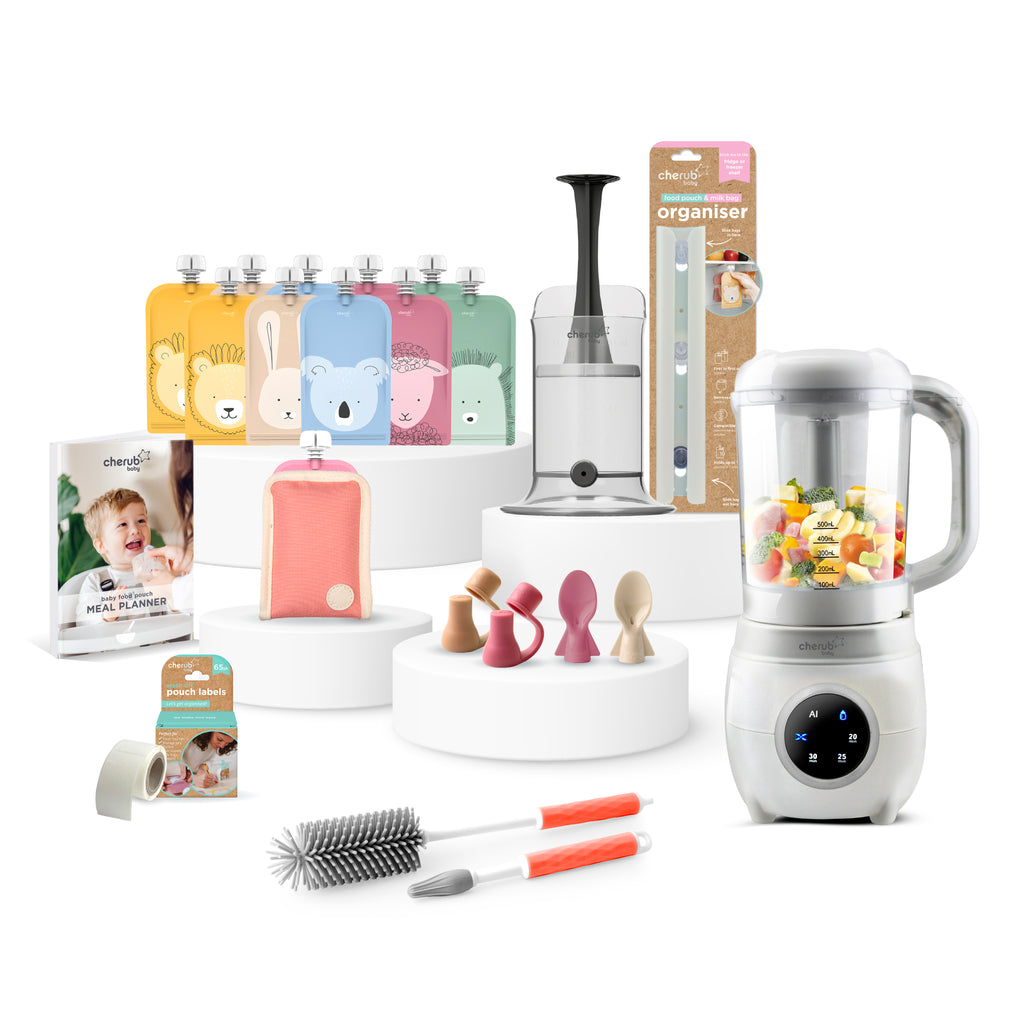
If you decide an all-in-one is right for your kitchen, explore our baby food makers here — they steam and blend in one jug to keep weekday cooking quick. And whichever method you choose, store your batches in reusable food pouches for grab-and-go feeds that cut waste and cost.
Frequently asked questions
Is a baby food maker actually worth buying?
It's worth it if the convenience means you'll make homemade food regularly. If you already own a steamer and blender and are happy using them, a dedicated machine is a nice-to-have rather than a must.
Is steaming on the stove just as good as a baby food maker?
Nutritionally and practically, yes — steaming then blending produces the same smooth purees. The difference is convenience and cleanup, not the quality of the food.
Does a baby food maker save time?
Generally yes, because it steams and blends in one jug with far less washing up. The saving is biggest when you're making small, fresh portions rather than large batches.
Which method is cheaper?
Stovetop steaming is cheaper if you already own a pot, steamer basket and blender. A baby food maker has an upfront cost but combines several tools in one.
Can I batch cook and freeze with both methods?
Absolutely. Both let you cook ahead and freeze portions. The stove suits larger batches, while a machine is handy for quick top-ups. Freeze in labelled portions and use within about three months.
Do I need any special appliance to make baby food?
No. A pot, a steamer basket and a stick blender are all you strictly need. An all-in-one maker simply combines those steps for convenience.
Related reading: Best baby food maker in Australia · Baby food maker: blender vs processor · When to start solids in Australia


