

Best Baby Food Maker Australia 2026: How to Choose


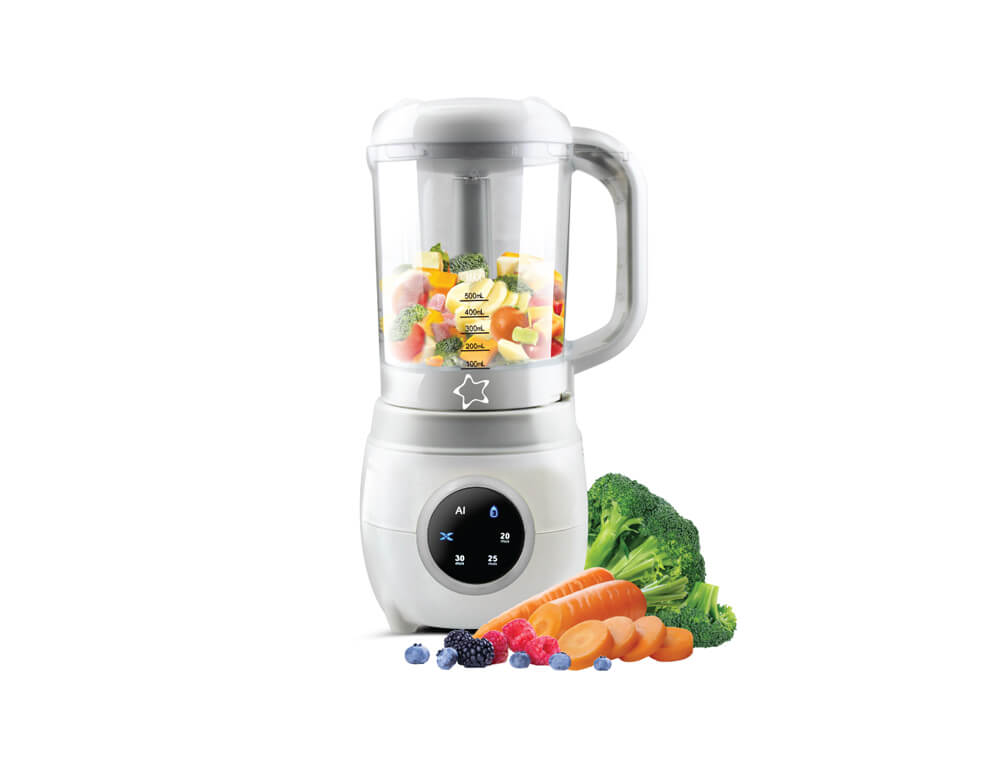
The best baby food maker for most Australian families is an all-in-one machine that steams and blends in the same jug at the press of a button — no transferring hot food, no separate steamer and blender, and far less washing up. It should be BPA-free, easy to clean, and big enough to batch-cook a few days of purees at once.
If you're about to start solids and weighing up whether a baby food maker is worth it, this guide walks through exactly what to look for in 2026, how it compares to a blender or food processor, and how to get the most out of one once it's on your bench.
What is a baby food maker — and do you need one?
A baby food maker is a compact appliance that steams fruit, vegetables, meat and fish, then blends them to whatever texture your baby is ready for. The best models do both jobs in a single jug, so the nutrients released during steaming go straight into the puree instead of being poured down the sink. You don't strictly need one — a saucepan and a stick blender will do — but if you plan to make homemade food regularly, a dedicated machine saves a genuine amount of time and mess. If you're wondering exactly how the combined function works, see our explainer on whether you can steam and blend baby food in one machine.

What to look for in the best baby food maker
These are the features that separate a machine you'll use every week from one that ends up in the cupboard.
Steam and blend in one jug
This is the single most important feature. An all-in-one jug means you steam, then blend in the same container without handling hot food. It's safer, faster, and keeps the vitamin-rich steaming liquid in the puree.
One-button simplicity
When you're holding a hungry baby, you don't want a complicated control panel. Look for a machine that starts steaming with one button and switches to blending just as easily.
Capacity for batch cooking
A larger jug lets you cook a few days' worth of food in one session. Batch-cooking and freezing portions is the real time-saver — make once, feed all week.
BPA-free and easy to clean
Choose a machine with BPA-free food-contact parts and a jug and blade that come apart for quick washing. Dishwasher-safe components are a bonus after a messy cook.
Extra functions: reheat, defrost and sterilise
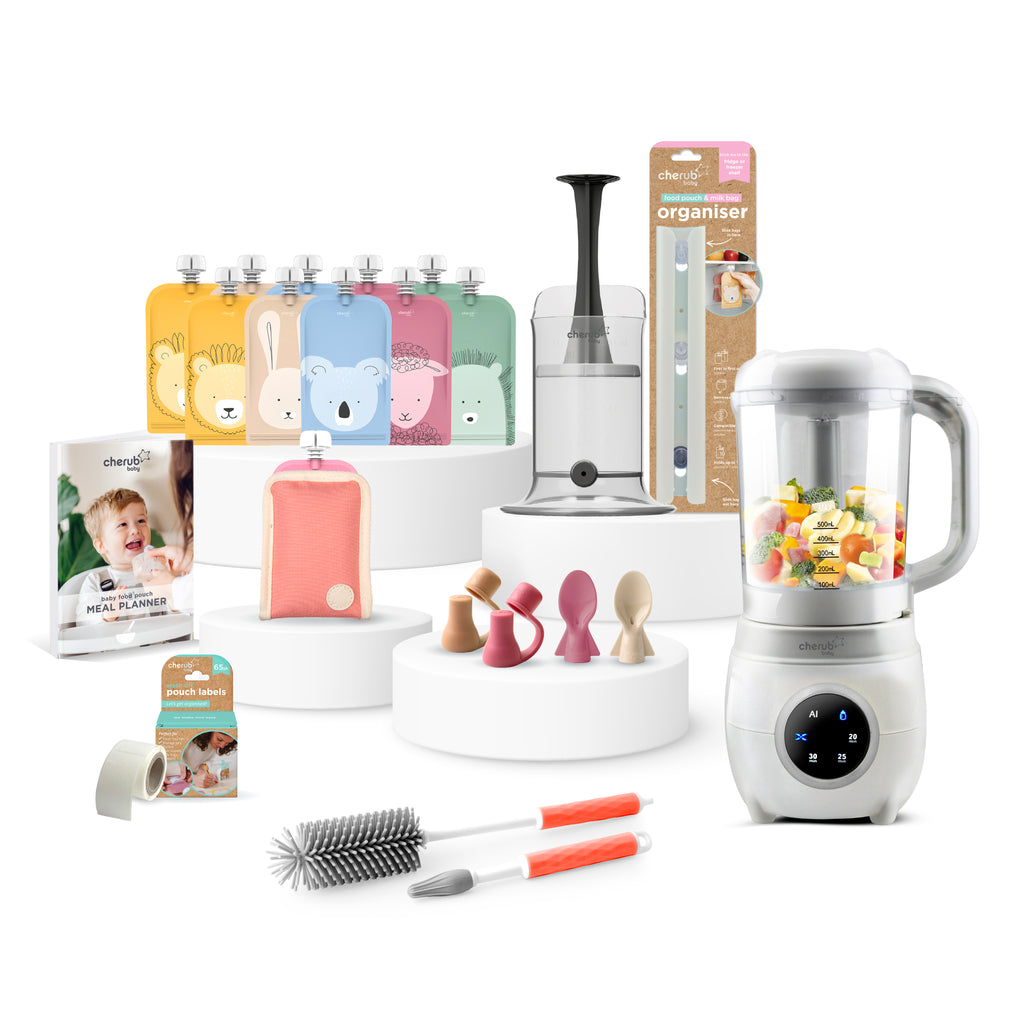
The most versatile machines also reheat frozen portions and sterilise bottles, which means one appliance covers several jobs and frees up bench space. Cherub Baby's baby food maker range includes all-in-one models that steam, blend, reheat and sterilise.

Baby food maker vs blender vs food processor
A general kitchen blender or food processor can puree cooked food, but you'll steam separately on the stove, transfer hot food across, and wash more equipment. A baby food maker combines those steps and is sized for baby portions. If you already own a good blender and only plan to make food occasionally, you may not need a dedicated machine — but for regular homemade meals, the all-in-one wins on convenience. We compare the options in detail in our guide to the baby food maker vs blender vs food processor.
Is a baby food maker worth it?
For parents who want to make their own food, yes. Homemade purees are cheaper per serve than store-bought pouches, contain no added preservatives or sugar, and let you introduce a wide variety of flavours and textures early. A baby food maker removes the main barriers — time and mess — which is what makes families actually stick with homemade cooking. Pair it with a set of reusable food pouches and you can portion, freeze and serve without a single single-use pouch.
When should you start using a baby food maker?
In Australia, solids are recommended from around six months, when your baby shows signs of readiness such as sitting with support and showing interest in food. Smooth, single-ingredient purees are a common first step, then you gradually move to thicker and lumpier textures. For the full readiness checklist and first-food ideas, see our complete guide to starting solids in Australia, which follows NHMRC infant feeding guidance. Steaming is a gentle cooking method that helps retain nutrients, which is why the Raising Children Network lists steaming among good ways to prepare first foods.
How to use a baby food maker
Chop your chosen fruit, vegetable, meat or fish into small pieces and add them to the jug with water in the reservoir. Steam until soft, then blend to a smooth puree for a new eater or a chunkier texture as your baby progresses. Spoon portions into an ice-cube tray or reusable pouches, cool, then freeze. For inspiration on what to cook first, our baby food puree recipes for Australian parents has easy, iron-rich combinations to get you started.

Make homemade simple
If you want to make healthy homemade food without spending your evenings at the stove, an all-in-one steam-and-blend machine is the tool that makes it happen. Browse the award-winning Cherub Baby baby food maker range and start cooking with confidence. Shop baby food makers now →
Frequently asked questions
What is the best baby food maker in Australia?
The best baby food maker is an all-in-one machine that steams and blends in the same jug at the touch of a button, is BPA-free and easy to clean, and has enough capacity to batch-cook. Extra functions like reheating and sterilising add value by replacing several appliances.
Do I really need a baby food maker?
You can make baby food with a saucepan and a stick blender, but a dedicated machine saves time and washing up and keeps the nutrient-rich steaming liquid in the puree. It's most worthwhile if you plan to make homemade food regularly.
At what age can I start using a baby food maker?
You can start making purees when your baby begins solids, which is recommended from around six months in Australia. Begin with smooth single-ingredient purees and move to thicker textures as your baby develops.
Is homemade baby food better than store-bought pouches?
Homemade food lets you control ingredients with no added sugar or preservatives, costs less per serve, and exposes your baby to more flavours and textures. Store-bought pouches are convenient for occasional use, but many families prefer homemade as the everyday option.
Can a baby food maker steam meat and fish?
Yes. A good baby food maker steams vegetables, fruit, meat and fish, which is useful for iron-rich first foods. Always make sure meat and fish are cooked through and blended to a safe texture for your baby's stage.
How do I clean a baby food maker?
Take the jug and blade apart and wash in warm soapy water after each use, or on the dishwasher's top rack if the parts are dishwasher-safe. Descale the steamer periodically following the manufacturer's instructions to keep it working well.


