

How Much Milk Should a Baby Have When Starting Solids?


When your baby starts solids at around six months, one question pops up almost straight away: how much milk should they still be having? It is easy to assume that as the meals go up, the milk should come down — but in the first months of solids, milk is still doing most of the heavy lifting. Getting the balance right helps your little one grow well, stay hydrated and settle happily into family mealtimes.
Here is a warm, practical guide for Australian mums on how much milk your baby needs from six to twelve months and beyond, whether you are breastfeeding, formula feeding or doing a bit of both.
Do babies still need milk after starting solids?
Absolutely. Solids in the early months are all about learning — new tastes, textures and the skill of eating — not about replacing milk. According to the NHMRC Infant Feeding Guidelines, breast milk (or infant formula) remains the main source of nourishment for babies from six to twelve months, while a variety of solid foods are gradually introduced alongside it. In other words, food complements milk during this year — it does not take over.

How much milk should a baby have when starting solids?
6 to 8 months
In these first months of solids, milk is still your baby's primary source of nutrition and fluid. Most breastfed babies continue to feed on demand, roughly four to six times a day. Formula-fed babies of this age typically have around 600–800 ml across the day, usually split into four or so bottles — though every baby is different. Solids at this stage are offered once or twice a day and are more about practice than filling a tummy.
9 to 12 months
As your baby becomes a more confident eater and works up to three meals a day plus snacks, milk naturally starts to make up a little less of their intake — but it is still important. Many formula-fed babies have around 500–600 ml a day at this age, and breastfed babies continue to feed on demand. Milk feeds and solids gradually move into balance across this stage.
After 12 months
From their first birthday, solids become the main event and your toddler can move to full-cream cow's milk as a drink (if you choose to), with breastfeeding continuing for as long as you both wish. Around 400–500 ml of milk a day is a common guide for toddlers, as too much milk can crowd out iron-rich foods and reduce appetite for meals.
These figures are a general guide only. The amount on a formula tin is a starting point, and babies genuinely vary depending on their age, weight and appetite. Always follow your baby's hunger and fullness cues, and check with your child health nurse if you are unsure.

Breastfed babies vs formula-fed babies
If you are breastfeeding, there is no need to measure millilitres — simply keep feeding on demand and let your baby lead. Their wet nappies, steady growth and general contentment are your best signs that they are getting enough. If you are formula feeding, the tin gives you a helpful guide, but treat it as a range rather than a rule. The Raising Children Network reminds parents that feeding amounts on the tin are a guide only, as babies may need different amounts. Doing a mix of both? That is perfectly fine too — offer the breast or bottle as usual and let solids build up gradually alongside.
Should milk or solids come first?
In the early months of solids, offer milk first and solids a little later — often around half an hour to an hour after a milk feed — so your baby is not too hungry or too full to enjoy exploring their food. As they approach nine to twelve months and eat more, you can start bringing solids and milk closer together and eventually offer solids as the meal with milk alongside or after. There is no single right way; follow what keeps your baby happy and interested.
Making milk feeds easy, wherever you are
Balancing milk feeds around meals, naps and outings is so much simpler when you can warm a bottle quickly on the go. A portable bottle warmer gently brings expressed breast milk or formula to the perfect feeding temperature in minutes — ideal for the car, the park or those out-and-about days when a hungry baby will not wait. View portable bottle warmers →


Signs your baby is getting the balance right
Rather than watching the clock or the millilitres too closely, look at the bigger picture. A baby getting the right balance of milk and solids will have plenty of wet nappies, be growing steadily along their own curve, seem content and energetic between feeds, and show growing interest in food without losing interest in milk. If milk feeds suddenly drop off, meals are being refused, or you have any concerns about weight gain, have a chat with your GP or child and family health nurse.
Building meals around milk
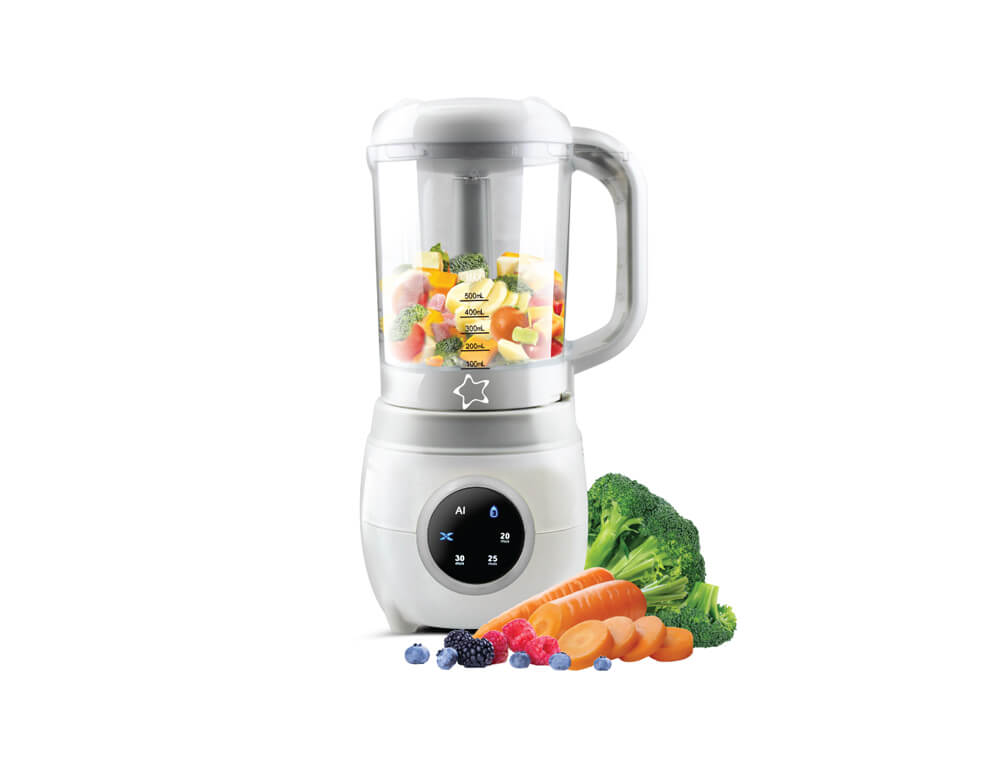
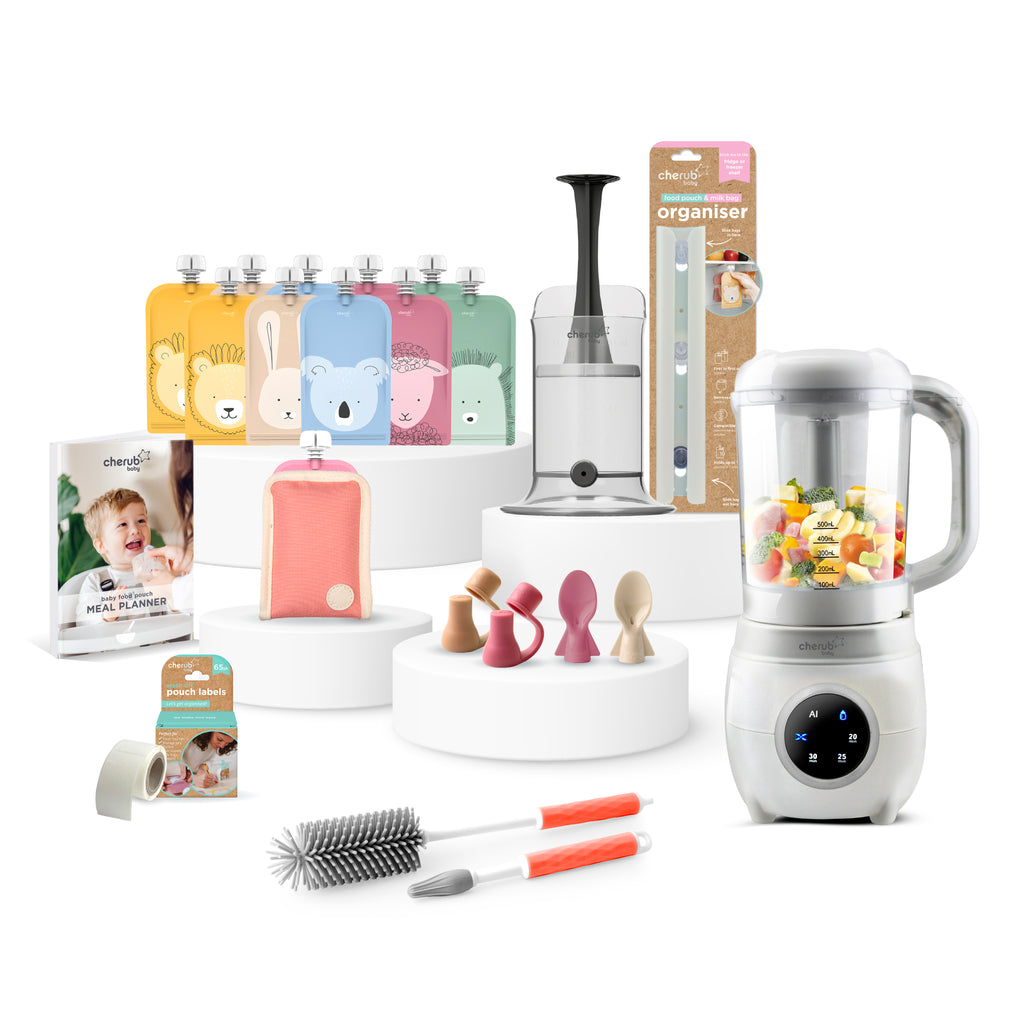
As solids slowly grow into a bigger part of the day, offering a variety of home-cooked flavours helps your baby learn to love real food while milk continues in the background. Steaming and blending your own fruit, veg and iron-rich foods with a baby food maker makes it easy to serve fresh, single portions that fit neatly around milk feeds — no jars, no fuss. Shop baby food makers →
Related reading
For more on this stage, see our complete guide to when to start solids in Australia, our week-by-week baby meal plan for 6 months, and our portion guide on how much solid food a 6-month-old should eat — the perfect companion to this milk guide.
Frequently asked questions
How much milk does a baby need at 6 months when starting solids?
At six months, milk is still your baby's main source of nutrition. Breastfed babies feed on demand around four to six times a day, while formula-fed babies typically have around 600–800 ml a day. Solids are offered once or twice as practice rather than a full meal.
Should I reduce milk when I start solids?
Not at first. In the early months of solids, keep milk feeds the same — food is for learning, not replacing milk. Milk naturally reduces on its own as your baby eats more from around nine months onwards.
Do I give milk or solids first?
In the beginning, offer milk first and solids a little later so your baby is not too hungry or too full to explore food. As they get older and eat more, you can bring solids and milk closer together and eventually offer solids as the main meal.
How much milk should a baby have at 9 to 12 months?
Around this age many formula-fed babies have roughly 500–600 ml a day, and breastfed babies continue feeding on demand. Solids and milk gradually move into balance as your baby works up to three meals a day plus snacks.
Can too much milk affect my baby's appetite for solids?
Yes. Especially after nine to twelve months, very large amounts of milk can fill your baby up and reduce their appetite for iron-rich solids. If your baby is eating little food, look at whether milk feeds might be crowding out meals and chat with your child health nurse.
When can my baby start drinking cow's milk?
Full-cream cow's milk can be introduced as a main drink from around twelve months. Before then, breast milk or infant formula should remain your baby's main milk. Cow's milk can be used in small amounts in cooking from six months.


