

Baby Constipation After Starting Solids: Causes, Relief & When to Worry


Starting solids is such an exciting milestone — those first messy tastes of pumpkin, pear and porridge are pure joy. But for many Australian mums, that excitement comes with a worry that catches you off guard: your once-regular little one suddenly seems blocked up. If your baby is straining, going less often, or passing hard little pellets since their first meals, you are absolutely not alone, and in most cases it is a normal part of the transition.
This guide walks you through why constipation happens after starting solids, the gentle things you can do at home to help, the foods that make a real difference, and the signs that mean it is time to see your GP or child health nurse.
Is it normal for babies to get constipated after starting solids?
Yes — a change in your baby's poos when they start solids is extremely common. Up until now, your baby's tummy has only ever had to process breast milk or formula, which is gentle and easy to digest. Solid food is a whole new job for their little digestive system, so firmer, less frequent poos are to be expected for the first few weeks while their gut adjusts.
According to the Raising Children Network, babies who have just started solids might have firmer and less frequent poos at first, and this usually sorts itself out within a few weeks. So a bit of change is normal — but genuine constipation, where poos are hard and painful to pass, is worth acting on.

What causes constipation when starting solids?
The switch from milk to solids
Breast milk and formula are almost completely absorbed by your baby's body. Solids leave more waste behind, which means more work for the bowel and firmer stools while everything settles into a new rhythm. This adjustment phase is the single most common reason for a temporary slow-down.
Common binding first foods
Many popular Australian first foods happen to be naturally binding. Baby rice cereal, banana and cooked apple are gentle on the tummy but low in the fibre that keeps poos soft. If these make up most of your baby's meals, constipation can creep in.
Not quite enough fluid
As solids replace some milk feeds, some babies take in a little less fluid overall. Less fluid means drier, harder stools. A small amount of cooled boiled water offered with meals from six months can help keep things moving.
How to tell if your baby is actually constipated
It is normal for babies to grunt, go red and strain a little — they are still learning to coordinate the muscles involved. True constipation is more than effort. Watch for: dry, hard poos that look like little pellets or crumbly balls; poos that clearly cause pain or distress to pass; fewer poos than usual combined with a firm, uncomfortable tummy; and small streaks of blood from tiny tears caused by straining. If you are seeing these signs, your baby is likely constipated and could use some gentle help.

How to relieve baby constipation after starting solids
Offer a little extra water
From around six months, you can offer small sips of cooled, previously boiled water in a cup with meals. You do not need much — just enough to add a little extra fluid to soften stools.
Reach for the fibre-rich fruit and veg
The classic "P" foods work wonders: pear, prune, peach, apricot, plum and peas. The Raising Children Network notes you can offer up to three tablespoons of strained, stewed prunes or apricots up to three times a week to help ease constipation. Wholegrain baby cereals, well-cooked lentils and soft cooked vegetables also add gentle bulk.
Gentle tummy massage and a warm bath
A gentle clockwise massage around your baby's tummy, plus some bicycle-leg movements, can help stimulate the bowel. A warm bath is relaxing and often does the trick when a baby is straining and uncomfortable.
Keep milk feeds up
Solids are for practice and exploration in the early months — breast milk or formula is still your baby's main source of nutrition and fluid. Keeping regular milk feeds going helps maintain hydration and soft stools while their gut adjusts.
Making fibre-rich meals easy
The simplest way to keep constipation at bay is to offer a rotating variety of soft, fibre-rich fruit and veg rather than relying on the binding favourites. Steaming and pureeing pear, prune, peach and peas at home means you know exactly what is going into every spoonful — no added thickeners or fillers that can make things worse.
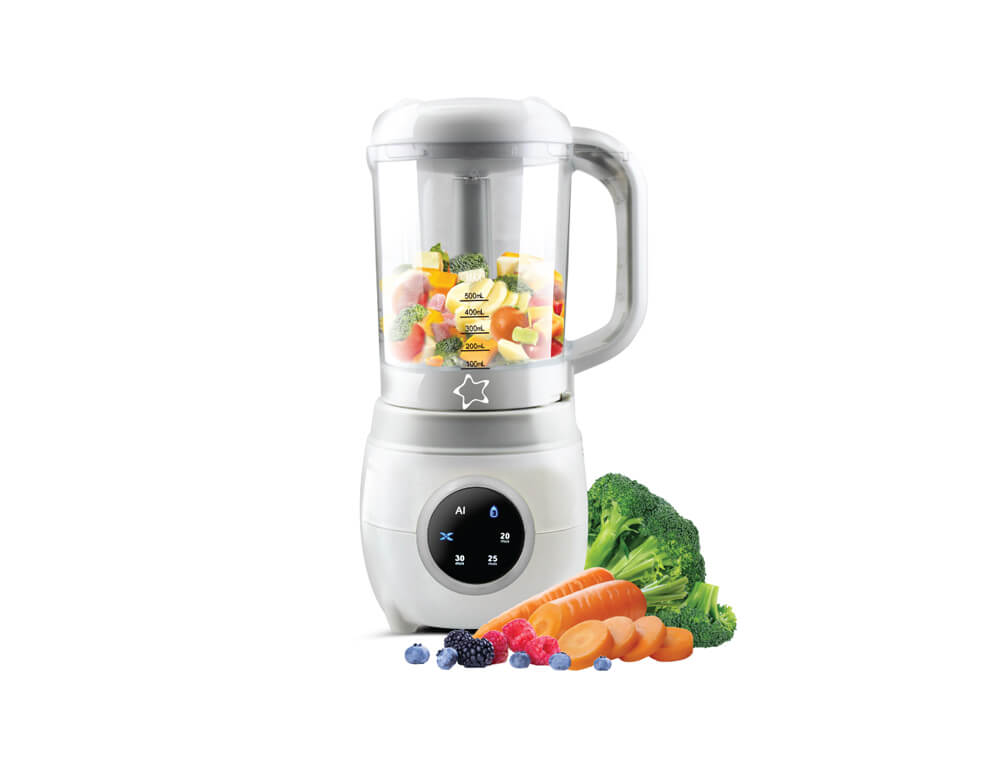
A baby food maker steams and blends whole ingredients in one button, so you can whip up a smooth prune or pear puree in minutes and freeze single portions for whenever your little one needs a fibre boost. View the range →
Foods that help — and foods to ease off
To keep things moving, lean into pears, prunes, apricots, peaches, plums, peas, broccoli and wholegrain cereals, and keep the fluids up. If your baby is constipated, gently ease back on the most binding foods for a little while — large amounts of banana, cooked apple, plain baby rice cereal and excessive dairy can all firm things up. It is all about balance rather than cutting anything out completely.
Storing homemade relief foods for on the go
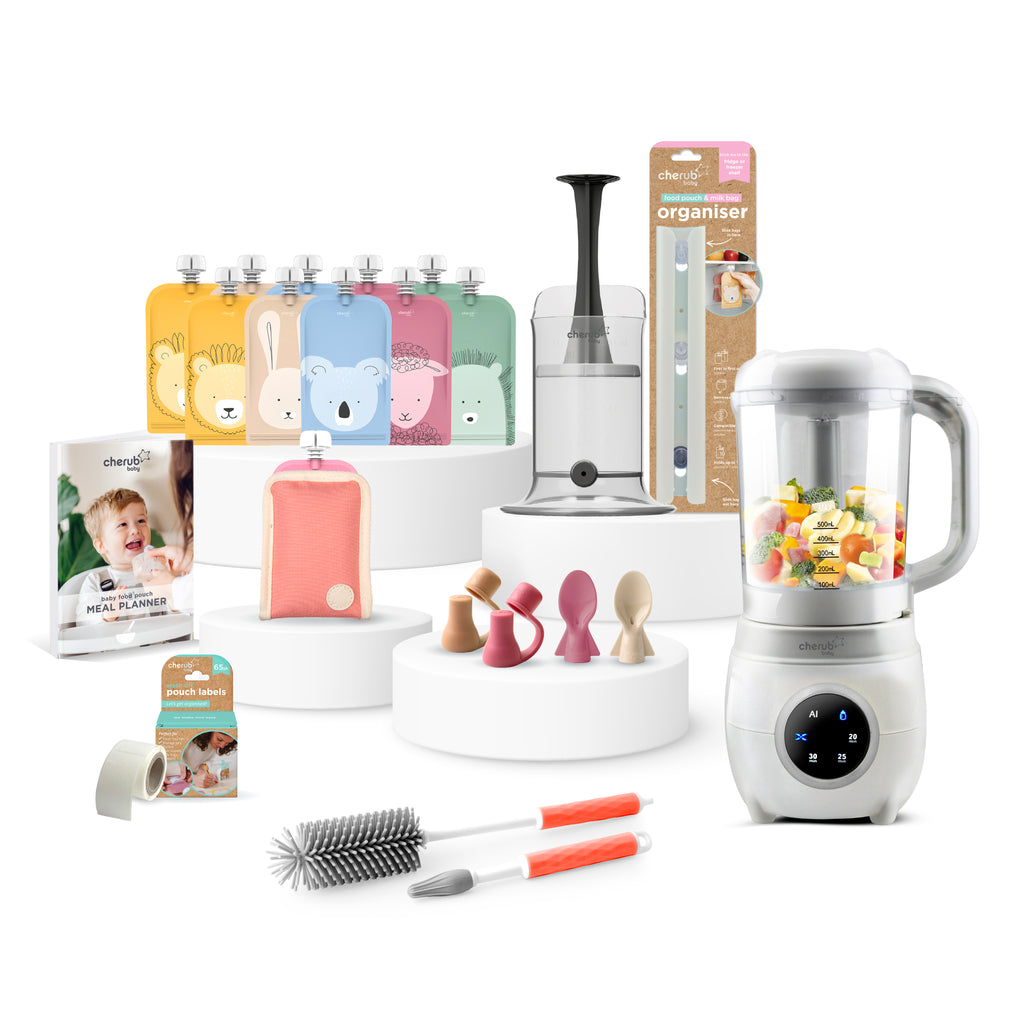
Once you have found the fruit and veg combinations that keep your bub regular, batch a few and take them with you. Fill a set of reusable food pouches with homemade prune or pear puree and pop them in the freezer — you will always have a gentle, fibre-rich option ready for daycare, the park or a road trip. Shop reusable pouches →


When to see your GP or child health nurse
Most cases of mild constipation settle with a few dietary tweaks and extra fluids. But book in with your GP or child and family health nurse if: your baby is under eight weeks old and constipated; the constipation lasts more than a week despite changes; there is blood in the poo beyond the odd tiny streak; your baby is refusing feeds, vomiting or has a swollen, hard tummy; or they seem in genuine pain or unwell. Trust your instincts — you know your baby best, and there is never any harm in getting them checked.
Related reading
For more on this stage of feeding, have a read of our guides to when to start solids in Australia, the best iron-rich first foods for babies, and our favourite easy baby food puree recipes — including plenty of the fibre-rich combinations mentioned above.
Frequently asked questions
How long does constipation last after starting solids?
For most babies, the firmer poos that come with starting solids settle within a few weeks as their gut adjusts. If genuine constipation lasts longer than a week despite offering more fluids and fibre-rich foods, check in with your GP or child health nurse.
What is the best food to relieve constipation in babies?
The "P" fruits are your best friends: pear, prune, peach, apricot and plum, along with peas and wholegrain cereals. Stewed prunes are especially effective — up to three tablespoons, three times a week, can gently get things moving.
Can I give my baby water to help with constipation?
Yes. From around six months you can offer small sips of cooled, previously boiled water in a cup with meals. Extra fluid helps soften stools, but keep breast milk or formula as your baby's main drink.
Is it normal for my baby to strain and go red when pooing?
Some straining, grunting and going red is completely normal — babies are still learning to coordinate the muscles they need. It is only a concern if the poo that comes out is hard, dry and pellet-like, or if passing it clearly causes pain.
Should I stop solids if my baby is constipated?
No need to stop altogether. Instead, adjust the balance: offer more fibre-rich fruit and veg, ease back on binding foods like banana and rice cereal, add a little water, and keep milk feeds up. If things do not improve within a week, see your GP.
Does formula cause more constipation than breast milk?
Formula-fed babies can be a little more prone to firmer stools than breastfed babies, and this can be more noticeable once solids begin. Always make up formula exactly to the instructions on the tin — too much powder can contribute to constipation. If you are worried, speak with your child health nurse.


