

Best Reusable Food Pouches Australia: The Complete Buying Guide


If you’ve started your little one on solids, you’ve probably noticed how quickly those commercial squeezy pouches add up — both in cost and in landfill. Reusable food pouches are one of the smartest swaps an Australian mum can make: they save money, reduce waste, and give you complete control over what goes into your baby’s meals.
Whether your bub is just starting solids at 6 months or your toddler is already demanding their favourite mango purée, this guide covers everything you need to know about choosing the best reusable food pouches in Australia — from materials and safety to filling, cleaning and freezing tips.
Wondering whether they’re actually worth the money and the washing-up? We’ve done the maths for you: Are reusable food pouches worth it? An honest cost and time breakdown.
Why Australian Parents Are Switching to Reusable Pouches
Single-use squeezy pouches are convenient, but they come with a real cost. If your toddler takes a squeezy yoghurt or fruit pouch to daycare every day, you could be spending more than $150 a year on packaging alone — packaging that goes straight to landfill after a single use.
Reusable food pouches solve all of that. Fill them at home with wholesome homemade food, pop them in the freezer, and grab one on your way out the door. You’ll know exactly what’s in every single squeeze — no preservatives, no added sugar, no mystery ingredients.
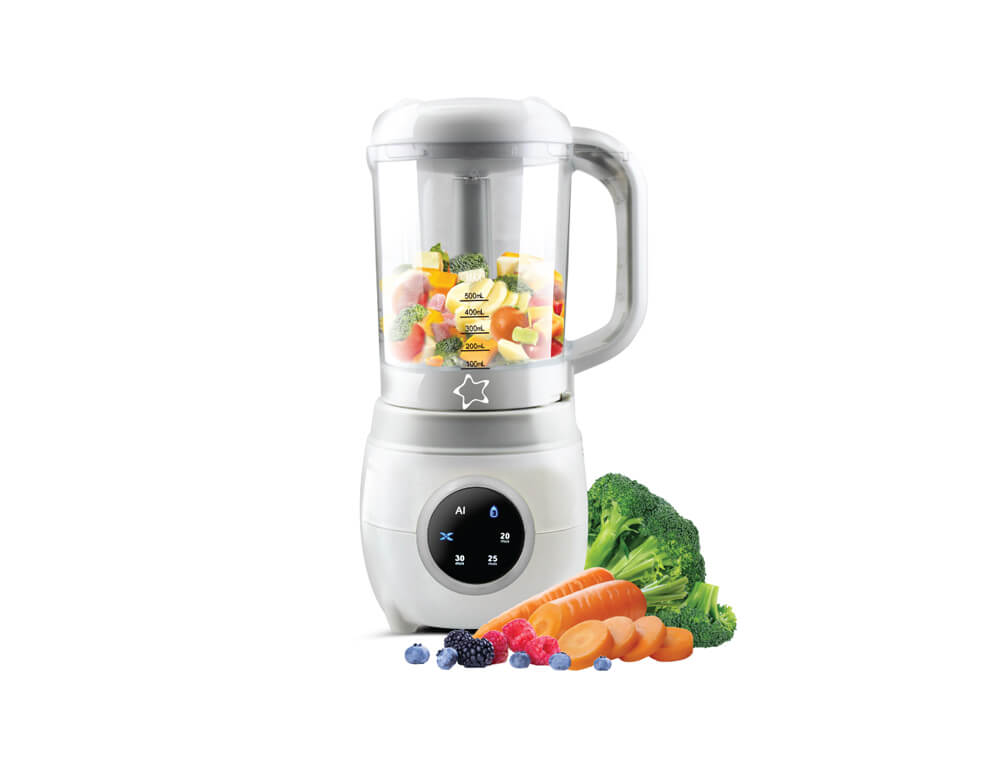
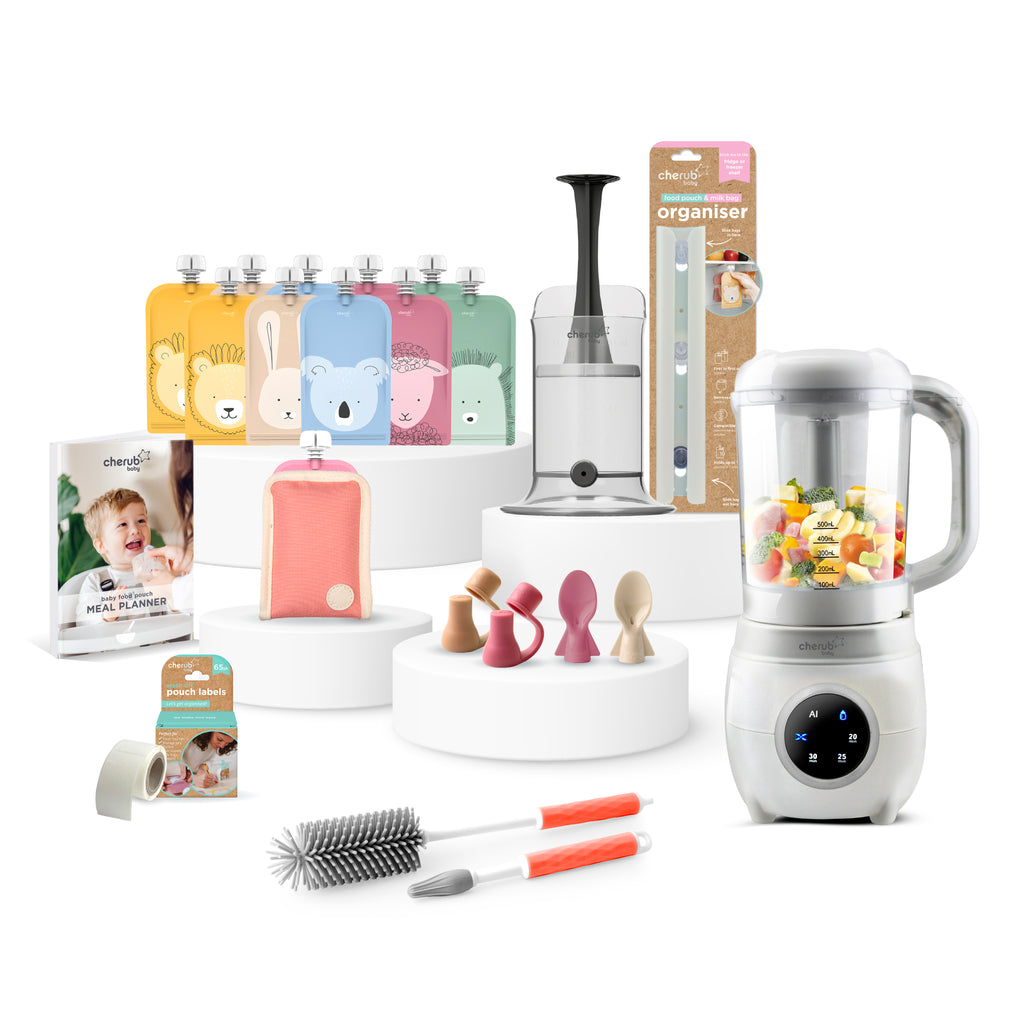
Pair your pouches with a baby food maker and you can steam and blend a full week of meals in under 20 minutes, then portion them straight into your pouches and freeze.
What to Look for in the Best Reusable Food Pouches Australia
BPA-Free and Food-Safe Materials
This is non-negotiable. Always check that a reusable pouch is made from food-grade materials that are BPA-free, lead-free and PVC-free. Cherub Baby’s reusable food pouches are made from food-safe materials and are completely free from harmful chemicals — so you can feel confident about every meal you put inside them. Not sure which material to choose? Our guide to silicone vs plastic reusable food pouches breaks down the differences.


Wide Opening for Easy Filling
A wide zip opening at the bottom or side makes it much easier to spoon thicker foods — like mashed sweet potato, hummus or Greek yoghurt — into the pouch without making a mess. Narrow-opening pouches are genuinely frustrating to fill with anything thicker than a thin purée.
Double-Seal Zip Closure
Look for a double-seal zip that won’t pop open mid-squeeze. Toddlers are strong, and they will squeeze with everything they’ve got. A secure closure is essential, especially in your nappy bag.
Freezer and Dishwasher Safe
The best reusable food pouches can go from freezer to nappy bag and then straight into the dishwasher. Being able to batch-fill, freeze and grab is one of the biggest time-savers for busy Australian families. Always check that the pouch is top-rack dishwasher safe to make cleaning genuinely easy.
Capacity: 120ml to 200ml
Smaller pouches (around 120ml) are great for younger babies just starting solids. As your little one grows into a toddler, a 200ml pouch is better sized for a proper snack or small meal. A mixed pack gives you flexibility as your child’s appetite changes.

Best Foods to Fill Your Reusable Pouches With
Almost any smooth food works beautifully in a reusable pouch. Here are some of the most popular choices for Australian babies and toddlers:
- Apple, pear and cinnamon purée
- Pumpkin and sweet potato blend
- Banana, avocado and breastmilk or formula
- Greek yoghurt with mango or berry
- Lentil, carrot and tomato purée
- Chia seed pudding with coconut milk
- Spinach, pea and mint smoothie
- Chicken, vegetable and rice blend (finely puréed)
For more inspiration on which foods to introduce first, read our complete guide to starting solids in Australia. And if you’re wondering whether to go with purées or finger foods, our article on baby-led weaning vs purées covers everything you need to know.
How to Fill a Reusable Food Pouch Step by Step
Step 1: Prepare Your Food
Use a baby food maker or blender to create a smooth purée. For pouch use, you want a consistency that’s thin enough to squeeze through the nozzle — thicker than water but not so thick it gets stuck.
Step 2: Open the Bottom Zip Fully
Hold the pouch upright or slightly tilted with the nozzle pointing down. Open the zip completely to create the widest possible opening.
Step 3: Fill and Seal
Spoon your purée into the pouch, leaving about 2cm of space at the top so the zip can close cleanly. Gently press out any air pockets before sealing the zip with both hands.
Step 4: Freeze or Refrigerate
Label the pouch with the date and contents using a washable marker. Store in the fridge for up to 48 hours, or freeze for up to 3 months. Lay pouches flat in the freezer to save space.
How to Clean Reusable Food Pouches
Cleaning is where many parents have concerns — but it’s simpler than you might think.
Dishwasher (Easiest)
Open the zip fully, rinse out any visible food residue under running water, and place the pouch on the top rack of your dishwasher with the zip open. This is the easiest option for busy parents and is suitable for Cherub Baby pouches.
Hand Washing
Use warm soapy water and a long, thin pouch-cleaning brush to scrub all inner surfaces. Rinse thoroughly and leave to air dry completely with the zip open before storing.
Never store a pouch that isn’t fully dry — moisture inside can lead to mould. Give them a quick squeeze before storing to check they’re completely dry inside.
Using Reusable Pouches at Daycare
Most Australian childcare centres are happy to accept reusable food pouches as part of a child’s lunchbox, but it’s always worth checking your centre’s food policy. A few tips for daycare days:
- Label pouches clearly with your child’s name and the date filled
- Freeze pouches the night before — they’ll thaw safely by morning tea
- Pack inside an insulated lunch bag with an ice brick to keep cool
- Ask your centre if they have refrigeration available for lunchboxes
For ideas on what to pack alongside pouches in a toddler lunchbox, check out our guide to the best finger foods for babies and toddlers.
Frequently Asked Questions
Are reusable food pouches safe for babies?
Yes — when made from food-grade, BPA-free materials and cleaned properly between uses. Always wash thoroughly after each use and never leave filled pouches at room temperature for more than 2 hours. The Raising Children Network recommends following standard food safety practices when preparing and storing baby food at home.
How long does food last in a reusable pouch?
Food stored in a clean reusable pouch will keep in the fridge for up to 48 hours and in the freezer for up to 3 months. Always label pouches with the fill date and thaw frozen pouches in the fridge overnight — never at room temperature.
Can I put yoghurt in a reusable pouch?
Absolutely — yoghurt is one of the most popular things to put in a reusable pouch. Plain or fruit-flavoured Greek yoghurt works especially well. For a full rundown, see our guide to the best reusable yoghurt pouches in Australia.
How many reusable pouches do I need?
Most Australian mums find 8–10 pouches is the ideal number. This lets you batch-fill and freeze a week’s worth of meals, always have clean pouches available, and rotate them easily between washing and refilling.
Are reusable pouches actually cheaper than shop-bought?
Yes, and quickly — a set typically pays for itself within six to eight weeks. We’ve broken down the real cost per serve, and the time cost, in are reusable food pouches worth it?
What age can babies start using reusable food pouches?
Babies can begin using reusable pouches as soon as they start solids — typically around 6 months of age, in line with the NHMRC infant feeding guidelines. Always supervise your baby when using a pouch.


