

First 100 Foods for Baby: A Printable Tick-Off Checklist


Bookmark or print this page. The “first 100 foods” challenge is a simple, fun way to expose your baby to a wide variety of flavours and textures in their first year — and variety early on is linked to less fussy eating later. Below is a free, printable checklist of 100 baby-friendly foods, grouped by food group, so you can tick each one off as your little one tries it.
Start solids from around six months, when your baby shows signs of readiness, and always offer new foods one at a time. There's no need to rush — work through the list at your baby's pace over the first year or two.
How to use this first 100 foods checklist
Print the list (or keep it on your phone) and tick off each food the first time your baby tries it. A few simple rules make it safe and enjoyable:
- Offer one new single-ingredient food at a time, then watch for any reaction before combining foods.
- Prepare every food to a safe texture — smooth puree for new eaters, then mashed, soft finger-sized pieces as your baby progresses.
- Always stay with your baby while they eat and never leave them alone with food.
- Cook meat, fish, poultry and eggs thoroughly.
- Introduce the common allergy foods deliberately (more on this below).
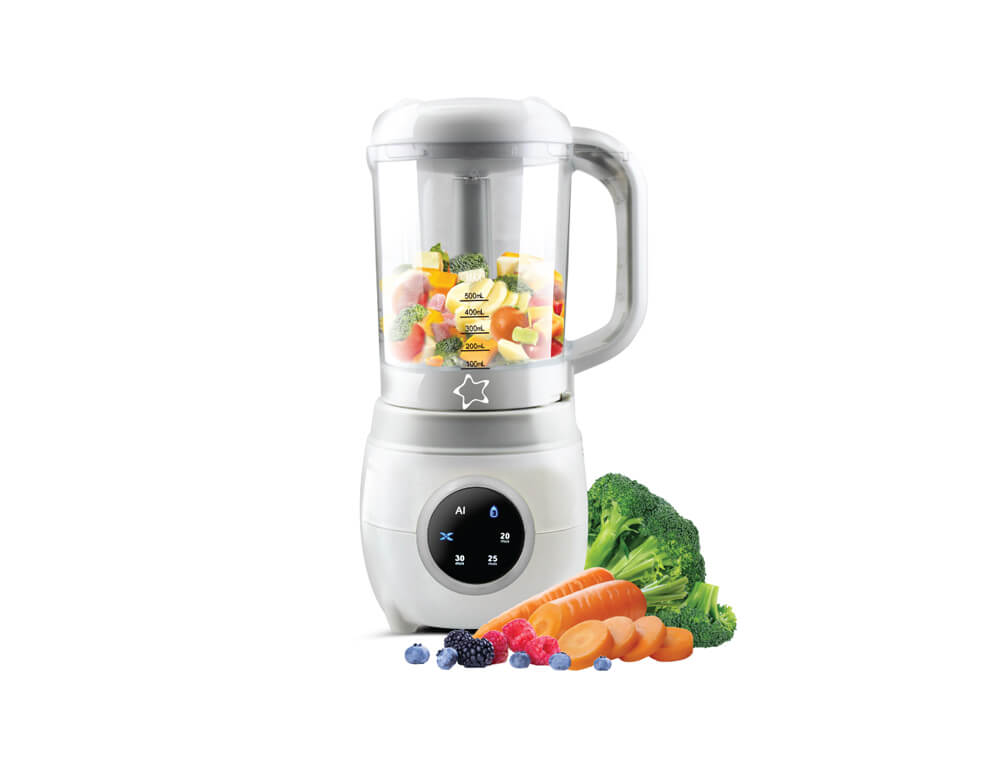
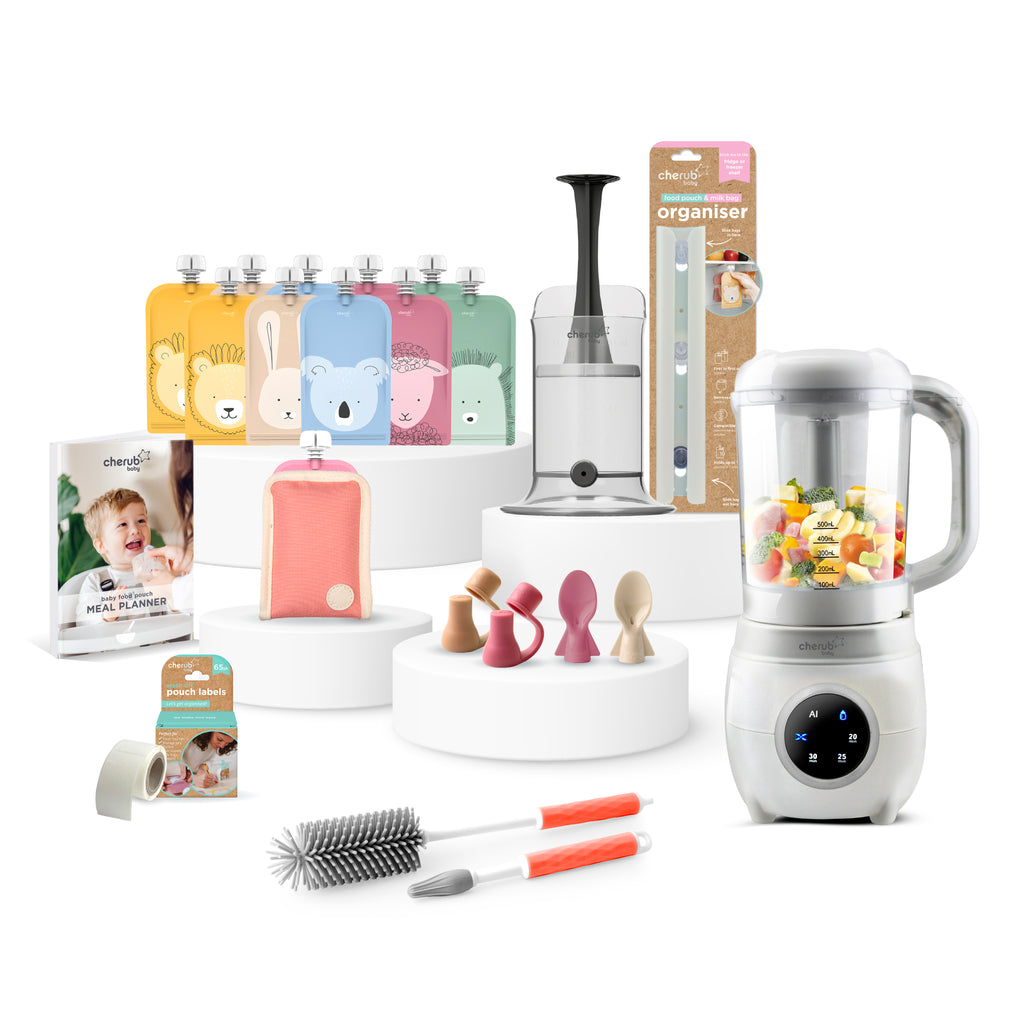
A baby food maker makes steaming and blending single foods quick, and a set of reusable food pouches is handy for freezing small portions as you work through the list.
Vegetables (1–24)
☐ Sweet potato
☐ Pumpkin
☐ Carrot
☐ Broccoli
☐ Cauliflower
☐ Zucchini
☐ Peas
☐ Green beans
☐ Spinach
☐ Kale
☐ Potato
☐ Parsnip
☐ Beetroot
☐ Capsicum
☐ Corn
☐ Cucumber
☐ Tomato
☐ Mushroom
☐ Cabbage
☐ Brussels sprouts
☐ Asparagus
☐ Eggplant
☐ Silverbeet
☐ Butternut squash
Fruits (25–44)
☐ Banana
☐ Apple (cooked)
☐ Pear
☐ Avocado
☐ Mango
☐ Peach
☐ Nectarine
☐ Plum
☐ Apricot
☐ Blueberries (squashed)
☐ Strawberries
☐ Raspberries
☐ Watermelon
☐ Rockmelon
☐ Kiwi fruit
☐ Orange
☐ Grapes (quartered)
☐ Cherries (pitted, chopped)
☐ Pineapple
☐ Papaya
Proteins, meat & legumes (45–64)
☐ Chicken
☐ Beef
☐ Lamb
☐ Pork
☐ Turkey
☐ Salmon (allergen: fish)
☐ White fish (allergen: fish)
☐ Egg, well cooked (allergen)
☐ Lentils
☐ Chickpeas
☐ Black beans
☐ Kidney beans
☐ Tofu (allergen: soy)
☐ Cannellini beans
☐ Split peas
☐ Sardines
☐ Prawns, cooked & chopped (allergen: shellfish)
☐ Beef mince
☐ Chicken liver (small amounts, iron-rich)
☐ Edamame (mashed)
Grains & carbohydrates (65–76)
☐ Iron-fortified baby cereal
☐ Oats / porridge
☐ Wholemeal bread (allergen: wheat)
☐ Pasta (allergen: wheat)
☐ Quinoa
☐ Brown rice
☐ Couscous
☐ Polenta
☐ Barley
☐ Buckwheat
☐ Rye
☐ Millet
Dairy (77–84)
☐ Full-fat plain yoghurt (allergen: dairy)
☐ Cheese, pasteurised (allergen: dairy)
☐ Ricotta
☐ Cottage cheese
☐ Custard
☐ Cream cheese
☐ Butter
☐ Full-fat milk (in cooking only until 12 months)
Healthy fats & extras (85–90)
☐ Olive oil
☐ Smooth peanut butter, thinned (allergen: peanut)
☐ Smooth almond or cashew butter (allergen: tree nut)
☐ Tahini (allergen: sesame)
☐ Hummus
☐ Chia seeds
Herbs & spices (91–100)
☐ Cinnamon
☐ Nutmeg
☐ Basil
☐ Oregano
☐ Coriander
☐ Mint
☐ Dill
☐ Parsley
☐ Ginger
☐ Turmeric
Introducing allergy foods
Current Australian advice is to introduce the common allergy foods — egg, peanut, tree nuts, dairy, wheat, soy, sesame, fish and shellfish — in the first year, ideally from around six months, once your baby is having other solids. Offer one new allergen at a time, on a day when you can watch your baby, and start with a small amount. Once a food is tolerated, keep it in the diet regularly. Follow the guidance from ASCIA and our step-by-step guide on how to introduce allergens to babies in Australia. If your baby has severe eczema or an existing food allergy, talk to your doctor first.

Keeping it safe: choking and iron
Prepare foods to suit your baby's stage and avoid choking hazards — no whole nuts, hard raw vegetables, whole grapes or hard chunks. Quarter grapes and cherry tomatoes lengthways, and cook hard vegetables until soft. Iron is the key nutrient in the second half of the first year, so include iron-rich foods like meat, poultry, fish, eggs, legumes and iron-fortified cereal often; see our guide to iron-rich first foods for babies. For readiness signs and first-food ideas, start with our complete guide to starting solids in Australia, which follows NHMRC infant feeding guidance.
Make working through the list easy
Batch-steam and blend single foods with a baby food maker, then freeze small portions in reusable food pouches so you always have a new food ready to try. Shop baby food makers now →
Frequently asked questions
What are the best first 100 foods for a baby?
The best first 100 foods cover every food group — a wide range of vegetables, fruits, iron-rich proteins and legumes, grains, dairy, healthy fats and gentle herbs and spices. Variety across groups exposes your baby to many flavours and textures and helps build a healthy relationship with food.
When should I start the first 100 foods challenge?
Start once your baby begins solids, which is recommended from around six months in Australia when they show signs of readiness. Work through the list at your own pace over the first year or two — there's no deadline.
Do I have to introduce foods one at a time?
Introduce new single foods one at a time at first, especially the common allergens, so you can watch for any reaction. Once foods are tolerated, you can freely combine them into mixed meals.
How do I include allergens in the first 100 foods?
Introduce egg, peanut, tree nuts, dairy, wheat, soy, sesame, fish and shellfish deliberately in the first year, one at a time and in small amounts, then keep tolerated allergens in the diet regularly. Follow ASCIA guidance and speak to your doctor first if your baby has severe eczema or a known allergy.
What foods should babies avoid?
Avoid honey before 12 months, whole nuts and other choking hazards, added salt and sugar, and cow's milk as a main drink before 12 months. Always prepare foods to a safe texture for your baby's stage.
Can I print this first 100 foods list?
Yes — this page is designed to print or bookmark. Use your browser's print function to keep a copy on the fridge and tick off foods as your baby tries them.


