

Healthy Snacks for 9-Month-Olds: Easy Ideas for Australian Mums


Your baby has just hit that brilliant 9-month milestone — sitting up confidently, exploring everything with their hands, and suddenly very interested in what's on your plate. If you're wondering what snacks are safe, nutritious and actually practical to put together between naps, you're in the right place.
Snacks at 9 months aren't about filling a gap — they're about exposing your bub to new textures, tastes and nutrients while supporting their growing body. Here's everything you need to know about feeding snacks to your 9-month-old in Australia.
When Should a 9-Month-Old Have Snacks?
By 9 months, most babies are eating three solid meals a day alongside breast milk or formula. A small snack mid-morning and mid-afternoon works well for many babies this age — think of them as a bridge between meals rather than a meal in themselves.
According to the National Health and Medical Research Council (NHMRC), babies aged 7–12 months need a varied diet of iron-rich foods, vegetables, fruits, grains and dairy to support growth and development. Snack time is a wonderful opportunity to tick off some of those food groups in a low-pressure setting.
Keep snacks simple. Small portions of one or two foods are plenty. Your baby's tummy is about the size of their fist — there's no need to overdo it.
What Textures Are Safe for a 9-Month-Old?
At 9 months, your baby is developing the pincer grasp — that delightful thumb-and-finger movement that lets them pick up small pieces of food independently. This is the perfect time to introduce soft finger foods alongside purées.
Safe Textures at 9 Months
Look for foods that squash easily between your fingers, dissolve in the mouth without much chewing, and can be cut into small manageable pieces (no larger than 1–1.5 cm). Avoid hard, round foods such as whole grapes, whole cherry tomatoes, raw apple or whole nuts, as these are choking hazards. Always cut round foods in half or quarters and supervise your baby during all meals and snacks.
Already exploring finger foods with your bub? Read our guide to 15 finger foods for babies with no teeth for more safe, practical ideas.

Best Healthy Snacks for a 9-Month-Old in Australia
These snacks are nutritious, easy to prepare, and suitable for most 9-month-olds. Introduce one new food at a time and watch for any reactions, particularly with common allergens.
Iron-Rich Snack Options
Iron is one of the most important nutrients for babies at this age. The NHMRC recommends iron-rich foods at every meal from around 6 months. Great iron-rich snack ideas include small cubes of soft-cooked red meat or chicken, lentil patties or hummus on soft toast fingers, pureed or mashed legumes (chickpeas, kidney beans), and scrambled or boiled egg cut into quarters.
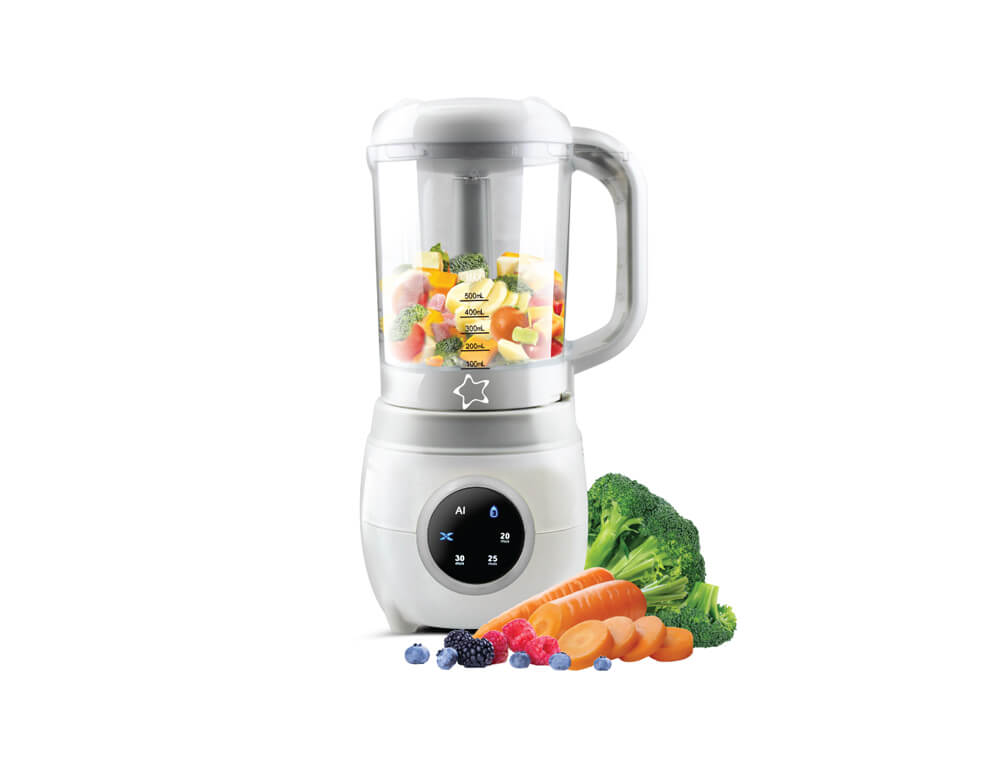
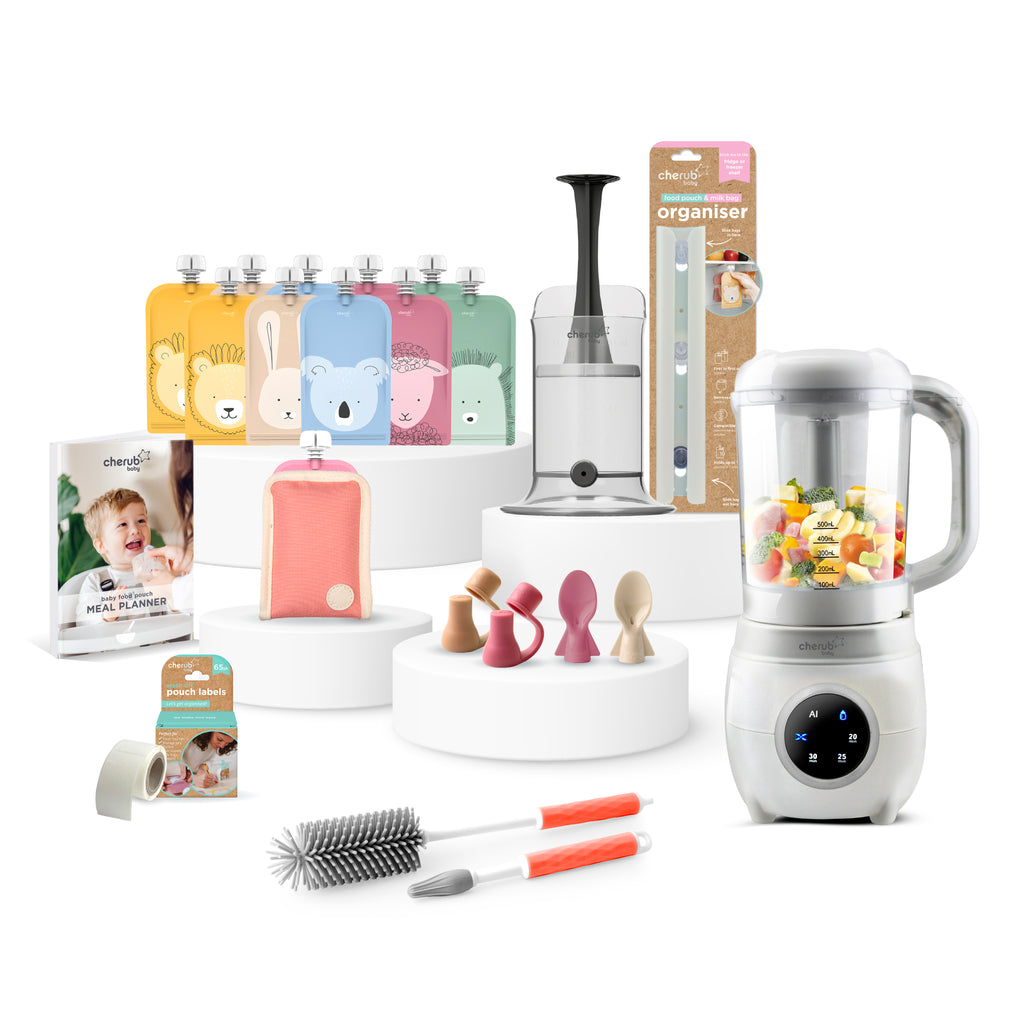
Want to make iron-rich meals easy? A baby food maker lets you steam and blend ingredients like chicken and lentils in one device, creating snack-sized portions your bub will love. Shop our award-winning Baby Food Maker →
Fruit and Vegetable Snacks
Soft banana pieces or mashed banana on rice crackers, steamed and cooled broccoli florets (small — perfect for pincer grasp practice), ripe avocado slices or mashed avo on soft bread, steamed sweet potato or pumpkin cubes, soft rockmelon or watermelon pieces (seeds removed, cut into strips), and mashed or grated pear are all wonderful options.
Dairy Snacks
Full-fat Greek yoghurt (plain, unsweetened), soft ricotta on toast fingers, and small pieces of mild cheese such as cheddar or cottage cheese are excellent sources of protein and calcium at snack time.
Grain-Based Snacks
Soft rice crackers, toast fingers with avocado or cream cheese, baby oat porridge with mashed fruit, and mini wholemeal pikelets are all easy options that most 9-month-olds enjoy.
How to Make Baby Snacks Ahead of Time
One of the best things you can do as a mum is batch-prep snacks in advance. Purées, soft vegetable cubes, and homemade snacks like mini fritters or muffins all freeze beautifully in individual portions.
A baby food maker makes batch cooking fast and simple — steam veggies, blend to your preferred texture, and portion straight into reusable pouches. Pull out what you need the night before, thaw in the fridge, and snack time is sorted.
Heading out for the day? Reusable food pouches are brilliant for packing homemade purées and mashed foods on the go — no messy spoons required. Fill them with yoghurt, fruit purée or lentil mash for a nutritious, portable snack.


Steam a small sweet potato and a handful of peas in your Baby Food Maker, blend to a smooth or chunky consistency, and fill a reusable pouch. Refrigerate for up to 3 days — a perfect on-the-go snack packed with vitamins and iron.
Shop Baby Food Makers → | View Reusable Food Pouches →
How Much Should a 9-Month-Old Eat at Snack Time?
Snack portions for a 9-month-old should be small — roughly 2–4 tablespoons of food, or a couple of pieces of finger food. Let your baby guide you. If they turn their head away, clamp their lips closed, or start throwing food, they're done.
Responsive feeding — offering food without forcing or pressuring your baby to eat — is recommended by the Raising Children Network and supports healthy eating habits well into childhood.
Foods to Avoid at 9 Months
Not everything on your plate is safe for your 9-month-old. Key foods to avoid include honey (risk of infant botulism before 12 months), cow's milk as a main drink (can be used in cooking, but not as a drink until 12 months), added salt and sugar, processed and packaged snacks with additives or preservatives, whole nuts (choking hazard), and raw honey products including some cereals.
What About Allergens at 9 Months?
By 9 months, most allergens should already have been introduced if your baby started solids around 6 months. If not, current Australian guidelines recommend introducing the top 9 allergens — including egg, peanut and tree nuts — as early as possible, one at a time, while your baby is well.
For a complete allergen introduction guide, read our article on how to introduce allergens to babies in Australia.

Connecting Snacks to Your Baby's Broader Diet
Snacks work best as part of a broader, balanced approach to starting solids. If you're still working out the rhythm of three meals a day, our complete guide on when to start solids in Australia covers everything you need — from readiness signs to meal planning and safe textures by age. And if your little one is a bit younger, see our ideas for snacks and meals for a 7 month old with no teeth.
Frequently Asked Questions About Snacks for 9-Month-Olds
How many snacks should a 9-month-old have per day?
Most 9-month-olds do well with two small snacks per day — one mid-morning and one mid-afternoon. Three solid meals remain the foundation of their diet, alongside breast milk or formula. Snacks should be small and simple, not replacing meals.
Can I give my 9-month-old rice crackers?
Yes, plain, unsalted rice crackers are a popular snack for babies at this age. They're soft enough to dissolve in the mouth and easy to hold. Avoid flavoured varieties with added salt, sugar or artificial additives. Always supervise your baby while eating.
Is yoghurt a good snack for a 9-month-old?
Full-fat, plain Greek yoghurt is an excellent snack for 9-month-olds. It's rich in protein, calcium and probiotics. Avoid yoghurts with added sugar or artificial flavours. You can stir in a little mashed fruit for natural sweetness.
Can a 9-month-old eat toast?
Yes — well-toasted bread cut into fingers is a great snack and also perfect for practising the pincer grasp. Top with soft avocado, cream cheese, or nut butter if allergens have been introduced. Choose wholegrain or wholemeal bread where possible for added fibre and nutrients.
What is the best homemade snack for a 9-month-old?
Some of the easiest homemade snacks include steamed vegetable cubes, blended fruit pouches, scrambled egg, and soft banana slices. A baby food maker makes preparation much faster — you can steam and blend fresh ingredients in minutes, then portion into reusable pouches for snacks on the go.
How do I know if my 9-month-old is ready for finger food snacks?
Most 9-month-olds are developing their pincer grasp and are ready to practise picking up small pieces of soft food. Signs of readiness include sitting unsupported, showing interest in food, and reaching for what's on your plate. Always start with very soft, small pieces and supervise closely.


