

Best Silicone Freezer Trays for Baby Food: An Australian Mum's Guide


The best silicone freezer trays for baby food are flexible, food-grade silicone trays with individual portion wells and a lid, so you can freeze homemade purees, pop out single serves in seconds and store them without freezer burn. For most Australian families, a tray with 1 to 2 tablespoon wells is the sweet spot for first foods, giving you ready-made portions that thaw quickly for a single meal.
If you're batch-cooking your own baby food, a good freezer tray is quietly one of the most useful things in your kitchen. It turns a Sunday afternoon of steaming and pureeing into weeks of easy, healthy meals. Here's how to choose the right one, and how to freeze baby food safely.
Why silicone freezer trays beat ice-cube trays for baby food
Plenty of mums start out freezing purees in a standard ice-cube tray, and it does work in a pinch. But rigid plastic trays can be a real struggle: you end up twisting and banging them on the bench to release rock-hard cubes, and thin plastic can crack over time. Food-grade silicone flexes, so each portion pops out cleanly with a gentle push from underneath. Look for these features:
- Individual portion wells – 1 to 2 tablespoon sizes are ideal for babies just starting solids, so you can thaw exactly one serve at a time.
- A fitted lid – this keeps out freezer smells, prevents freezer burn and lets you stack trays to save space.
- Food-grade, BPA-free silicone – safe for repeated freezing and, on many trays, safe for the microwave, dishwasher and oven too.
- A design that doubles as an icy-pole mould – handy later on for teething babies and toddlers in an Australian summer.
What size freezer tray should you choose?
The right well size depends on where your baby is up to. When you first introduce solids, your baby might only take a teaspoon or two, so smaller wells mean less waste. As appetites grow, you can thaw two or three cubes at once, or move up to larger wells and combination meals. A tray with roughly 1–2 tablespoon wells covers you from first tastes right through to chunkier textures. For guidance on when to begin, the Raising Children Network is a trusted Australian resource on starting solids and food safety.

How to freeze homemade baby food safely
Freezing baby food is simple once you have a routine. Follow these steps to keep it safe and tasty:
- Cool it quickly. Let freshly cooked puree cool at room temperature, then refrigerate or freeze within one to two hours. Don't leave cooked food sitting out.
- Spoon into your tray. Fill each well, smooth the tops and pop the lid on.
- Freeze flat. Lay the tray flat in the freezer until the portions are solid, usually a few hours.
- Label and rotate. Once frozen, you can leave cubes in the lidded tray, or transfer them into a labelled container or reusable pouch. Always note the date and use the oldest first.
- Use within the recommended time. Homemade baby food generally keeps well in the freezer for around one to three months. Thaw a portion in the fridge overnight, or gently warm from frozen, and never refreeze food once it has thawed.
For a deeper walkthrough, our ultimate guide to freezing baby food covers timings and storage in detail, and our roundup of baby food storage ideas has more clever ways to keep meals fresh.
From frozen cube to meal on the table
Once your cubes are frozen, mealtimes get wonderfully easy. Pop out one or two, warm them through, and you have a fresh-tasting, preservative-free meal ready in minutes. Many mums like to load thawed puree into a reusable food pouch for feeding on the go, so home cooking travels just as easily as a shop-bought squeeze pouch.
Try it: Cherub Baby Silicone Freezer Trays
Our food-grade silicone freezer trays and icy-pole moulds have flexible, easy-release portion wells and a fitted lid, so you can freeze homemade purees and pop out single serves in seconds. They double as icy-pole moulds for teething babies and toddlers too.
Shop Now → or browse the full food storage & pouches collection.

Silicone freezer trays and your baby food maker
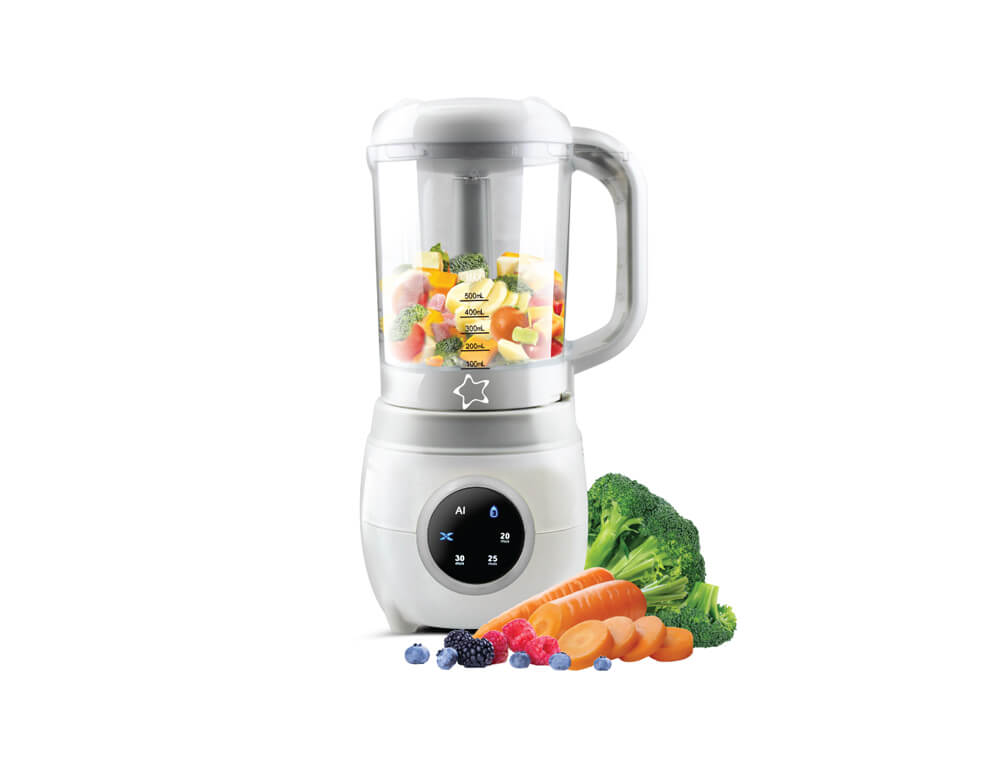
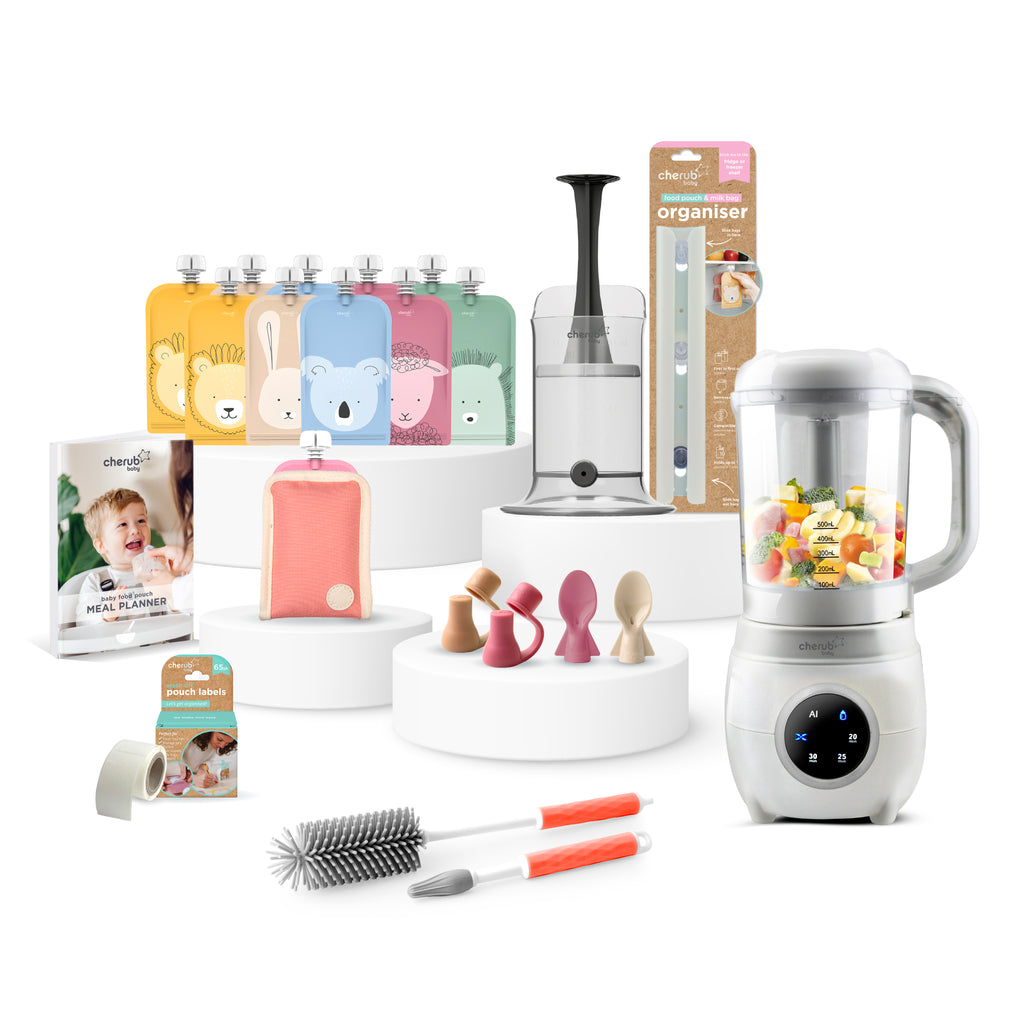
Freezer trays and a baby food maker are a brilliant pairing. Steam and blend a big batch of veggies or fruit, portion it straight into your trays, and freeze. One cooking session can fill your freezer with a rainbow of single-serve meals, saving you time and money over the weeks ahead. If you're weighing up whether a food maker is worth it, our pillar guide on reusable food storage is a good place to start.
Frequently asked questions
Are silicone freezer trays safe for baby food?
Yes. Food-grade, BPA-free silicone is designed for repeated freezing and is a safe way to store homemade baby food. Choose trays clearly labelled as food-grade silicone, and wash them before first use.
How long can you keep homemade baby food in the freezer?
As a general guide, homemade baby food keeps well in the freezer for around one to three months. Label each batch with the date and use the oldest portions first for the best flavour and quality.
What size freezer tray is best for a baby starting solids?
Trays with 1 to 2 tablespoon wells suit babies starting solids, because you can thaw a single small serve at a time and reduce waste. As your baby eats more, simply thaw two or three cubes together.
Can I freeze baby food in a reusable pouch instead?
You can, and many families use both. Freezer trays are great for portioning and quick freezing, while reusable pouches are handy for feeding on the go. A common routine is to freeze in trays, then transfer cubes into pouches as needed.
Can I put the silicone tray straight into the microwave?
Many food-grade silicone trays are microwave safe, but always check the product's care instructions first. When warming baby food, stir well and test the temperature before serving, as microwaves can heat unevenly.
How do I get frozen cubes out of the tray easily?
Flexible silicone makes this easy. Twist the tray gently and push up from underneath each well, and the cube should release cleanly. If it's stubborn, let it sit at room temperature for a minute first.
This article offers general information for Australian parents and isn't a substitute for personalised advice from your GP, child health nurse or a health professional.


