

Reusable Food Pouches vs Silicone Freezer Trays: The Best Way to Store Homemade Baby Food


Both reusable food pouches and silicone freezer trays are excellent ways to store homemade baby food — the best choice comes down to your baby's stage and how you feed. Silicone freezer trays are ideal for freezing small, single-serve portions of puree in the early days of solids, while reusable pouches shine once your baby is self-feeding and you're out and about. Many Australian parents end up using both: trays to freeze, pouches to serve.
If you're batch-cooking baby food and wondering which to buy first, this honest comparison walks through cost, portion control, freezing, cleaning and convenience so you can pick what actually suits your routine.
At a glance
| Feature | Reusable food pouches | Silicone freezer trays |
|---|---|---|
| Best for | Serving & feeding on the go | Freezing single-serve portions |
| Best stage | Self-feeding, ~7 months+ | First purees, ~6 months+ |
| Portion control | Larger servings (60–140ml) | Small cubes (15–75ml) |
| Freezer friendly | Yes (many are) | Yes — designed for it |
| On-the-go use | Excellent | Not portable once thawed |
| Cleaning | Needs a little care (a bottle brush helps) | Easy — usually dishwasher safe |
| Reduces waste | Yes vs disposable pouches | Yes vs single-use containers |
Silicone freezer trays: the batch-cooking workhorse
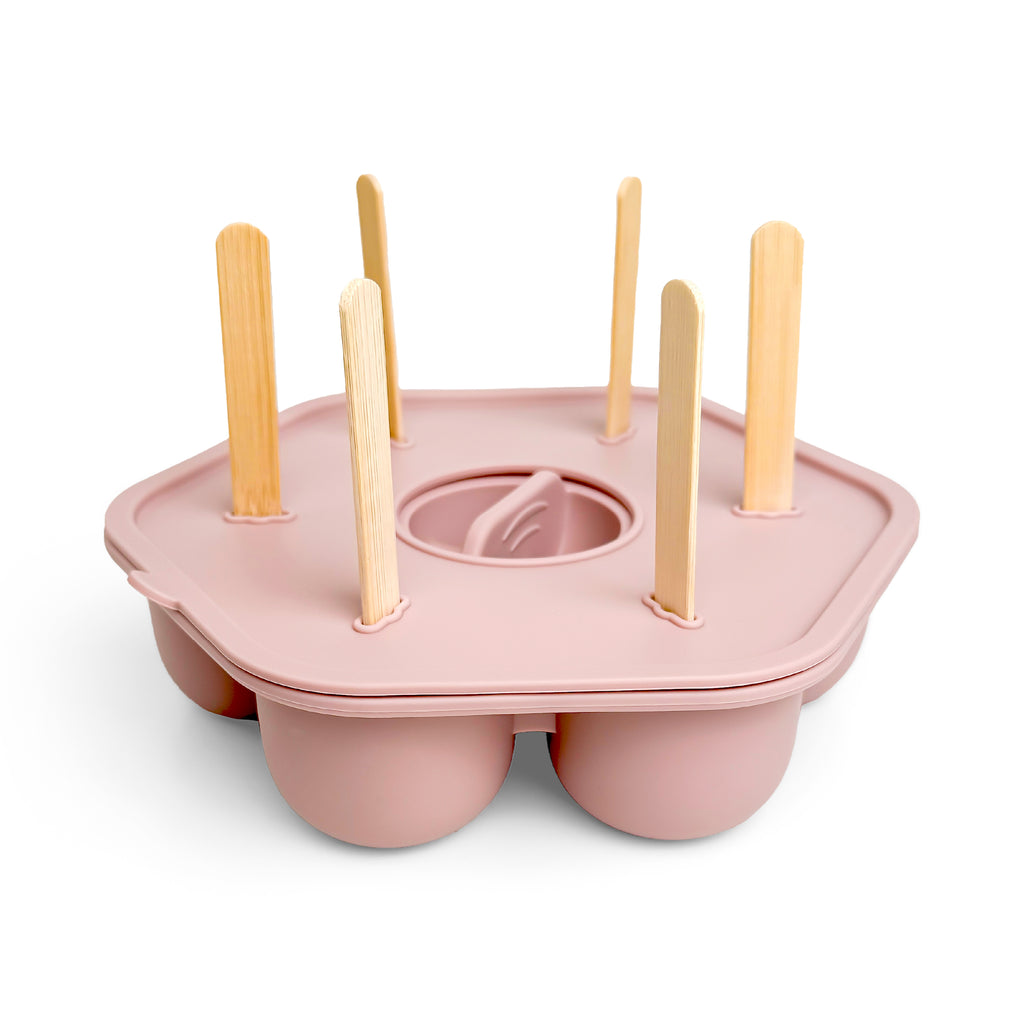
Silicone freezer trays are purpose-built for one job: freezing homemade puree into neat, single-serve portions. You steam and blend a batch of food, spoon it into the tray's cavities, freeze, then pop out the cubes and store them in a labelled freezer bag. When it's mealtime, you thaw exactly as many cubes as your baby will eat.
This is perfect for the first months of solids, when portions are tiny and you want to offer variety without waste. The flexible silicone releases frozen cubes easily — no more hacking at rigid plastic ice-cube trays — and most are dishwasher safe for quick cleaning.
Pros:
- Ideal small portions for first tastes
- Easy to release frozen cubes from flexible silicone
- Usually dishwasher safe and simple to clean
- Let you freeze lots of variety in a small space
Cons:
- Not portable — you still need a bowl and spoon to serve
- Best kept in the freezer, not for feeding on the go
- Cubes need thawing and often warming before serving
For a deeper look at what to buy, see our guide to the best silicone freezer trays for baby food, and our ultimate guide to freezing baby food for safe portioning and defrosting.

Reusable food pouches: made for feeding on the move
Reusable food pouches are refillable squeeze pouches you fill with your own puree, yoghurt or smoothie. They're the answer to expensive single-use pouches: fill, seal, and hand to your baby to self-feed, or squeeze onto a spoon yourself. They're brilliant for daycare, the park, car trips and restaurants — anywhere a bowl would be messy or impractical.
Most quality reusable pouches can also go in the freezer, so you can fill and freeze a batch, then grab one on your way out the door. They come into their own once your baby is around seven months and starting to self-feed, though you can spoon-feed from them earlier too.
Pros:
- Perfect for feeding on the go and encouraging self-feeding
- Far cheaper and greener than disposable pouches over time
- Larger servings suit hungrier, older babies and toddlers
- Great for yoghurt, smoothies and fruit as well as puree
Cons:
- Need a bit more care to clean — a small brush makes it easy
- Larger portions are less suited to tiny first tastes
- Quality varies, so look for food-grade, leak-proof designs
Our complete buying guide to reusable food pouches covers what to look for, and if you're wondering about freezing and cleaning, we answer whether reusable food pouches can go in the freezer, dishwasher and microwave.


Which is right for you?
Here's the simplest way to decide:
- Just starting solids (around 6 months)? Begin with silicone freezer trays. Small cubes let you offer single tastes and build variety without waste while portions are tiny.
- Baby self-feeding or eating on the go (around 7 months+)? Add reusable pouches. They make daycare, outings and travel far easier and cut your spend on disposable pouches.
- Want one system for the whole journey? Use both together — and it's the combination most parents land on. Batch-cook and freeze puree in trays, then thaw and decant into pouches for days out.
- Feeding yoghurt, smoothies or toddler snacks? Pouches win, hands down.
- Tight on freezer space and want maximum variety? Trays let you stockpile lots of small portions efficiently.
A simple routine that uses both
Many families find the pouch-and-tray combo unbeatable. Steam and blend a batch of vegetables or fruit — a baby food maker makes this a five-minute job — then freeze the puree in silicone trays. Once frozen, transfer the cubes to labelled bags. On a busy morning, thaw a few cubes overnight in the fridge and squeeze them into a reusable pouch for daycare or an outing. You get the portion control of trays and the convenience of pouches, all from one cook-up.

Whichever you choose, follow safe storage guidance: the Raising Children Network advises cooling homemade baby food quickly, refrigerating it for no more than two days, or freezing it for up to a few months, and never refreezing thawed food.
The verdict
It's not really pouches versus trays — it's which one you need first. If your baby is just starting solids, silicone freezer trays are the smarter first buy. If you're chasing a self-feeding toddler out the door, reusable pouches will save your sanity. Together, they turn one batch of homemade food into a week of easy, waste-free meals. Shop reusable food pouches →
Frequently asked questions
Can you freeze food directly in reusable pouches?
Yes — most quality reusable pouches are freezer safe. Fill them, leave a little room for expansion, lay them flat to freeze, then thaw in the fridge before serving.
Are silicone freezer trays better than ice-cube trays for baby food?
Generally yes. Flexible silicone releases frozen cubes far more easily than rigid plastic, and purpose-made trays often have lids and larger cavities suited to baby portions.
How long does homemade baby food last in the freezer?
Frozen homemade baby food is best used within about one to three months. Label everything with the date, and never refreeze food that has already been thawed.
Do I need both pouches and freezer trays?
Not necessarily, but they complement each other. Trays are best for freezing small first-stage portions; pouches are best for serving and feeding on the go. Many parents use trays to freeze and pouches to serve.
Which is easier to clean?
Silicone freezer trays are usually the easier of the two, as most are dishwasher safe. Reusable pouches need a little more care, but a small bottle brush and a rinse straight after use keep them fresh.
Are reusable pouches worth it compared with disposable ones?
Over time, yes. Reusable pouches cost more upfront but quickly pay for themselves versus buying single-use pouches, and they create far less waste.


